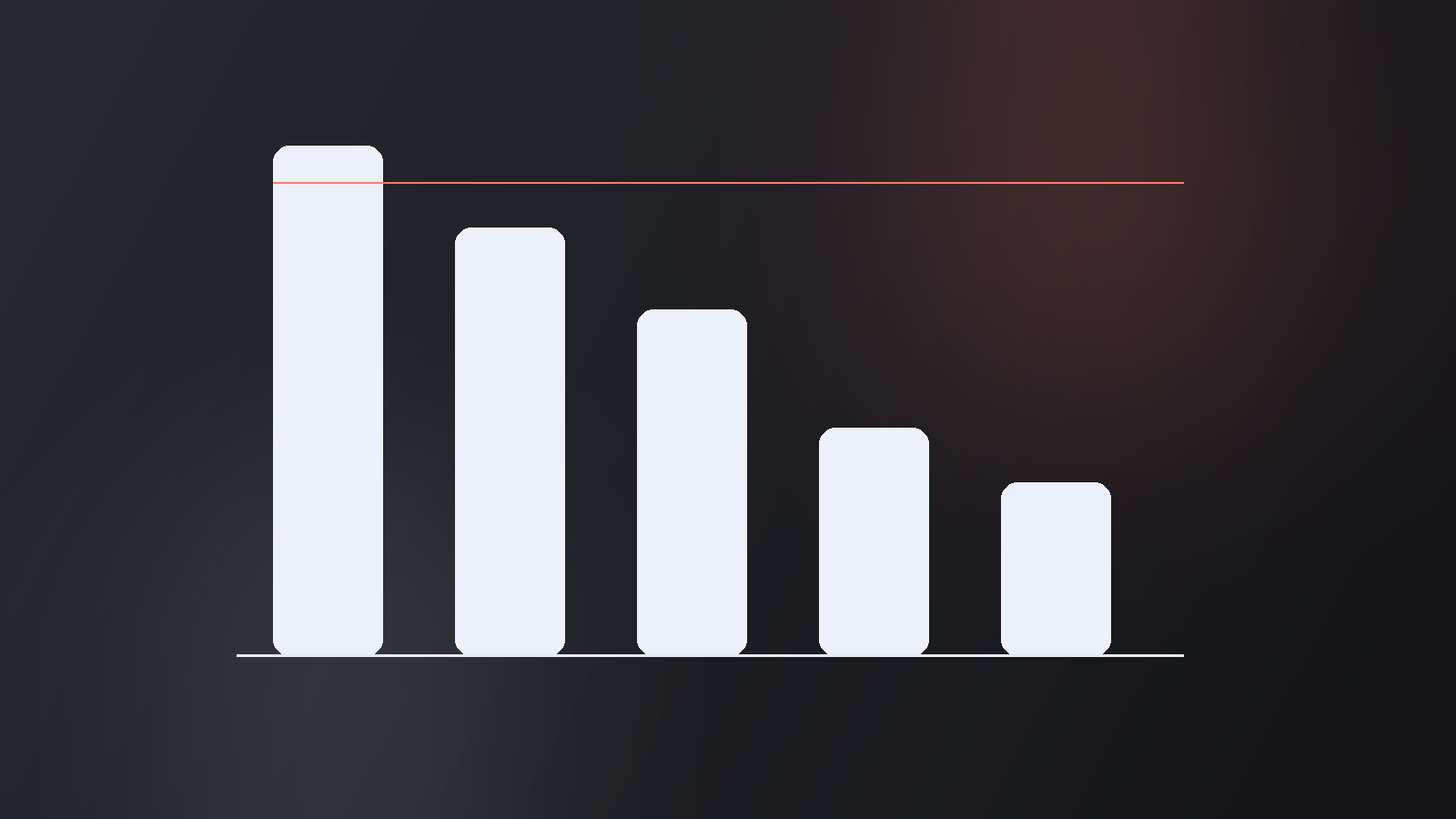
Bloomberg reported on November 4 that Apple lowered what its engineering teams can spend on AI each day, from $300 to $200. Apple hasn't commented, and the numbers are small enough that the story is really about accounting.
The Apple AI budget went from $300 a day to $200
The cut landed in October, and it took a third off the daily cap for engineering teams. More reductions are reportedly planned, and some allowances are said to be heading toward $100 a day.
Outside engineering, Apple is said to be weighing a limit as low as $25 a day. That's not a rounding error for a company this size. It's a decision that some AI usage isn't worth the invoice, or at least that's what a cap this low implies.
Treat all of it as reported. Bloomberg's sourcing hasn't been confirmed by Apple, the company hasn't published a policy document, and no internal memo has surfaced.
A daily cap is a blunt instrument. It treats a Tuesday debugging session and a Friday afternoon experiment as the same unit of work, and it gives a team no way to bank unused budget for the week a release slips. Companies reach for it anyway because it's the one number a finance team can audit without reading anybody's prompt logs.
Blunt, and auditable.
Why an Apple AI spending cut isn't an anti-AI story
A daily allowance is the most legible form of AI budgeting there is. It turns an abstract cloud bill into a number an engineer can see before lunch, which is why finance teams like it and why engineers grumble about it.
TechCrunch frames the shift as the end of a tokenmaxxing wave, the stretch of 2026 when staff were encouraged to use AI as much as possible. The bills arrived. Companies moved from encouragement to rationing, and Apple is hardly the first to do it.
This is what happens when a pilot becomes a line item. Someone asks what the pilot cost per engineer, nobody has a clean answer, and the next email sets a ceiling.
What a $25 daily cap says about Apple internal AI
Different teams get different numbers, and that detail is worth keeping. Engineering holds the largest allowance because agentic coding burns tokens fast, while a support or marketing team may not need $200 a day to draft copy.
So what does $200 a day actually buy? Roughly enough for several hours of frontier-model work, and not enough for an agent running unattended from morning to night. Twenty-five dollars is a few long agent sessions or a lot of short chats. The cap doesn't stop anyone from working. It stops the workflow that runs an agent in a loop for six hours while nobody checks the output.
That distinction matters for anyone building internal tooling. The expensive patterns are the ones with no human in the middle, because nothing in the loop notices when the loop stops producing anything useful.
Apple AI costs and the productivity gap
The same reporting points at a gap that isn't unique to Apple. What AI costs to build and run keeps outrunning the productivity it returns in measurable terms, and the gap gets harder to defend as the bills grow.
Per-seat pricing is where that gap shows up first. A $30 monthly seat is easy to approve because it's predictable, and predictability is most of what a manager wants. A team that spends $6,000 a month on tokens has to show what came back, and "faster drafting" is a hard line to put in a spreadsheet.
Apple's answer, per Bloomberg, is a ceiling per person per day. It's crude. Crude is usually what ships first.
How to budget token spending on a smaller team
Budgeting starts with cost per accepted output instead of cost per request. A cheap model that needs three retries costs more than an expensive one that lands in a single pass, and the retries also cost you the afternoon.
Then separate chat from agents. Chat has a natural ceiling because a person is typing. An agent loop doesn't, so it needs a hard stop, a spend alert, and someone who owns the number.
Finally, write down what you'd cut if the cap dropped by a third tomorrow. If the answer is nothing, you don't have a budget yet. You have a wish and a credit card.
What the Apple AI budget story leaves open
Nobody outside Apple knows whether the caps will stick, loosen or spread to contractors. What's clear is the direction: AI spending is being treated like travel spending, with a per-person limit and a manager who asks why the trip was necessary.
For teams outside Cupertino, the useful move is to copy the habit before a bill forces it. Set a daily cap and watch which work survives it.
The rest is arithmetic, and arithmetic is cheaper to argue about now than in January.
One thing to watch: whether other large employers publish similar caps. A single company trimming a daily allowance is a cost story. Three of them doing it in the same quarter is a pricing signal, and it would land hardest on vendors who sell AI by the seat rather than by the task.