
The share of US students choosing a computer science major fell again this fall, and the two-year drop is now close to a fifth. The numbers are solid. The explanation isn't.
The Numbers NSC Released
On October 29, the National Student Clearinghouse Research Center published preliminary enrollment data for fall 2026. In the federal category called computer and information sciences and support services, four-year undergraduate enrollment fell 12.4% year over year. Two-year programs fell 12.3%. Graduate enrollment fell 10.4%.
Those figures come from a panel of schools reporting both this year and last, which controls for institutions entering and leaving the dataset. The preliminary release covers 46.0% of participating institutions and 7.92 million enrollment records as of September 24. Final numbers arrive in January 2027, and they have moved before.
Two Years, Not One Bad Term
A single year could be noise. Two consecutive years looks like a trend.
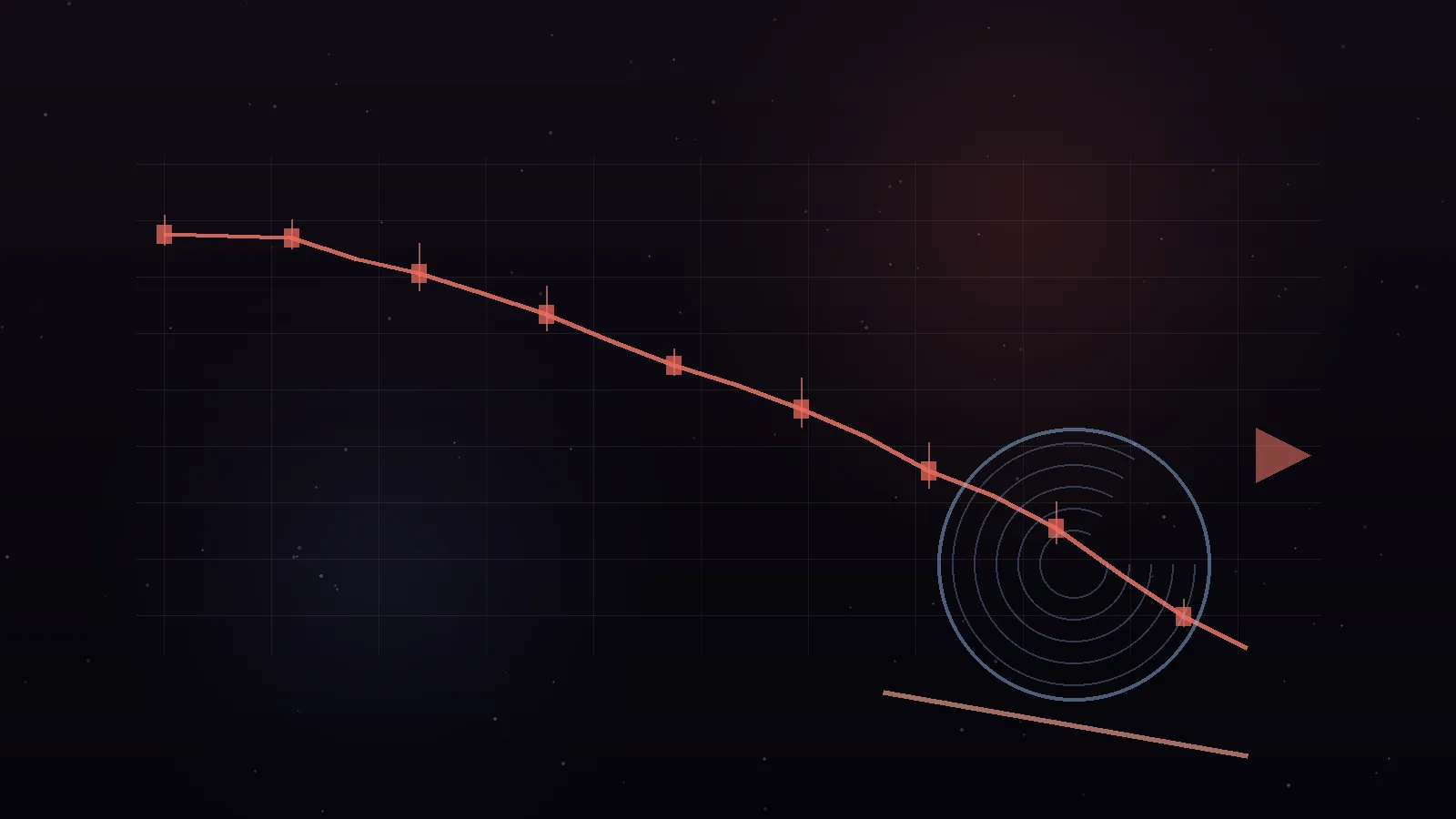
From fall 2024 to fall 2026, four-year undergraduate computing enrollment is down 18.4%, two-year is down 17.5%, and graduate enrollment is down 27.1%. The prior year already showed declines: 6.9% for four-year undergraduates, 5.9% for two-year students, and 18.6% for graduate students.
The movement inside those numbers deserves separating. Undergraduate declines are accelerating, from 6.9% to 12.4%. Graduate declines are shrinking, from 18.6% to 10.4%. Same headline, two different stories. The undergraduate slide is getting worse; the graduate slide is easing off what may have been a one-time correction.
Engineering Grew While Computing Shrank
The obvious reading, that students are abandoning technical fields, doesn't survive contact with the rest of the data. Total enrollment across all institutions rose 0.2%.
Within the same set of four-year schools, engineering gained 6.1%, health professions gained 6.2%, and biology gained 3.8%. Business was flat at 0.1%. Humanities fell 4.5%, and visual and performing arts fell 4.2%.
Computing dropped while engineering rose. That's not a retreat from technical work. It's a reallocation, and it's specific enough to be interesting. If the story were simply that students fear automation, engineering should have fallen too.
The Scale of What's Missing
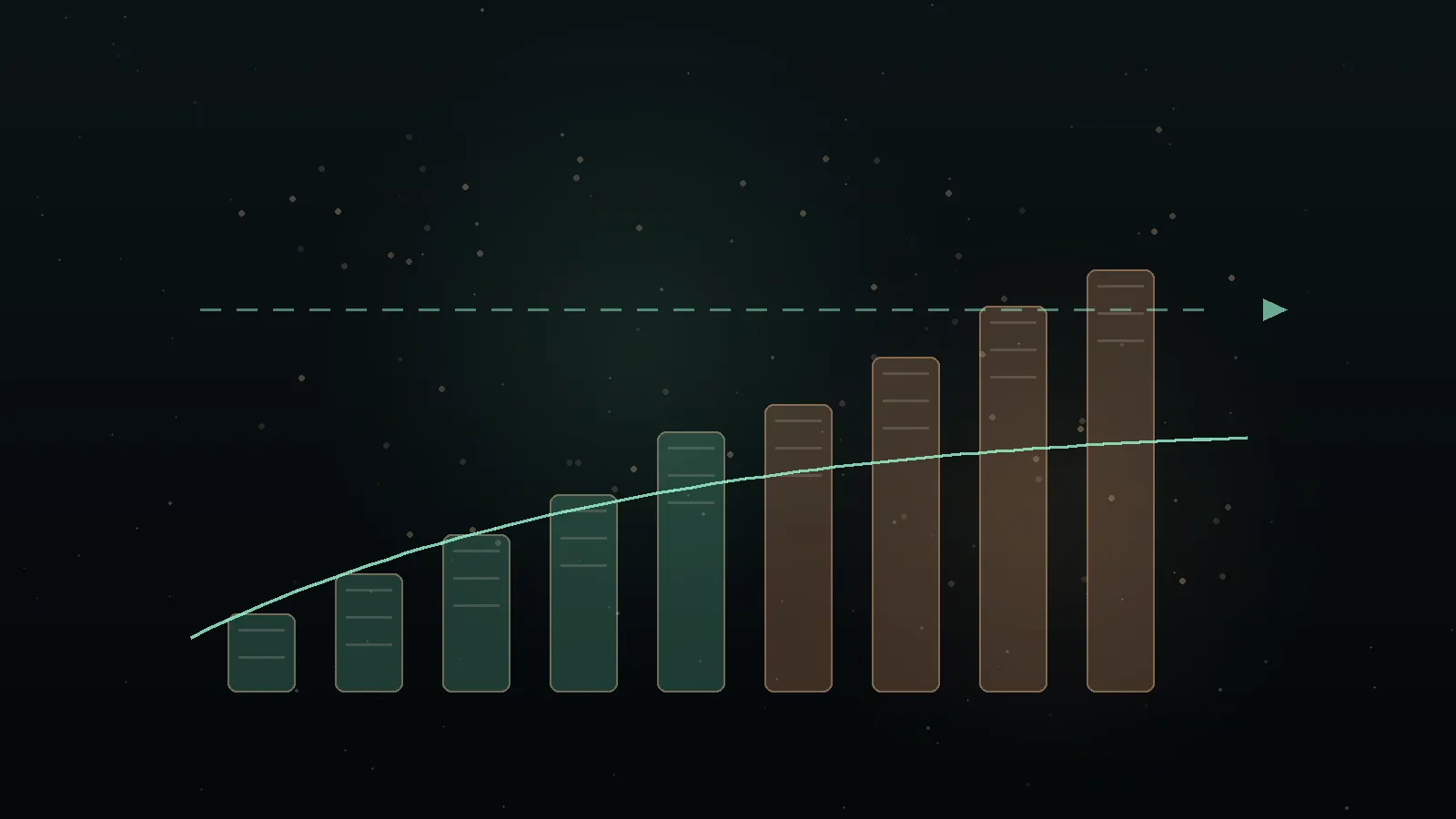
Four-year undergraduate computing enrollment grew from about 499,000 in 2020 to about 660,000 in 2024. Then it fell 8.1% in fall 2025 to roughly 606,000, and this year's decline lands on top of that.
Put differently, the field is giving back most of a boom that took four years to build. That's the kind of swing that reshapes department budgets, faculty hiring, and the number of tenure lines a university is willing to commit to. A 12% drop hits introductory course sections first, then upper-division electives, then hiring plans.
The Job Market Behind the Numbers
None of this happens in a vacuum. In early 2026, only 4.5% of software development job postings were entry level. One recent dataset put unemployment among computer science graduates at 7.0%. Indeed's software development posting index sits around 81, where February 2020 equals 100.
For a high school senior doing the math, that's a legible signal: four years of tuition, then a market where the bottom rung of the ladder has been sawed off. Whether the signal is accurate matters less than whether students believe it. Enough of them apparently do.
What the CRA Data Adds
The Computing Research Association's 2025 Taulbee survey of PhD-granting departments in the US and Canada found new first-year and newly declared majors down 13%. In the same year, those departments awarded a record 41,858 bachelor's degrees.
Both can be true at once because a degree reflects enrollment from four or five years earlier. Departments are graduating the largest class in their history while admitting a noticeably smaller one. The pipeline narrows on a delay, which means the budget pain arrives after the good news.
Why Economists Won't Call It an AI Effect
The tempting headline is that AI killed the CS major. The people who study this won't say that, and their caution is worth taking seriously.
Stanford economist Jacob Light found that computing enrollment fell in the 2025-26 academic year for the first time in nearly two decades. He also wrote, explicitly, that the finding should be read as descriptive evidence, not as a causal estimate of what ChatGPT or AI exposure did to student demand.
The candidate explanations he lists overlap and interact: changes in how the subject is taught, shifting expectations about returns, a labor market that already partly reflects AI adoption, and a tech hiring slowdown with little to do with AI. Pulling those threads apart with enrollment data alone isn't possible. Anyone who claims otherwise is guessing with a spreadsheet.
Where the Missing Students Went
One hypothesis has decent support. The Washington Post analyzed NSC data earlier this year and suggested some of the missing computing students may have moved into adjacent fields such as data analytics and data science.
That would fit the engineering and health professions gains. Students aren't leaving quantitative work. They're picking a different label for it, one that sounds less exposed to automation and, in some cases, comes with a clearer job title at the end of four years.
What Would Confirm the Trend
Two things would settle the question. Final data in January 2027, which will either hold near 12% or drift. And a second year of graduate enrollment, since the graduate decline is shrinking while the undergraduate one grows.
Until then, the honest summary is narrow. A specific major lost a specific number of students, twice in a row, while adjacent majors grew. The cause is an open question, and anyone who tells you otherwise is selling a story rather than reading a table.