
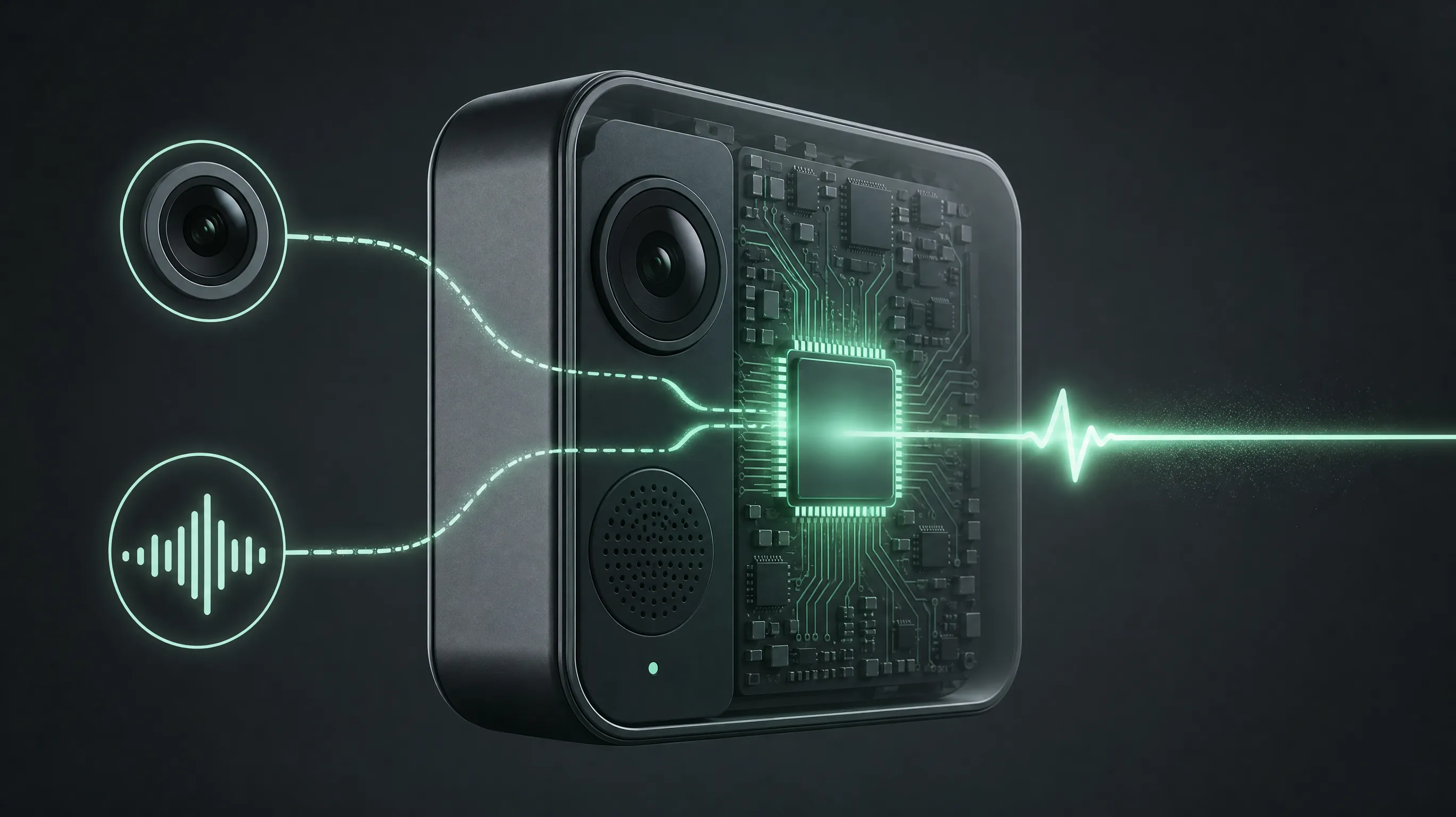
Liquid AI released two open-weight decision models that answer in a single pass instead of writing text. It's a different shape of model, aimed at devices that need an answer fast rather than a paragraph.
Liquid AI released two open-weight decision models on October 7: d1-3B, which reads text and images, and an experimental d1-omni-600M, which handles text with either an image or an audio clip. Both are downloadable now, with weights up on Hugging Face. The interesting part isn't the size. It's that these models don't write anything.
What a Decision Model Is, and What It Isn't
Most AI models you've used are generative. You ask a question, the model writes a response one word, or token, at a time. That's flexible, and it's also slow and expensive, because every token is a step.
A decision model works differently. Instead of producing text, it takes a situation and a set of named questions, then returns typed answers in a single forward pass. The model processes the input once and produces its output, with no tokens generated along the way. Ask it to score a set of choices or label an image, and there's no prose to read. Just the answer.
That makes the models useful for jobs where you don't need an explanation, you need a call. Whether a request should be approved, what category a photo belongs to, what a clip contains. Liquid AI built d1-3B on its LFM2.5-VL-3B model, and d1-omni-600M on LFM2.5-Encoder-350M plus vision and audio encoders.
The Numbers Liquid AI Is Claiming
The company reports that d1-3B scored 48.57 on Decision Index v0.2.1, a public split. It says that's higher than any model under 10B parameters and matches Decider 35B-A3B, a model roughly twelve times its size. Those are Liquid AI's own figures, reported alongside the release, and they haven't been independently verified.
The latency numbers are the more concrete pitch. According to the company, d1-3B answers in 8 milliseconds on an RTX 4090 desktop GPU, 16ms on a Jetson AGX Thor, 26ms on a Jetson AGX Orin, and 50ms on the smaller Jetson Orin Nano. The experimental d1-omni-600M scored 15.95 on the same index. The company describes it as a first experimental checkpoint.
Why Edge Devices Are the Target
The latency figures point at where these models are meant to run. The RTX 4090 is a high-end desktop card, but the Jetson line is a family of small, low-power computers built for devices at the edge: cameras, robots, sensors, and machines that operate away from a data center.
On a device like that, a model that answers in milliseconds and never generates text is a different proposition than a chat model. There's no round trip to a server, no streaming response to wait for, and no dependency on a network connection. For something like a camera that needs to decide whether to trigger an alert, that matters more than the ability to explain itself.
This is a crowded idea. Microsoft shipped a decision model of its own, Decision-1, the week before, and other labs are chasing the same fast, cheap, local-answer use case. Liquid AI's bet is that open weights plus small size is the combination that gets its models embedded in products.
Open weights help here. If a company can download d1-3B and run it on its own hardware, it can test it for a specific task without going through an API, an account, or a per-call price. That's the appeal of the open approach, and it's also what makes these models hard to monetize directly.
What's Still Open
The claims rest on a single benchmark that the company itself reports and on hardware figures that need reproducing. The Decision Index measures how well models make choices. A score tells you where a model lands relative to others on that test, not how it will handle the specific judgments your product needs.
What Liquid AI has done is put the weights out where people can try them. The models are on Hugging Face as LiquidAI/d1-3b and LiquidAI/d1-omni-600M, with documentation at docs.liquid.ai. Whether the single-pass approach delivers in the field, on the small devices it's aimed at, is now something anyone can test rather than take on faith. For the edge AI market, that's the part that will decide if this is a real category or a neat idea.