Microsoft will put its own AI chip at the center of Azure for the first time. Maia 300 arrives in 2027, and the company says a single rack of them can push seven times the throughput of the last generation.
What Microsoft Announced With the Maia 300
Microsoft unveiled Azure Maia 300, its third in-house AI accelerator, at the OCP Global Summit in San Jose on October 12. The chip goes into deployment in 2027, and Microsoft plans to scale the Maia family to multi-gigawatt capacity from that point on.
The scale is the story here, not a single spec sheet. Microsoft wants Maia to become the primary inference system behind its own products and services, according to the company's announcement. Inference is the part of AI where a trained model answers requests, which is the steady, everyday cost of running a service like Copilot.
Maia 300 is aimed at long-context reasoning, latency-sensitive conversations, and agent tasks that run across many steps. Those are workloads where the model keeps reading large amounts of information and moving data between memory and compute.
Maia 300 Specs: What the Rack Actually Delivers
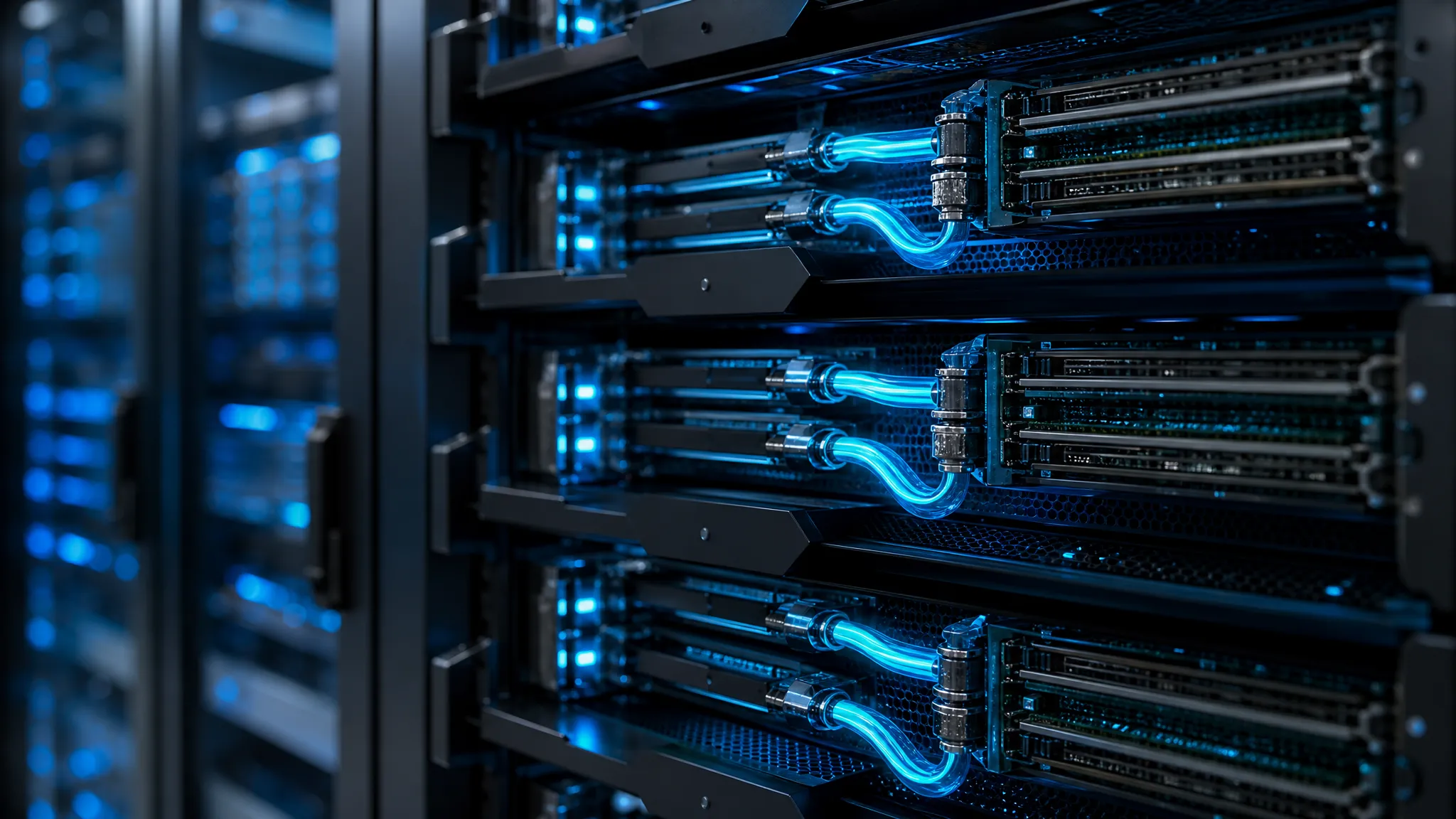
A full Maia 300 rack holds 96 accelerators. Microsoft says that configuration reaches up to seven times the token throughput of a comparable Maia 200 rack, and runs inside a 167 kW power envelope.
Token throughput matters because tokens are the basic unit of text, images, and other data that a model processes. More tokens per second means more concurrent requests served from the same hardware.
Each accelerator carries eight stacks of HBM4 memory, the fourth generation of high-bandwidth memory built for AI workloads. Across the rack, that adds up to 27.6 TB of HBM capacity and 1.7 PB/s of aggregate bandwidth. Microsoft says the memory bandwidth is 2.5 times that of Maia 200, with 33 percent more capacity.
The design splits compute, memory control, and input/output into separate chiplet dies. The main compute die uses TSMC's N2P process. The chip also supports a lower-precision math format that trims memory needs for both model computations and key-value cache, which is the fast storage a model keeps while it works through a prompt.
The 40 Percent Efficiency Claim Microsoft Is Making
Microsoft says Maia 300 can produce roughly 40 percent more tokens per megawatt than leading GPU-based systems. That figure comes straight from the company and hasn't been tested by outside parties.
Treat it as a vendor claim for now. No independent lab has run these racks, so there's no third-party number to check the 40 percent against. The same goes for the seven-times rack comparison, which Microsoft hasn't broken down with a published benchmark.
The efficiency angle matters because power, not chips, is becoming the binding constraint on AI data centers. If a rack really does wring 40 percent more work out of the same electricity, that changes both the operating cost and how much hardware a campus can physically support.
Maia 300 isn't Microsoft's first attempt. Maia 100 arrived in 2023 on TSMC's 5nm process, and Maia 200 followed in January 2026 on 3nm. Maia 200 is already running production workloads, including Microsoft Copilot, and is deployed in the US, Europe, and Australia. GitHub Copilot and Microsoft Foundry are set to come on board by the end of the year.
Why Microsoft Is Building Its Own AI Chips
AI has run on Nvidia GPUs almost by default, and those GPUs still power training for labs like OpenAI and Anthropic. Building custom silicon lets a cloud provider cut its dependence on a single supplier and tune the hardware for its own traffic.
Microsoft's move fits a broader pattern. Amazon, Google, and Meta have their own chips, and OpenAI and Anthropic are working on custom designs too. The goal across all of them is the same: less exposure to outside suppliers and hardware shaped around a specific business.
That doesn't mean an exit from Nvidia or AMD. Microsoft says it will keep using third-party chips, and its Surface devices still carry Nvidia silicon. The realistic reading is that Microsoft wants negotiating room, not a clean break.
There's a timing question worth watching. Analysts at Evercore ISI expect Maia to account for about 10 percent of Microsoft's AI chip spending by the first quarter of 2027, according to a client note cited by Chinese tech outlet The Paper. That's a meaningful share, but it leaves most of the spend elsewhere.
What Maia 300 Means If You Use Azure or Copilot
For most people, the chip underneath Copilot is invisible. What shows up is cost and speed. If Microsoft's own silicon is cheaper per token than renting GPU time, does that reach you as a lower bill or just a fatter margin? That's the part Microsoft hasn't spelled out.
For developers and businesses building on Azure, the practical question is when Maia-backed capacity becomes available and at what price relative to GPU-backed options. Microsoft hasn't published those numbers yet.
The next real checkpoint is 2027, when the racks ship and third parties get to measure them. Until then, the specs and the efficiency claim stand as Microsoft's own figures, and the deployment timeline is the firm part of the announcement.