Dek: PyTorch fills billions of empty weights with random numbers, and the GPU doing the filling leaves a mark in the finished file. Someone checked six Chinese checkpoints and found newer silicon than the rules allow.
How Blackwell fingerprints survive training
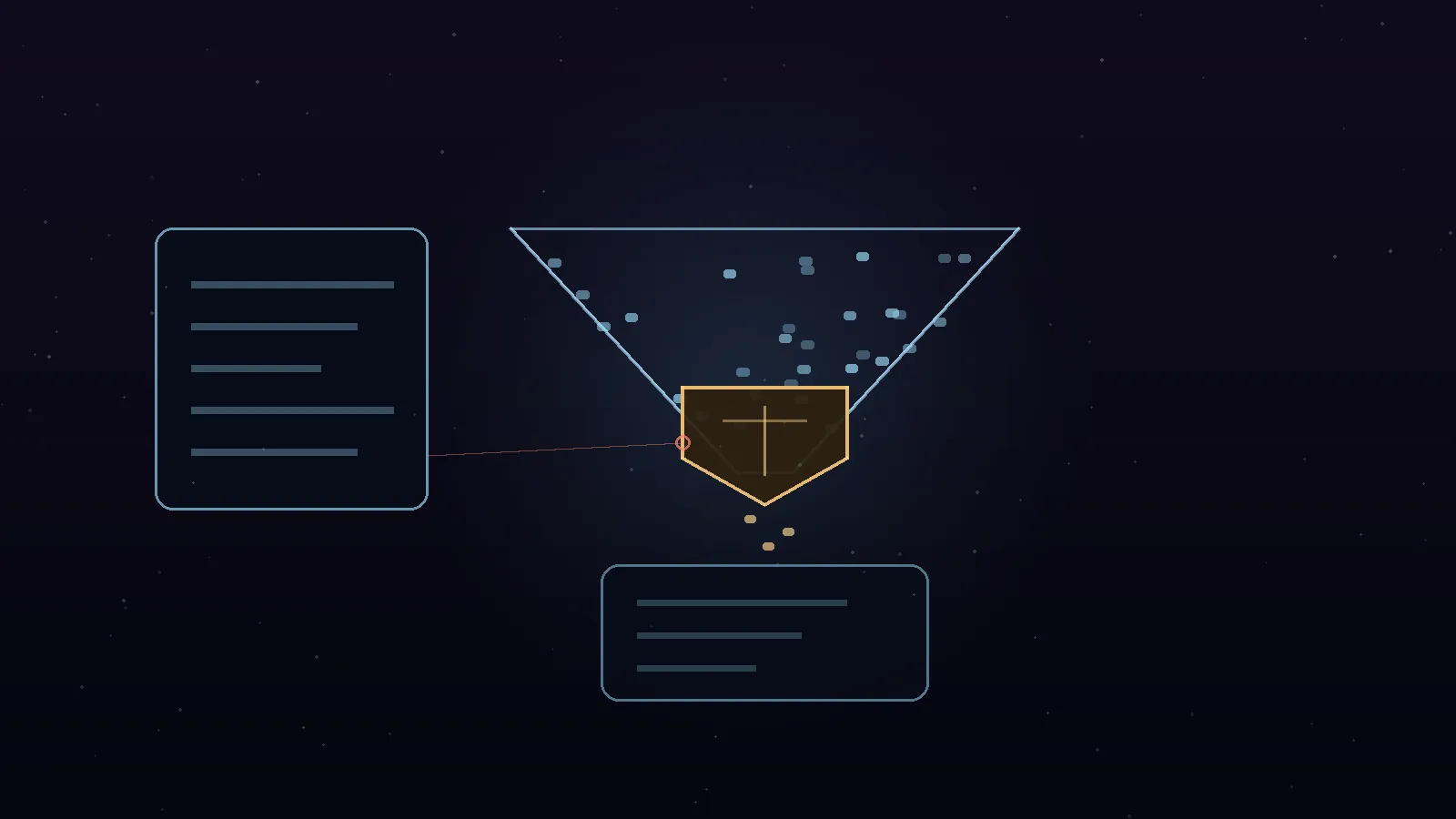
Before training starts, PyTorch fills billions of empty weight slots with random numbers drawn from a seed. The GPU spreads that fill across its cores, and the number of cores shapes how the work gets split, which leaves a statistical pattern in the finished checkpoint.
Most of those slots never receive a useful value. Models are built to shapes that divide neatly across cores, so plenty of weights stay close to their starting numbers, and a faint echo of the original distribution survives all the way into the published file.
That's the entire forensic. It needs no data center access, no informant and no supply-chain records. Anyone holding the checkpoint can run the same test, which is why the analysis published this week is worth reading even if you end up disagreeing with its conclusions.
A checkpoint, for anyone who has never downloaded one, is the file a lab publishes when it releases weights: billions of numbers plus the code to run them. It's the artifact, not a description of the artifact, and that's what makes it testable.
Will DePue, a former OpenAI researcher who now leads the nonprofit Unemployment Labs, published the analysis and the verification code, and announced it on X.
Core counts that separate Blackwell from Hopper
The pattern is tied to how many compute cores did the initialisation. Hopper H100 and H800 parts use 132, Blackwell B200 and B300 use 148, and the liquid-cooled GB200 and GB300 systems use 152.
Three numbers, each mapped to a generation of hardware.
This isn't a serial number, and it can't identify a specific card. It's a fingerprint of a manufacturing configuration, closer to identifying a printer model from its dot pattern than to reading a license plate. That limit matters, and it comes back later.
Which checkpoints carry the DeepSeek Blackwell signature
DePue says six Chinese models released since April 2026 carry Blackwell signatures. Older work doesn't: DeepSeek-V3 and Kimi K2.5 show Hopper traces.
The mapping puts DeepSeek-V4-Flash and MiniMax-M3 on 148-core B200 or B300 parts, and DeepSeek-V4-Pro, Kimi K3, Kimi K3.1-Pro and Ant Group's Ling-3.1-flash on 152-core GB200 or GB300 systems.
Other Chinese labs still look like Hopper in the same analysis, including Alibaba's Qwen3.8, Zhipu, Tencent, Xiaomi and StepFun. Meituan's LongCat-2.0 points at Huawei hardware instead.
Hopper, or Huawei.
So the picture isn't "China has Blackwell." It's six specific checkpoints from a handful of labs, with the rest of the field on older silicon or domestic chips.
The control test that backs the Blackwell claim
The strongest part of the work is the control set. DePue says the method correctly identified all 24 models whose hardware is known, including Meta's Llama 3.1 on H100.
He also says he reproduced the DeepSeek-V4-Flash and Kimi K3 results on real Blackwell chips, which is the difference between a statistical hunch and a measurement.
He says senior researchers at OpenAI and Anthropic independently checked the findings. That's his account. Neither company has confirmed it publicly, so file it as a claim rather than an endorsement.
Why Nvidia smuggling evidence stops at the data center door
The hard limit is location. The method shows which hardware initialised the weights, and it can't show where that hardware sat or who owned it.
Rented capacity outside China would produce an identical signature. A lab with a Singapore or Gulf contract could train on Blackwell and publish a checkpoint that looks exactly like these ones. DePue says the evidence doesn't by itself prove smuggling or an export-law violation, and that's the correct reading.
The scale is still startling. He estimates about 12,000 Blackwell GPUs across the five training runs, roughly equal to 30,000 H100s. Kimi K3 alone looks like 4,500 processors over about 70 days, with DeepSeek-V4-Pro near 3,000.
At roughly $70,000 a unit, that's $200 million to $300 million per cluster, and more than half a billion dollars across the five systems. Money that large is hard to move quietly, which is what makes the offshore-rental explanation plausible rather than comforting.
What export controls China policy does next
The rules in place aren't subtle. Blackwell exports to China and to Chinese-owned firms are banned, according to TechCrunch, while the H200 can be exported under routing requirements that let the US claim a 25 percent tariff.
Enforcement is the weak point. Epoch AI estimates about two million advanced chips entered China in 2024 and 2025, including 275,000 Nvidia accelerators shipped to Malaysia, a route that reads like a staging post.
Politically, the ground is already prepared. White House technology adviser Michael Kratsios said earlier in 2026 that Moonshot used export-banned Nvidia chips, citing US intelligence. Bloomberg reported banned chips installed at a Shanghai data center linked to Alice Huang. Nvidia has told lawmakers that tracking chips is technically feasible, which is a different statement from admitting that anything was sold.
So why hasn't an enforcement agency run this test? Ask that question at the next hearing and watch what happens.
What the analysis changes is the cost of denial. A checkpoint is a public document, and a public document can be tested. If the method holds up under independent review, the question for regulators stops being whether Blackwell reached China and becomes how many runs they can identify. Narrower, and much harder to answer with a press release.