Dek: In private technical talks, the company's people said the tracking was possible. In public, its industry association called the same mandates unproven. Both statements are on the record now, and only one of them was written down.
Two Nvidia Chip Tracking Answers, Six Months Apart
MIT Technology Review reported on 12 November that Nvidia's representatives told Representative Bill Foster, an Illinois Democrat on the House Committee on Science, Space and Technology and a cosponsor of the bill, that the anti-smuggling measures in the Chip Security Act would be technically possible to implement. He gave the interview himself.
He said Nvidia never put anything in writing. In technical discussions, their reaction was along the lines of "yeah, of course we can do this".
Nothing in writing.
Compare that with March, when the Semiconductor Industry Association told Congress the bill's tracking mandates were new, untested and potentially infeasible. Nvidia is a member of that association. The filing carries the association's name, not the company's, and the association speaks for a group rather than for one member.
What the Chip Security Act Would Actually Require
The bill was introduced in May 2025 and would add geotracking requirements to verify where advanced AI chips end up, with the stated aim of stopping smuggling to China. It's one of three chip-security bills under consideration for inclusion in the Senate's National Defense Authorization Act.
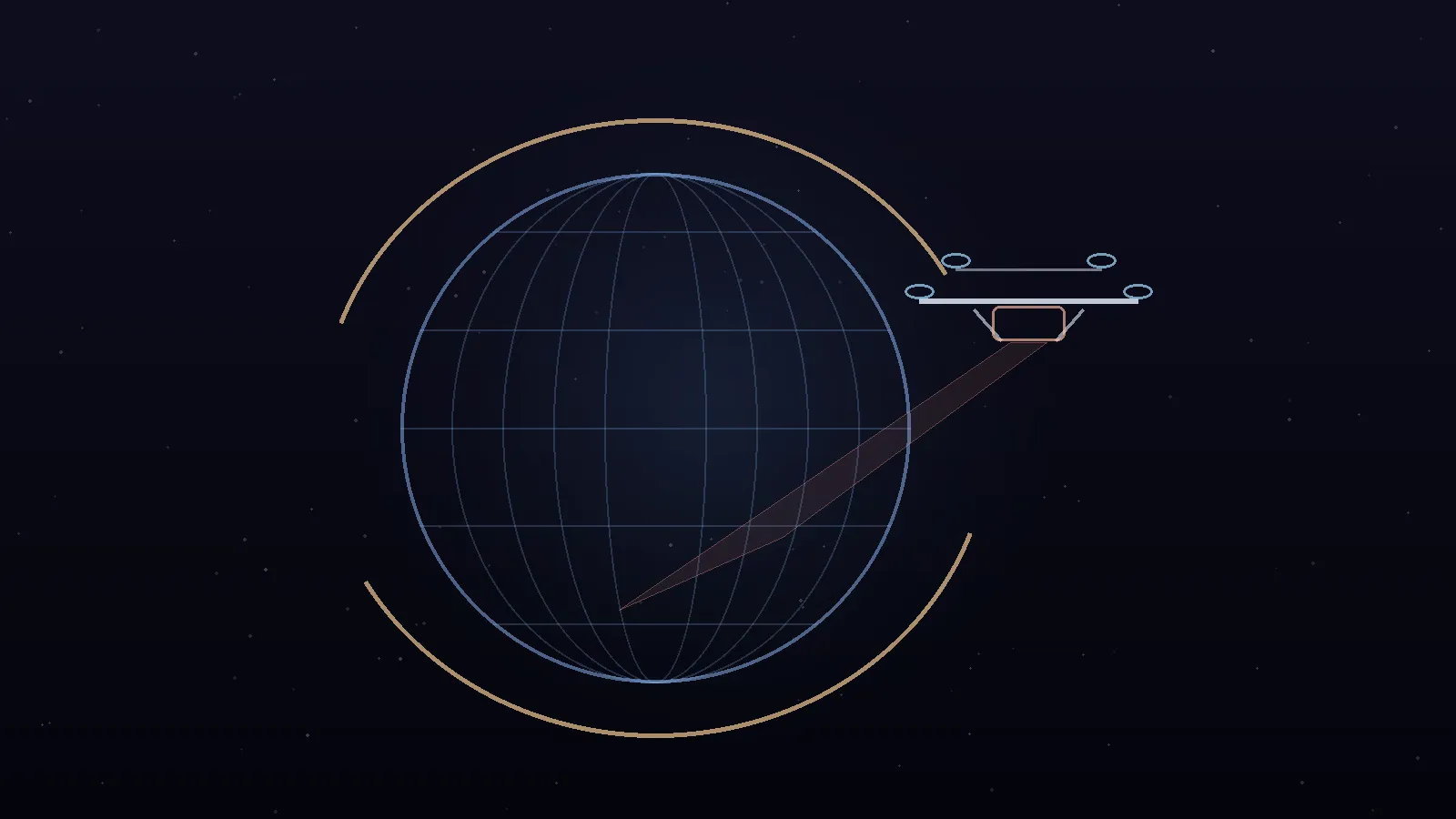
As drafted, the act offers three routes to that verification. It doesn't require all three. Facility inspections put people on the ground. Company attestations rely on paperwork signed by the exporter. Ping-based location has the GPU announce where it sits whenever it powers on.
The third option is the one that matters, because a ping is hard to fake from a warehouse in another country. In September, Georgetown's Center for Security and Emerging Technology looked at the options and found ping-based tracking the most cost effective.
That finding is why the private answer from Nvidia's engineers carried weight. The technical question was never really open. That's the part that matters.
Fleet Intelligence Already Does Part of the Job
The private claim looks less surprising once you look at what the company already sells. In December 2025 Nvidia announced Fleet Intelligence, optional software for managing data-centre hardware that lets customers watch how chips perform across locations.
Nvidia confirmed to Reuters that the tool could indicate which country a chip was in. It wouldn't say whether it could prevent smuggling, and those are different questions with very different answers.
Knowing where a device is doesn't let you stop it. A location signal that a customer can see is a monitoring feature. A location signal that a regulator can act on is an enforcement system, and building the second one changes the relationship with every customer who buys the first.
That gap is where the whole argument lives. Why would a company that can do a thing argue in public that the thing can't be done? Because doing it voluntarily, for customers, is a feature. Being required to do it, for customs officials, is a compliance burden with a sales cost attached.
The 'Drop in the Bucket' Line Nvidia Gave Reuters
Ask Nvidia directly and the answer gets blunter. In early October, when Reuters asked whether Fleet Intelligence could be used against AI chip smuggling, the company declined to answer and sent a statement instead.
Governments and media have found insignificant diversion of controlled US products, the statement said, a drop in the bucket compared with the domestic compute China already has.
That's a claim about scale, and it's doing a lot of work. If the leakage is small, the argument goes, the machinery required to stop it costs more than the problem. Small is doing a lot of work there. Nvidia didn't respond to requests for comment on the congressman's account of the private conversations.
There's a second reading, which is that a company describing its own enforcement gap as small isn't a neutral source on the size of the gap.
Why AI Chip Smuggling Enforcement Got Loud Again
Three things pushed the issue back into the room this month. The first is the Senate defense bill, which is the vehicle all three chip-security proposals are trying to catch.
The second is Jensen Huang's resignation, and the affair with an alleged Chinese spy that preceded it. Every chip bill in the pile now has a news hook attached.
The third is Megaspeed, the Singaporean firm under investigation for smuggling advanced GPUs to China. Alice Huang, the woman reportedly involved with Jensen Huang, runs it. A US Commerce Department inquiry into the company was reportedly halted after Nvidia intervened, and Megaspeed reportedly bought its chips from Supermicro. Halting an inquiry isn't closing one.
Our own reporting on the checkpoint forensics that traced export-banned chips inside Chinese model weights landed on 14 November and doesn't need repeating here. What matters for this story is the political effect: the technical case that chips could be tracked has stopped being hypothetical.
What Comes After the Chip Security Act
The current bill has a limit its cosponsor is happy to describe. It would reveal where chips are. It wouldn't give anyone a way to disconnect a smuggled one.
So he intends to introduce stricter legislation that would require a licence to operate an advanced GPU, verified before the chip can connect to anything. That's a different kind of law: not a locator but a switch, and one that assumes a registry of who is allowed to run what.
He also expects pressure to do the job without new statutes. There will be a lot of political pressure on companies to do a very good job of geographic validation after recent events, he said.
Which puts the next move with the companies rather than with Congress. Nvidia could ship the ping, publish the numbers and make the bill look redundant. Or it could keep answering questions about tracking with a statement about how little needs tracking, and let a licensing regime get written for it.