
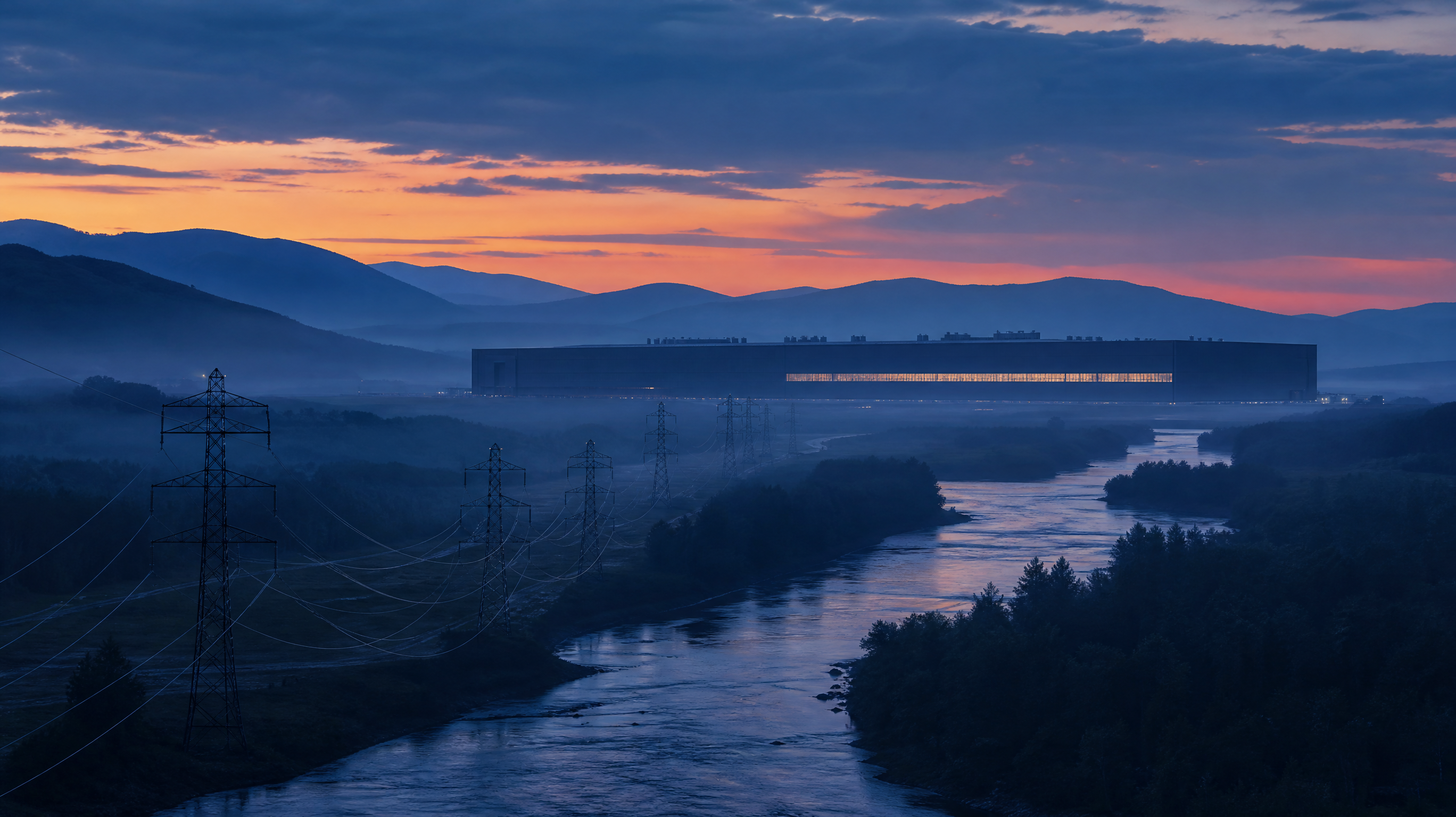
Nvidia is reportedly negotiating to guarantee billions in debt for a cloud provider building a 460 megawatt data center that Anthropic plans to fill. Nobody involved has confirmed it.
What The Information Reported
On October 29, The Information reported that Nvidia is in talks with Nscale, an AI cloud provider, to provide credit guarantees on several billion dollars of debt. Reuters and Bloomberg followed the same day, citing the same reporting.
The debt would fund a 460 megawatt data center: the second building at Nscale's Monarch campus in West Virginia. Anthropic intends to use that capacity under a compute agreement worth roughly $45 billion. Bloomberg reported earlier this month that Anthropic was in late-stage talks on that deal. The site runs Nvidia's next-generation Vera Rubin chips.
The size of the guarantee hasn't been disclosed. No agreement has been signed. Terms can change, and in deals of this shape they usually do.
The Site Microsoft Walked Away From
The Monarch location has a history. Microsoft signed a preliminary letter of intent for the site in March, then withdrew. Anthropic picked it up.
That detail is small but telling. The physical constraints of a data center, power, land, cooling, permits, don't change when the tenant does. What changes is who's willing to underwrite the risk and at what price.
Nscale's public filings show Anthropic's existing infrastructure commitments at close to $45 billion, so the West Virginia build belongs to an established relationship rather than a new customer.
Nscale's IPO and Nvidia's Stake
Nscale publicly filed for a US IPO in September, targeting a valuation around $30 billion. It recently closed roughly $3.4 billion in pre-IPO funding led by Third Point, with Nvidia among the investors.
That stake is the detail that makes the guarantee story cohere. A supplier that has already taken equity in a customer has an interest in that customer's cost of capital. Debt guarantees lower borrowing costs, and lower borrowing costs let a company build faster than its cash flow would otherwise allow.
Three Roles on One Balance Sheet
If the guarantee happens, Nvidia occupies three positions at once: it sells Nscale the chips, it owns part of Nscale, and it stands behind Nscale's debt.
Each role is normal alone. A supplier taking equity in a key customer is common. A strategic investor helping a portfolio company finance a build is common. All three at once, on one counterparty and one 460 megawatt project, is where the structure starts to draw questions.
The concentration matters more than the size. A guarantee spread across twenty customers is a portfolio. A guarantee concentrated on a single building tied to a single customer's commitment behaves more like a bet.
The Circular Financing Question
This isn't the first time the pattern has surfaced. In September, Anthropic signed a $35 billion compute agreement with Lambda, another cloud provider that also depends on Nvidia hardware and also counts Nvidia as an investor. Critics described the arrangement as Nvidia underwriting demand for its own chips.
Nvidia's CFO has said the company views these arrangements differently. The general argument from the company's side is that investing in customers who then buy your products is how strategic investment has always worked in hardware, and that calling it circular misunderstands where the demand originates.
What Backers and Critics Each Get Right
The case for the structure is straightforward. A supplier sitting on a very large cash position can guarantee debt more cheaply than a young company can borrow on its own. That lowers the cost of the build and brings committed capacity online sooner, which benefits the customer who signed the $45 billion agreement and the users waiting on that capacity.
The case against is equally straightforward. A guarantee puts Nvidia's balance sheet behind a smaller, highly leveraged company. And part of the revenue flowing through that company may depend on financing Nvidia helped arrange, which means the demand signal is partly generated by the supplier reading it.
Both descriptions fit the facts. Which one matters more depends on what happens if the build runs late, if Anthropic's appetite shifts, or if chips arrive on a different schedule than the debt requires.
Why the Debt Market Is Watching
Morgan Stanley has flagged rising AI-related debt issuance and widening credit spreads on data center bonds as a major source of pressure on equities in the coming weeks.
That's the climate this deal lands in. Every new guarantee is a new data point about how much of the AI buildout is financed by the vendors selling into it. Lenders and rating agencies will price that in, one way or another, and the pricing will show up in the next deal before it shows up in a headline.
The IPO angle cuts both ways. Nscale's offering could benefit from a supplier standing behind its debt, which is one reason to read the prospectus closely. Investors will want to know how much of Nscale's revenue depends on companies that also invest in Nscale, and how those contracts are structured if the chips slip.
What Would Make This Real
Three things would move this from report to fact: a signed agreement, a disclosed guarantee size, and confirmation from any of the three companies. None has happened.
Until then, the accurate description is a negotiation between a chip supplier and a cloud provider over who carries the risk on a very large building. The building is real, the chips are real, and the customer's intent is real. The balance sheet question is still open.