
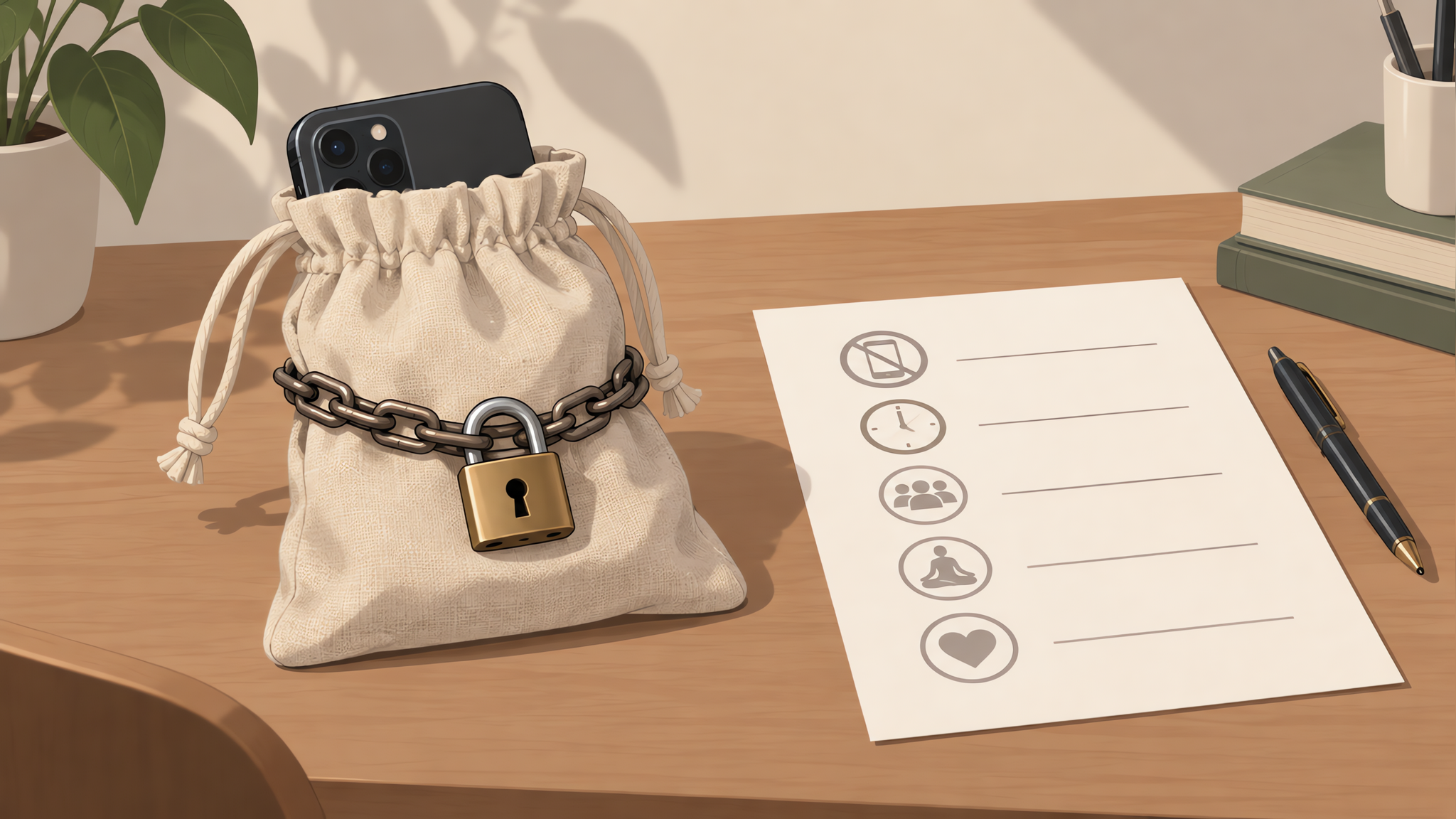
Students use AI for homework every day, but schools still can't agree on what counts as cheating. Some districts are answering with phone bans that lock devices away from bell to bell.
Why schools can't agree on what AI cheating is
Walk into two high schools and you may get two different answers to the same question: is using AI on an assignment cheating? Many districts still don't have a clear rule, and where rules exist, they often leave the hard cases open. Arlington Magazine put the problem bluntly: a student who wants to cheat can still get away with it by doing the bare minimum to disguise it.
That gap is the real story. AI tools are now common enough that teachers assume students use them, but the policy language hasn't caught up. A rule that says "no plagiarism" doesn't obviously cover a student who asks a chatbot to outline an essay, writes the essay themselves, and never copies a sentence. Is that cheating? Depends who you ask.
When the rules are fuzzy, the outcomes get unfair. A student who discloses that they used AI for brainstorming might get flagged, while a classmate who hides heavier use slides by. That's a problem of enforcement, not just ethics.
The bell-to-bell phone ban and Yondr pouches
Some districts have stopped trying to police AI use directly and gone after the device instead. Arlington Public Schools, following state guidance, adopted a bell-to-bell phone ban, per Arlington Magazine. The phrase means exactly what it sounds like: phones are out of reach from the moment class starts until dismissal.
The enforcement tool of choice is a pouch made by a company called Yondr. Students drop their phones into the pouch, which seals magnetically for the day. They keep the pouch with them, but they can't open it until the school unlocks it at the end of the day. No willpower required, and no phone.
One district is the small version of this story. New York State passed a bell-to-bell smartphone restriction signed into law by Governor Kathy Hochul, and it took effect for the 2025-2026 school year. Across the country, dozens of states have enacted or signed policies limiting student phone use, some covering only instruction time and others banning phones all day.
What a phone ban can and can't fix
A pouch solves one problem and creates another. It removes the phone as a distraction and as an in-class cheating device, and teachers in districts that adopted the rule say enforcement got easier. The downside is cost and logistics. One Indiana district spent $420,000 in the first year on Yondr pouches, plus $120,000 for replacements from another brand, according to local reporting.
Locking up phones also doesn't address AI use on a laptop or a school-issued tablet, which is exactly where most homework happens. A student can write an essay on a Chromebook with a chatbot open in another tab just as easily as on a phone. The ban narrows one channel; it doesn't close the rest.
That's why the device approach and the policy approach have to work together. A phone ban without a clear academic integrity rule just moves the problem to the next screen.
How schools can set an AI policy that works
The districts getting this right tend to do the same few things. They define what AI use is allowed, in plain language, by assignment type. They tell students when disclosure is required, so a student who uses a chatbot for research knows to say so. And they train teachers to spot AI writing without turning every essay into a courtroom.
None of that's glamorous, and none of it is a single product you can buy. It's the unglamorous work of writing rules that students can actually follow. The alternative is what many schools have now: an informal patchwork where some teachers allow AI, some quietly forbid it, and students guess at the boundary every time.
For parents, the practical question is worth asking directly at back-to-school night. Does this school have a written AI policy, and does my kid know what it says? If the answer is vague, that's the gap cheating thrives in.
What parents and students should watch next
The policy question is moving faster than most districts can keep up with. More states are passing phone restrictions, which means the device side of the equation is getting clearer even as the AI side stays muddy. Watch for districts that publish specific AI rules by assignment type, and for teacher training that goes beyond detection software.
The honest takeaway: a locked phone pouch is easy to understand and easy to enforce, which is why it's spreading. A coherent AI honesty policy is harder, slower and less visible. Schools that only do the first will keep discovering that cheating found a new door.