Dek: The new flagship reuses a block of layers instead of adding fresh weights, and Z.ai says that puts it level with models two to three times its size. The evidence so far comes from a much smaller stand-in.
GLM-5.4 is a 750B model that runs 28 layers twice
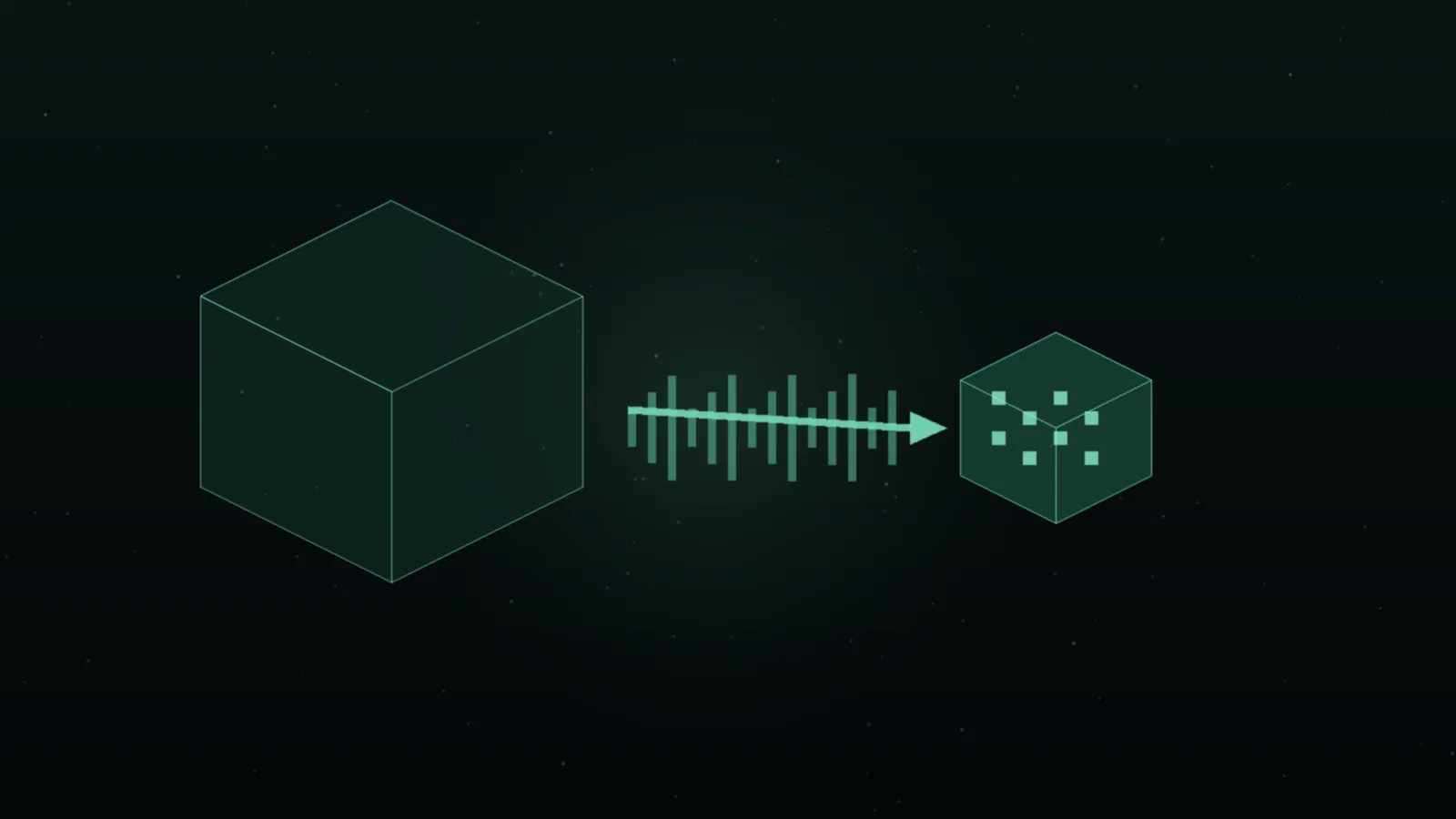
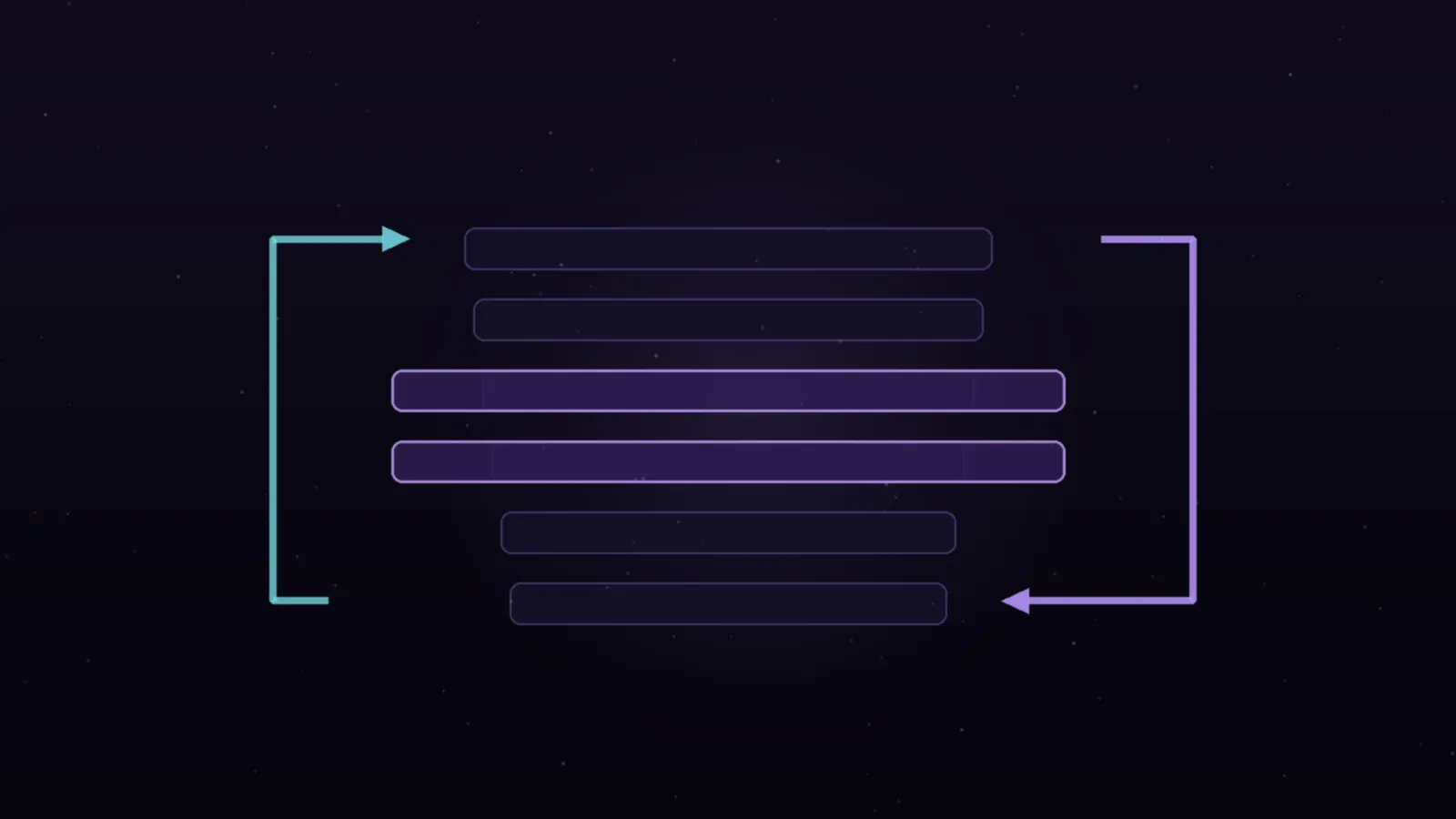
Z.ai introduced GLM-5.4 on 23 November, and the headline figure is 750 billion parameters. The number that explains the release is 28. That's the size of the block, layers 27 through 54, that the model runs twice on every forward pass.
A forward pass is one trip through the network to produce the next token. Taking part of that trip twice costs compute and buys depth, and depth normally comes from parameters. This model gets the extra pass without a second set of weights.
Z.ai says GLM-5.4 performs at the level of models with 2 to 3 trillion parameters. Nobody outside the company has verified that, and the benchmarks the company did publish come from somewhere else entirely.
What a loop transformer buys you, and what it costs
A standard model uses each layer once. More depth means more layers, and more layers mean more parameters to train, store and serve.
A loop transformer reuses a shared block and refines the intermediate result on the second pass. Same weights, more computation per token. The idea isn't new: the Universal Transformer spelled it out in 2018, and a March 2026 study from Bonn found that looping helps math more than stored knowledge. That split fits the design. Repetition sharpens a calculation, and it can't add a fact the model never learned.
The cost is real. Z.ai trained its test model with about 10 percent more compute, so looping buys depth with GPU hours rather than with memory. Anyone who hoped this was a free lunch should read the training note twice.
The activation problem GLM-5.4 solves with per-pass gates
Here's the engineering problem nobody mentions in the announcement. Run a block twice, overwrite the intermediate state on the second pass, and the activations keep growing. Later layers then see values outside the range they were trained on, and quality collapses in a way that looks like a bad checkpoint.
GLM-5.4 uses dedicated gates for each token and each pass to control how much new output flows back into the data stream. In practice the first pass builds context cautiously, the second writes changes back in full, and the first pass steps in more strongly on difficult tokens. The model decides per token how hard to think on the way through.
That's a control problem, not a scaling trick, and it explains why looped models stayed a research curiosity for years.
Shared KV cache and sparse attention inside GLM-5.4
Two passes could double the memory bill. Z.ai avoids that by sharing the KV cache between them, which is the store of key and value vectors the model keeps for earlier tokens. The second pass adds extra values only in a small local window.
Sparse attention does the rest. The model picks the relevant earlier tokens once, and the second pass reuses that selection instead of recomputing it. Z.ai says this keeps overhead manageable at a 1-million-token context.
Speed claims are 200 tokens per second off-peak and 70 to 80 under load. Those are vendor figures, measured on the company's own serving stack, and peak-hour numbers on a shared API tend to look different.
The 30B test model behind the GLM-5.4 numbers
Z.ai published architecture evidence from a 30B model with the same design and about 10 percent more training compute. The three deltas below are the whole case for looping, and they're worth reading carefully.
Test | 30B baseline | 30B looped |
|---|---|---|
AIME25 | 19.2 | 30.4 |
GPQA-Diamond | 47.6 | 56.3 |
AA-LCR | 40.3 | 47.7 |
AIME25 is a competition math set, GPQA-Diamond is graduate-level science, and AA-LCR tests long-context reasoning. Math moved the most, which lines up with the Bonn finding. MMLU-Pro and IFBench gained about three points, a smaller lift on tasks that lean on knowledge.
The looped model also wrote shorter answers, by 14.9 percent on MMLU-Pro, 11.7 percent on GPQA-Diamond and 2 percent on AIME25. Fewer tokens for a better score is the outcome you want from extra depth.
What Z.ai hasn't published about GLM-5.4
No 750B scores. No third-party test. No token pricing, no weight release date, and no size for the larger model the company teased in the same post.
Z.ai does name one weakness: GLM-5.4 can get stuck in overly long reasoning phases, burning tokens while it rechecks work. The company argues the extra checking improves accuracy, which is a fair point and also the kind of trade-off that shows up on an invoice.
So the honest read is narrower than the launch copy. A 30B model with this architecture beats its own baseline, clearly on math. Does that prove the 750B version lands near a 2T model? It doesn't, and only someone with a cluster and a weekend can settle it.
GLM Coding Plan, ZCode and the Generalized Coding pitch
You can reach GLM-5.4 through the glm coding plan, the ZCode coding environment and Z.ai Chat. An API is coming, and weights will follow further safety testing.
Z.ai frames the release as the start of "Generalized Coding" and shows a music video, a six-axis robot arm designed in FreeCAD, a game and an interactive 3D scene. Treat the demo reel as colour. The coding plan is the part with a price attached, and that price hasn't been announced.
For a team choosing a coding assistant this quarter, the practical move is to test GLM-5.4 on your own repository through ZCode and keep a second provider warm. Architecture stories are cheap. Reproducible numbers on your own codebase aren't.