

IP Portal
The Data Foundation (formerly Story) · Business
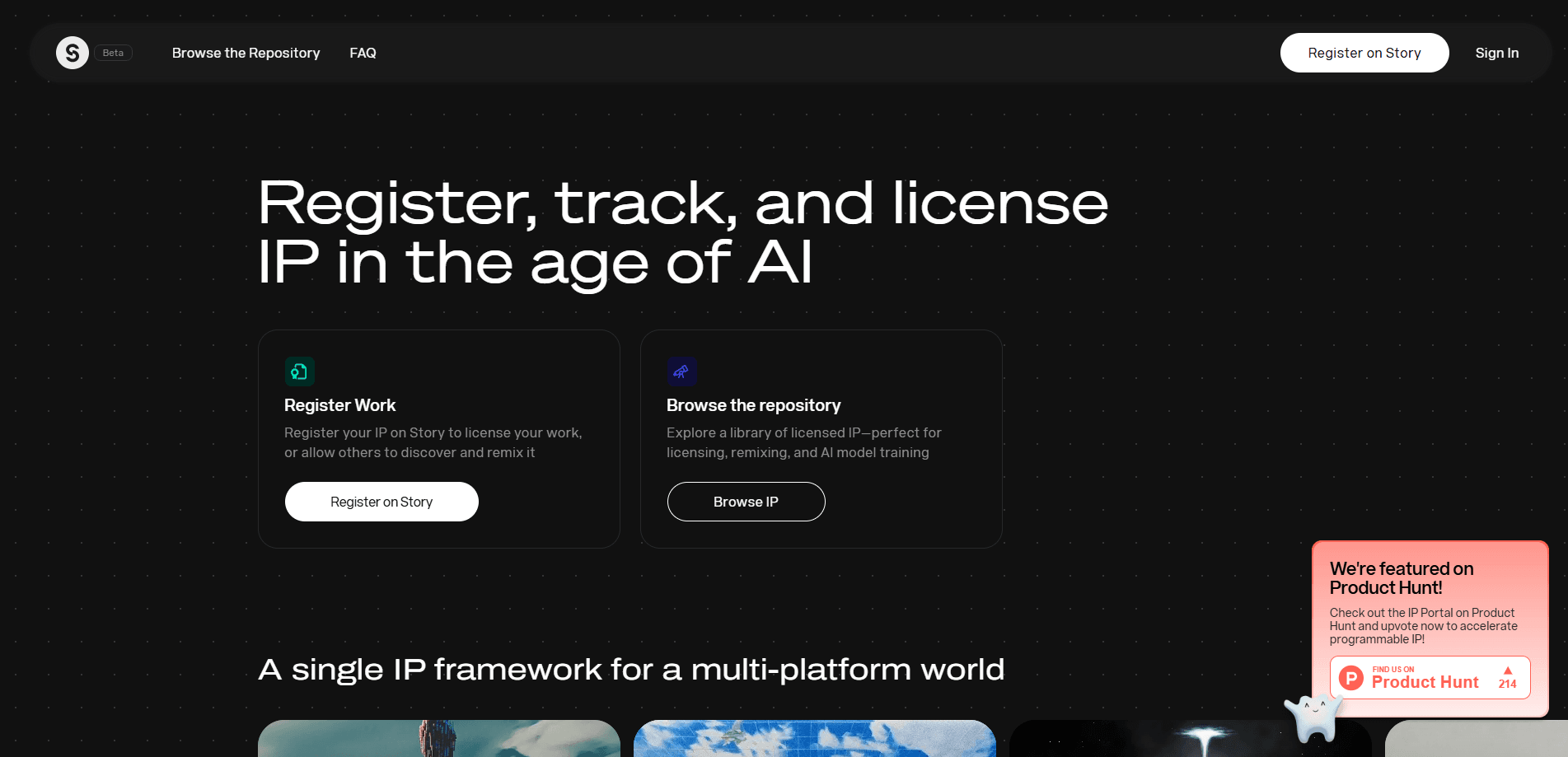
IP Portal is Story's free on-chain tool for registering creative work, setting licensing terms, and earning royalties from AI training. Creators monetize work and protect ownership without a lawyer.
About IP Portal
What Is IP Portal
IP Portal is the consumer gateway to Story, a Layer 1 blockchain built specifically for intellectual property. Instead of treating a song, a design, or your own likeness as a file you email to a lawyer, it turns each piece of work into a registered IP Asset with a public ownership record and its own set of usage rules.
The problem it targets is familiar to anyone who creates. Traditional IP systems are slow, expensive, and hard to read, so most independent creators never bother protecting their work at all. If you want to register IP on-chain, IP Portal compresses that whole process into a guided wizard that finishes in minutes and costs nothing to use.
The catch is that the value depends on other people opting into the same system. A license only pays off when someone wants to use your work and agrees to your terms, so creators with no audience may register work and see little activity. It's also a crypto product at heart, which means you need a digital wallet to hold and manage your assets.
Getting Started
- Create a wallet and connect it to IP Portal at portal.story.foundation.
- Upload the work you want to protect, such as art, music, or a dataset, and let the wizard register it as an IP Asset.
- Pick your Programmable IP License terms, covering commercial use, remixes, and attribution.
- Publish the asset so others can browse it, or list it for licensing and AI training.
- Collect royalties automatically when someone licenses or remixes your work.
Product Information
A quick look at IP Portal's pricing, supported platforms, and performance.
Best for
The users, tasks, and scenarios where this tool fits best.
Users
- Independent artists and illustrators
- Musicians and producers
- Writers and photographers
- AI and data contributors
Tasks
- Registering a new creation
- Setting licensing terms
- Earning royalties
- Discovering and remixing IP
Scenarios
- Launching a character or brand you want to license out to others
- Sharing training data with AI companies on your terms
- Collaborating across borders
Key features
On-Chain IP Registration
You upload a file and the wizard turns it into an IP Asset, an ERC-721 token that stands as a public record of who owns what and when. That record lives on the blockchain, so it can't be quietly edited or lost. Registration takes seconds and costs no platform fee.
Programmable IP License
The Programmable IP License is a ready-made legal framework based on US copyright law. You set the permissions, such as whether others can use the work commercially, remix it, or profit from derivatives, and those terms attach to the asset itself. It's the difference between a vague handshake and rules everyone can read.
Automatic Royalties and Revenue Sharing
Every license can carry a royalty rate, and payments flow to the rights holders automatically when the work gets used. If someone remixes your asset, the original creator still earns from the result. That's the part traditional licensing rarely gets right for small creators.
Optional AI Training Opt-In
Creators can choose to let their work be used for AI training and set their own price for it. Because the terms sit on-chain, an AI company can check them and pay without a back-and-forth negotiation. Opting in is a choice, not a default.
Browse and Remix With Attribution
The portal doubles as a marketplace. Anyone can browse registered assets, license what's available, and build on it. Attribution and revenue splits for the original creator are built into the remix flow, so credit and payment aren't left to goodwill.
Wallet-Based Ownership and Control
Your IP Account is a smart contract tied to your wallet, holding the metadata and licenses connected to your asset. You keep the keys, which means no platform can lock you out of your own work or freeze your earnings.
Pros and cons
Pros
- Free to register, license, and remix, with no platform take rate on what you earn.
- Licensing and royalty terms settle through smart contracts in minutes instead of weeks of legal back-and-forth.
- AI training participation is opt-in, so consent and payment come first.
- Remixes route attribution and revenue back to the original creator automatically.
- The ownership record is public and tamper-resistant, which helps in disputes.
Cons
- You need a crypto wallet to use it, which is a real barrier for people outside Web3, even when you just want to monetize your work.
- A license only earns money when others choose to license your work, so results depend on demand and reach.
- On-chain transactions can involve network gas fees, and the platform doesn't cover them for you.
- The legal weight of an on-chain license may not be recognized everywhere, so high-stakes deals still call for a lawyer.
Frequently asked questions
IP Portal is used to register creative work on the Story blockchain, set your own licensing terms, and collect royalties when others use or remix it. It replaces the slow, expensive steps of traditional IP protection with a guided web wizard.
Related content
Explore related tools, skills, and articles for IP Portal.
IP Portal Alternatives

Claude for Google Workspace
Anthropic · Writing · Productivity · BusinessClaude for Google Workspace puts Claude in a sidebar inside Google Docs, Sheets, and Slides, where it reads the file you have open and edits it in place.

KloudMate 2.0
KloudMate · Coding · BusinessKloudMate 2.0 is an AI observability platform that keeps logs, metrics, traces, and incidents in one place, with KloudMate Assistant investigating alerts and proposing the fix.
Cekura Bench
Cekura · Voice & Language · BusinessCekura Bench is a public benchmark that runs speech-to-speech models and deployed voice agents through 82 simulated phone calls, three times each, then publishes pass rates, latency and cost.