

OpenHouse.ai
OpenHouse.ai · Business
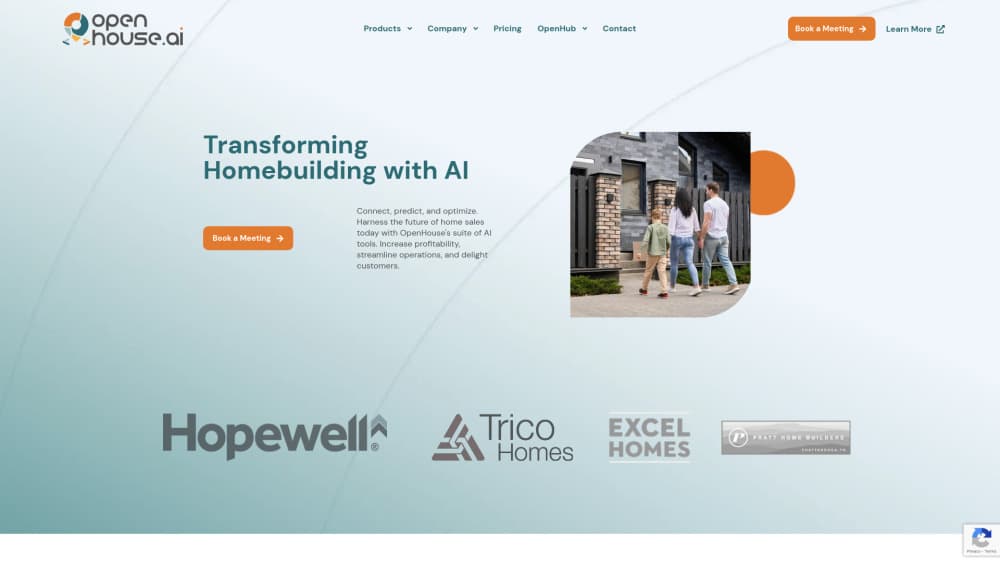
OpenHouse.ai is decision intelligence software for homebuilders. It watches community-level pricing, traffic and sales signals, explains what changed, and suggests the next move.
About OpenHouse.ai
What Is OpenHouse.ai
OpenHouse.ai is homebuilder software that sits on top of the systems a builder already runs. It pulls sales, traffic, pricing, and incentive data into one place, then looks for changes at the community level rather than at the company average. The point is timing. A division usually learns about a slowdown from a monthly report, and by then the pricing window has closed.
The product comes in two parts. OpenPredict is the always-on platform: it detects shifts in pace, buyer behavior and pricing power, then tells sales, marketing, and operations what to do about them. Applied Intelligence is a small consulting team that builds custom models for executives. The work ranges from cancellation risk to starts planning to cash flow scenarios under different market conditions.
The limit is scope. This is built for new home construction, not for resale brokerages, rentals or commercial property. Small builders with a handful of communities will struggle to justify the cost, and there's no self-serve tier to test first.
Getting Started
- Request a scoping call through the OpenHouse.ai site and describe your divisions, communities and the decisions that hurt most.
- Connect the data sources you already use, such as CRM records, website traffic, sales and pricing sheets, plus construction or starts data if it's available.
- Work with the team to validate that the models reflect how your business actually sells, which usually needs historical samples and context from the field.
- Start with one focused pilot on a live decision, then expand to more communities and more decisions once the output holds up.
Product Information
A quick look at OpenHouse.ai's pricing, supported platforms, and performance.
Best for
The users, tasks, and scenarios where this tool fits best.
Users
- Division presidents
- VPs of sales
- Pricing and finance leads
- Marketing leads
Tasks
- Setting community-level pricing
- Catching a pace shift early
- Planning starts and even flow
- Diagnosing a soft community
Scenarios
- A community that sells well on weekends but stalls midweek
- Incentive season
- Annual business plan review
Key features
Early Signal Detection at the Community Level
OpenHouse.ai looks for small changes in traffic, buyer behavior, sales pace and pricing pressure inside each community. The aim is to catch a drift while it's still cheap to fix, not after it shows up in a monthly report. This community performance tracking matters most for builders with many active communities, since averages across a division tend to hide exactly the problems worth finding.
Pricing and Incentive Diagnostics
Home pricing analytics here connect price levels to expected near-term sales response, so a discount decision comes with a rough forecast attached. It also separates incentives that genuinely move volume from those masking a deeper pricing problem. Finance teams can see where pricing power is holding and where it's already gone.
Sales Velocity and Cancellation Forecasting
This module projects pace and cancellation risk per community, which matters because cancellations tend to show up late and hit margin hard. Leaders get a warning while there's still time to change incentives or release strategy. The forecasts lean on the builder's own historical sales pattern, not an industry benchmark.
Demand and Traffic Forecasting by Channel
Traffic forecasts break down by channel, community and time period, so a marketing team can tell whether a dip came from lower spend, a seasonal lull or weaker intent. That distinction decides whether the fix is budget, creative or pricing. It also gives marketing a way to argue for spend with numbers instead of impressions.
Starts Planning and Even-Flow Balance
Sales pace, construction capacity and capital all have to line up, and most builders reconcile them in spreadsheets. OpenHouse.ai models starts against real sales scenarios, plus material demand and cycle time constraints tied to those starts. The result is a schedule that reflects what sales is likely to deliver.
Applied Intelligence Engagements
Beyond the platform, a small team of engineers and data scientists works directly with executives on a fixed-scope, paid engagement. Typical work includes business plan simulation, cash flow planning under several market scenarios and custom interfaces for leadership. Engagements run in weeks rather than quarters, and the team builds tools your staff can keep running.
Pros and cons
Pros
- Signals arrive at the community level and often earlier than internal monthly reporting, which is where pricing decisions actually get made.
- Every recommendation comes with a diagnosis, so a team can argue about the fix instead of arguing about whether a problem exists.
- Models train on the builder's own sales and traffic history, which makes the output more specific than a generic market index.
- The Applied Intelligence team covers work a standard analytics subscription can't, such as cash flow scenarios and custom leadership tools.
- The platform sits above existing systems, so a builder usually doesn't have to replace a CRM or sales stack to use it.
Cons
- No public pricing and no self-serve signup, so evaluating the cost takes a sales conversation and a scoping call.
- No free plan or trial means smaller builders can't test the output before committing budget.
- Results depend on clean data across communities. Builders still reconciling numbers in spreadsheets will spend the first phase fixing that, not deciding.
- It's built only for new home construction, and there's no published API, so resale brokerages and teams needing deep custom integrations should look elsewhere.
Frequently asked questions
It helps homebuilders decide what to do next about pricing, sales pace and marketing spend. The platform detects changes inside individual communities, explains the likely cause and recommends an action for sales, marketing or operations.
Related content
Explore related tools, skills, and articles for OpenHouse.ai.
OpenHouse.ai Alternatives

Claude for Google Workspace
Anthropic · Writing · Productivity · BusinessClaude for Google Workspace puts Claude in a sidebar inside Google Docs, Sheets, and Slides, where it reads the file you have open and edits it in place.

KloudMate 2.0
KloudMate · Coding · BusinessKloudMate 2.0 is an AI observability platform that keeps logs, metrics, traces, and incidents in one place, with KloudMate Assistant investigating alerts and proposing the fix.
Cekura Bench
Cekura · Voice & Language · BusinessCekura Bench is a public benchmark that runs speech-to-speech models and deployed voice agents through 82 simulated phone calls, three times each, then publishes pass rates, latency and cost.