

Sherlock
Sherlock AI · Business
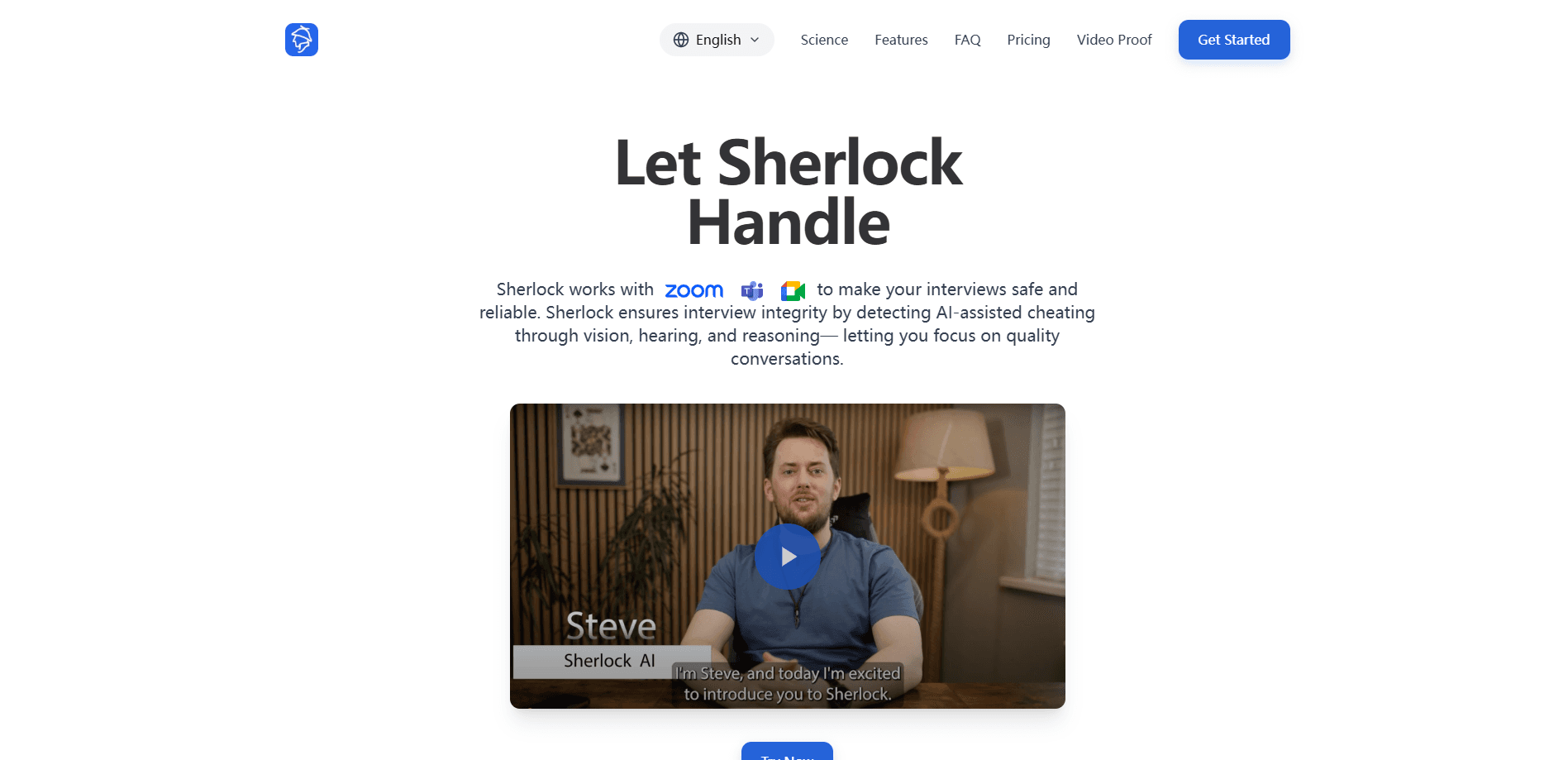
Sherlock AI is an interview fraud detection platform for remote hiring. It joins live video interviews, watches for AI copilots, deepfakes, and proxy candidates, and flags risky moments in real time.
About Sherlock
What Is Sherlock AI
Sherlock AI is AI interview cheating detection built for remote hiring teams. It works as interview proctoring software that runs inside the call rather than beside it. It joins video interviews as a monitoring agent, watches for the signals that point to cheating, and hands interviewers a timestamped evidence trail instead of a single verdict. The company is US-based and runs its product at sherlock.sh.
Remote interviews are easy to fake. A candidate can run a hidden AI copilot on a second screen, let someone else answer for them, or feed cloned audio into the call. None of that shows up in the recording, and most teams only find out much later, if at all. Sherlock targets that blind spot by analyzing behavior, audio, and device activity while the interview is still running.
The limits matter too. Sherlock needs candidate consent, camera and microphone access, and a desktop browser or desktop app. Phones and tablets are not supported, and the team warns against VPNs because they can dilute detection. It is a hiring integrity tool for companies, not something a candidate would install on their own.
Getting Started
- Connect the calendar that holds your interview schedule, whether it runs on Google, Apple, or Outlook.
- Turn on Sherlock for interview meetings so it generates secure links and updates the calendar invites.
- Set your detection preferences and, if you allow AI use, switch on AI fluency scoring.
- Run the interview as usual while Sherlock monitors in the background and posts real-time alerts.
- Review the flagged moments, timestamps, and notes in the report before making a hiring decision.
Product Information
A quick look at Sherlock's pricing, supported platforms, and performance.
Best for
The users, tasks, and scenarios where this tool fits best.
Users
- Recruiting and talent acquisition teams
- Hiring managers at fast-scaling companies
- Executives and leadership teams
Tasks
- Detecting AI-assisted answers
- Catching deepfakes and identity mismatches
- Screening proxy interviews
- Scoring AI fluency
- Automatic notetaking
Scenarios
- High-volume recruiting
- High-stakes executive hiring
- Interviews where AI use is allowed
Key features
Real-Time AI Fraud Detection
Sherlock monitors live interviews for AI-generated answers, hidden copilots, and scripted reading. The company says it uses a multimodal adversarial model that combines device activity, audio context, and behavior into one signal, and that retraining has pushed detection accuracy from about 85% to above 97%. Alerts arrive while the interview is happening, not in a report days later, and the same model drives AI copilot detection for hidden third-party assistants.
Deepfake and Identity Checks
The platform looks for synthetic or manipulated video and for signs that the person on camera is not the candidate on file. That covers a rising category of fraud where a convincing face or voice clone takes the call. Interviewers get a flag to review rather than an automatic rejection.
Proxy Interview Detection
Sherlock watches for a second participant, extra devices, or external assistance that suggests someone is feeding answers in the candidate's ear. It is aimed at the classic proxy setup, where a stronger candidate or a paid helper answers the questions.
AI Fluency Scoring
When a company lets candidates use AI, Sherlock shifts from catching cheating to measuring skill. It observes how well someone leans on AI tools during problem-solving and gives a fluency score. The idea is to reward good AI use instead of treating every AI signal as a disqualifier.
Automated Notetaking and Insights
Sherlock takes structured notes during the interview and bundles them with performance and interviewer insights. That removes a separate notetaking tool from the stack and gives reviewers a written record to pair with the flags.
Evidence Trail and Review Workflow
Every flagged moment links back to the exact point in the interview, with timestamps and context. Reviewers see what happened and when, then decide themselves. The design keeps a human in the loop instead of letting a score make the call.
Calendar and Meeting Integration
Sherlock connects to Google, Apple, and Outlook calendars, joins meetings you mark as interviews, and generates secure links on its own. It also lists ATS integrations, so the checks can sit inside the recruiting stack your team already uses.
Developer API
Sherlock publishes an API for teams that want to build the detection into their own workflows. The API page lets you analyze interview recordings for fraud or wire the checks into a custom pipeline, which matters for larger recruiters with their own tooling.
Pros and cons
Pros
- Flags cheating during the interview, so you can dig into a moment while it is still fresh.
- Combines AI copilot, deepfake, proxy, and voice signals in one tool rather than several.
- Evidence trails with timestamps give reviewers something concrete before they decide.
- AI fluency scoring fits teams that permit AI use and want to grade skill instead of banning tools.
- Calendar and ATS integrations keep the checks inside the existing hiring workflow.
Cons
- Requires camera, microphone, and browser monitoring, so candidates must consent and using it in every region may need legal review.
- Desktop only. No phone or tablet support, and the team advises against VPNs, which narrows where it works.
- Pricing starts around $100 per month and scales to $1,500-plus, so small teams should size the interview volume before committing.
- Detection relies on a model, and the company says it can fail, so it works as a review aid rather than proof.
Frequently asked questions
Sherlock AI is interview fraud detection software. It joins remote video interviews, monitors for AI-assisted cheating, deepfakes, and proxy candidates, and gives interviewers a timestamped evidence trail to review.
Related content
Explore related tools, skills, and articles for Sherlock.
Sherlock Alternatives

Claude for Google Workspace
Anthropic · Writing · Productivity · BusinessClaude for Google Workspace puts Claude in a sidebar inside Google Docs, Sheets, and Slides, where it reads the file you have open and edits it in place.

KloudMate 2.0
KloudMate · Coding · BusinessKloudMate 2.0 is an AI observability platform that keeps logs, metrics, traces, and incidents in one place, with KloudMate Assistant investigating alerts and proposing the fix.
Cekura Bench
Cekura · Voice & Language · BusinessCekura Bench is a public benchmark that runs speech-to-speech models and deployed voice agents through 82 simulated phone calls, three times each, then publishes pass rates, latency and cost.