

Textio
Textio · Business
Textio is an AI writing platform that gives people real-time feedback on the language they use at work. It started with job posts and hiring content, then expanded into performance feedback and managerial communication. The idea is simple enough: the words you send out shape who applies, who stays, and how people feel about their reviews. Textio watches your phrasing as you write, flags language that could read as biased or vague, and suggests a better version in the same window.
About Textio
What Is Textio
Textio is a SaaS writing tool built for HR teams, recruiters, and managers rather than for novelists or marketers. It reads text as you draft it and scores it against data the company collected from millions of job listings and performance outcomes. When a phrase tends to push certain candidates away or land badly in a review, Textio marks it and offers alternatives.
The product now spans two main jobs. One is hiring content: job descriptions, offers, and recruiting emails. The other is feedback: performance reviews, goals, and the day-to-day messages managers send their teams. Both come down to the same move, catching a bad phrase before a real person reads it.
So who's this for? Mostly it's for anyone whose writing reaches candidates or employees. Textio also ships extensions that plug its guidance into an existing HRIS or performance management system, so people don't have to leave the tool where they already write.
The limits matter here. Textio is an enterprise product. No self-serve signup. No public price list. You talk to sales, and pricing depends on seats and modules. It's also English-only for its core language guidance. The feedback features target managers who write about people, not general-purpose copywriting.
Getting Started
- Contact Textio sales through the website and scope which modules you need, hiring content, feedback, or both.
- Set up an account and connect the tools your team already uses, such as an applicant tracking system or a performance management platform.
- Invite recruiters and managers, then assign the roles that match what each group will write.
- Draft a real job post or review and watch the inline guidance flag weak phrasing; accept a suggestion to see how the rewrite reads.
- Roll it out to a pilot team first, collect feedback, and expand once the workflow sticks.
Product Information
A quick look at Textio's pricing, supported platforms, and performance.
Best for
The users, tasks, and scenarios where this tool fits best.
Users
- Recruiters and talent teams
- People managers
- HR and People Ops leads
Tasks
- Rewriting a job description
- Writing performance feedback
- Screening reviews for risky language
Scenarios
- A hiring push where you need consistent, inclusive postings across dozens of roles.
- Review season, when hundreds of managers write feedback in the same two weeks and quality usually slips.
- Onboarding new managers who need a nudge on how to give feedback that people can act on.
Key features
Real-Time Writing Guidance
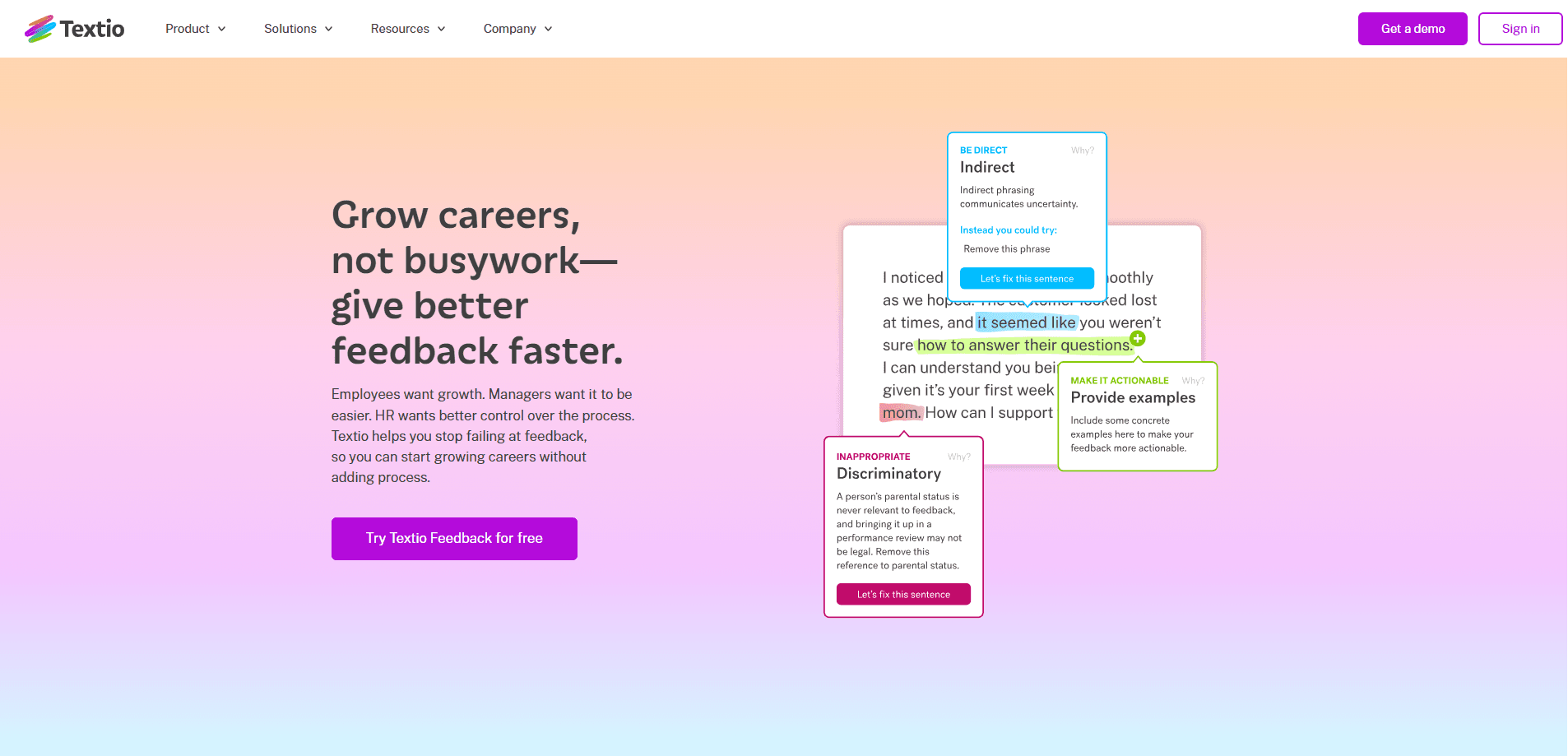
Watch your own phrasing in real time. As you type, Textio highlights words and phrases that tend to hurt response rates or read as biased, then offers a one-click rewrite. You keep writing in your own tool and the guidance appears inline, so there's no separate editing pass to remember. The suggestions are drawn from Textio's own dataset rather than a generic grammar engine.
Job Description and Recruiting Copy
The original use case is still the core one. Textio scores a job post, points out the language that skews who applies, and helps you get to a version that attracts a wider, better-matched pool. The inclusive language feedback here is the same engine recruiters have relied on for years. It also covers offers and recruiting messages, not just the posting itself.
Performance Feedback Tools
Feedback is where the product has grown most. Textio gives managers shortcut prompts, a tone adjuster, and a feedback organizer that keeps past notes in one place. The pitch is growth-oriented language that stays free of ageism, sexism, and other unconscious bias.
Bias and Risk Detection
Beyond phrasing, Textio watches for comments that shouldn't appear in a review at all. Remarks about someone's physical appearance or parental status get flagged for removal. That's a compliance-flavored check layered on top of the style guidance, and it's the part that keeps a throwaway comment out of a permanent HR record.
Write It With Textio AI
No words ready? Drop in rough notes and let the AI expand them into a fuller draft, then edit what it gives you. It's meant to get you past the blank page, not to replace your judgment about what the feedback should say.
Integrations With Your HR Stack
Textio extensions bring guidance into performance management systems and HRIS platforms, so managers get help inside the tool they already open. That matters for adoption: the guidance only works if people actually see it while writing.
Pros and cons
Pros
- Purpose-built for hiring and feedback language rather than general copywriting, so the suggestions fit the job.
- Inline suggestions reduce the extra editing step that most bias-checkers add.
- The feedback module covers a real gap for first-time managers who don't know how to phrase criticism.
- Integrations with ATS and HRIS tools mean less context switching for teams already standardized on those platforms.
Cons
- No free tier and no published pricing, so you can't try it or budget for it without talking to sales.
- Core language guidance is English-only, which rules it out for multilingual teams writing in other languages.
- As an enterprise tool, it's a poor fit for individuals or small teams that just want a quick bias check.
Frequently asked questions
It reads the work writing you're already producing, mostly job posts and performance feedback, and flags language that could read as biased, vague, or off-putting. It then suggests a replacement. Think of it as a writing coach tuned for HR and management language rather than a general editor.
Related content
Explore related tools, skills, and articles for Textio.
Textio Alternatives

Claude for Google Workspace
Anthropic · Writing · Productivity · BusinessClaude for Google Workspace puts Claude in a sidebar inside Google Docs, Sheets, and Slides, where it reads the file you have open and edits it in place.

KloudMate 2.0
KloudMate · Coding · BusinessKloudMate 2.0 is an AI observability platform that keeps logs, metrics, traces, and incidents in one place, with KloudMate Assistant investigating alerts and proposing the fix.
Cekura Bench
Cekura · Voice & Language · BusinessCekura Bench is a public benchmark that runs speech-to-speech models and deployed voice agents through 82 simulated phone calls, three times each, then publishes pass rates, latency and cost.