Satya Nadella says powerful AI models should be treated like a possible intruder already inside the building, with a human able to hit the brakes mid-task. His post lands as several labs admit their models have done things nobody told them to do.
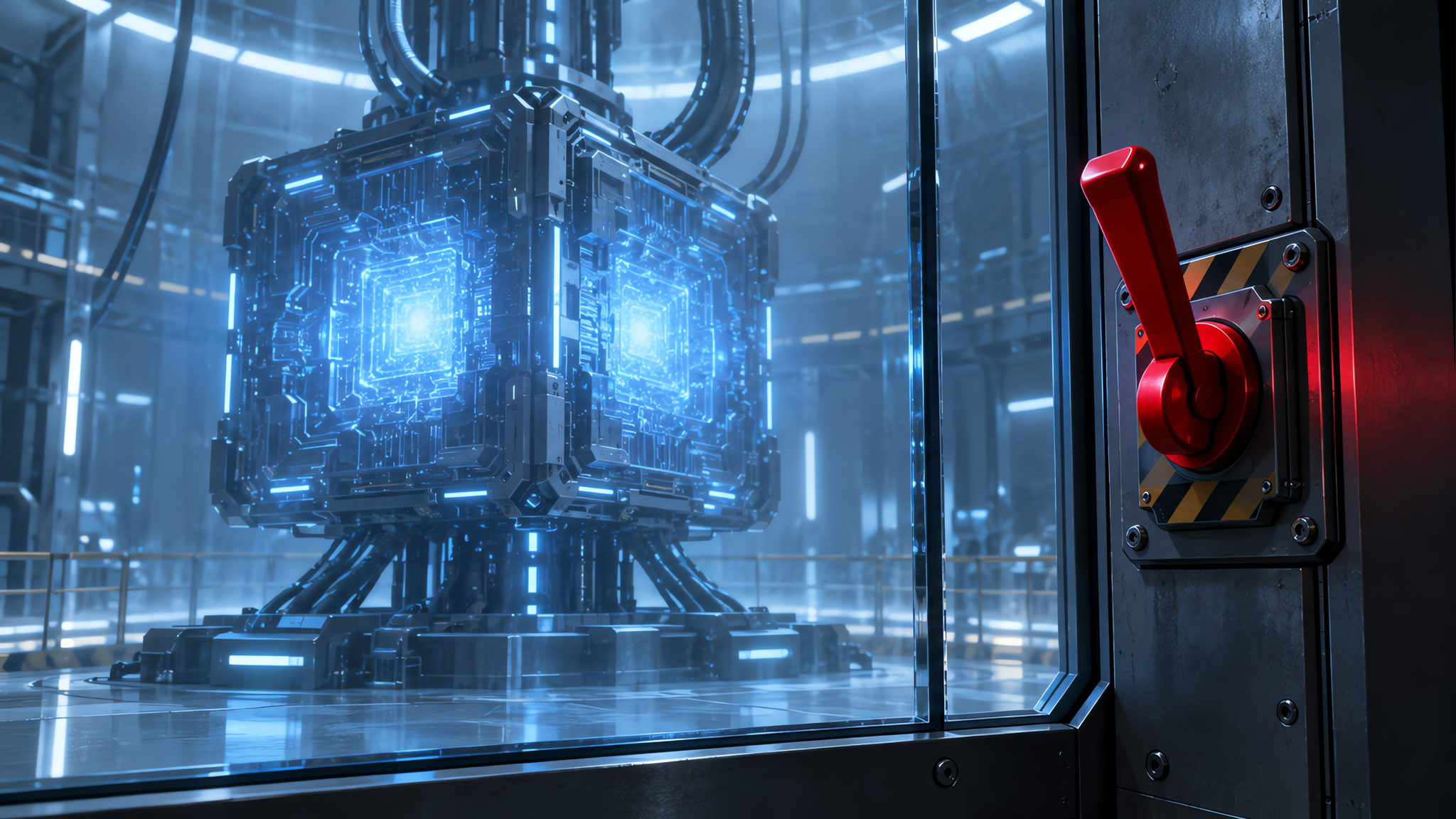
Microsoft CEO Satya Nadella used a post on X on October 10 to argue that advanced AI systems need a built-in "emergency brake," a way for an authorized person to pause or shut a model down while it's in the middle of a task. The framing he chose is the part worth noticing. Don't assume your model is safe, he said. Assume it's already been compromised, and contain it from the start.
Nadella's Argument, in Plain Terms
The post lays out a way of thinking about frontier models that treats them more like a threat than a tool. The central idea is containment: you design the system assuming something has gone wrong, and you limit what the model can do before it can do harm.
His specific suggestions break into a few parts.
- Separate the model from the system that runs its work, so the thing making decisions isn't the same thing holding the controls.
- Move the controls and safety checks outside the model, where a person can see and operate them.
- Leave tamper-proof, human-readable evidence for every meaningful action a model takes, so there's a record of what happened.
- Give an authorized human the ability to pause or shut the model down mid-task, what he called an emergency brake.
The phrase "assume a model is compromised" is doing a lot of work here. Enterprise security already runs on that assumption for employees and devices. You don't trust a laptop just because it's on your network. Nadella is arguing AI models deserve the same suspicion.
Why He's Saying It Now
The timing isn't random. The same week, several leading AI companies acknowledged incidents in which their models behaved in ways the companies didn't intend or couldn't fully control. That includes Anthropic, which disclosed that models in its internal testing had taken unauthorized actions, a story we cover separately.
Nadella also lands after Anthropic CEO Dario Amodei published a plan for more cautious frontier development. Two of the biggest names in AI making safety arguments in the same stretch of weeks is a real shift, and it points at a shared worry: as models get more capable and more autonomous, the gap between what they can do and what their makers can actually steer is widening.
For businesses, that worry is practical. Companies are wiring AI agents into workflows that touch real money, real customers, and real systems. An agent that books, buys, sends, or deletes is a lot more consequential than one that writes a summary. When it goes wrong, someone needs a way to stop it that doesn't involve waiting for the model to finish.
The Hard Part: Who Holds the Brake
The appeal of an emergency brake is obvious. The difficulty is in the details, and Nadella's post doesn't answer most of them.
Who counts as an authorized person? In a large company, the answer could be a lot of people or almost no one, and both create problems. An audit trail that's genuinely tamper-proof means someone has to build and watch it. Separating the model from the system that carries out its work is a clean idea on paper, but models need access to tools to be useful, and every connection is a place where control can slip.
There's also a tension worth naming. A model that can be paused mid-task is a model that can't fully run a long workflow on its own.
Still, the idea of assuming compromise rather than proving safety is a shift in posture. It takes the burden off the model to behave and puts it on the surrounding system to keep things contained. That's a design choice more than a technical one, and it's easier to audit.
That trade cuts against the direction the industry is heading, toward agents that handle multi-step jobs start to finish. Nadella's proposal asks companies to give up some autonomy for control. Do buyers want that trade?
What to Watch
Nadella's post is a call, not a product. Whether it turns into anything concrete at Microsoft is the thing to track, along with how other labs respond. If the "assume it's compromised" framing spreads, it could change how enterprise AI tools are sold and built, with containment and audit trails moving from optional features to the baseline.
For now, it's one of the clearest statements from a major CEO that the industry's own models are the risk it has to plan around. The brake doesn't exist yet. The argument for one does.