Dek: A foundry just put money into the two labs whose accelerators it builds, days before one of them lists. The check is small. The direction it points in isn't.
TSMC board approval: up to $1 billion for two customers
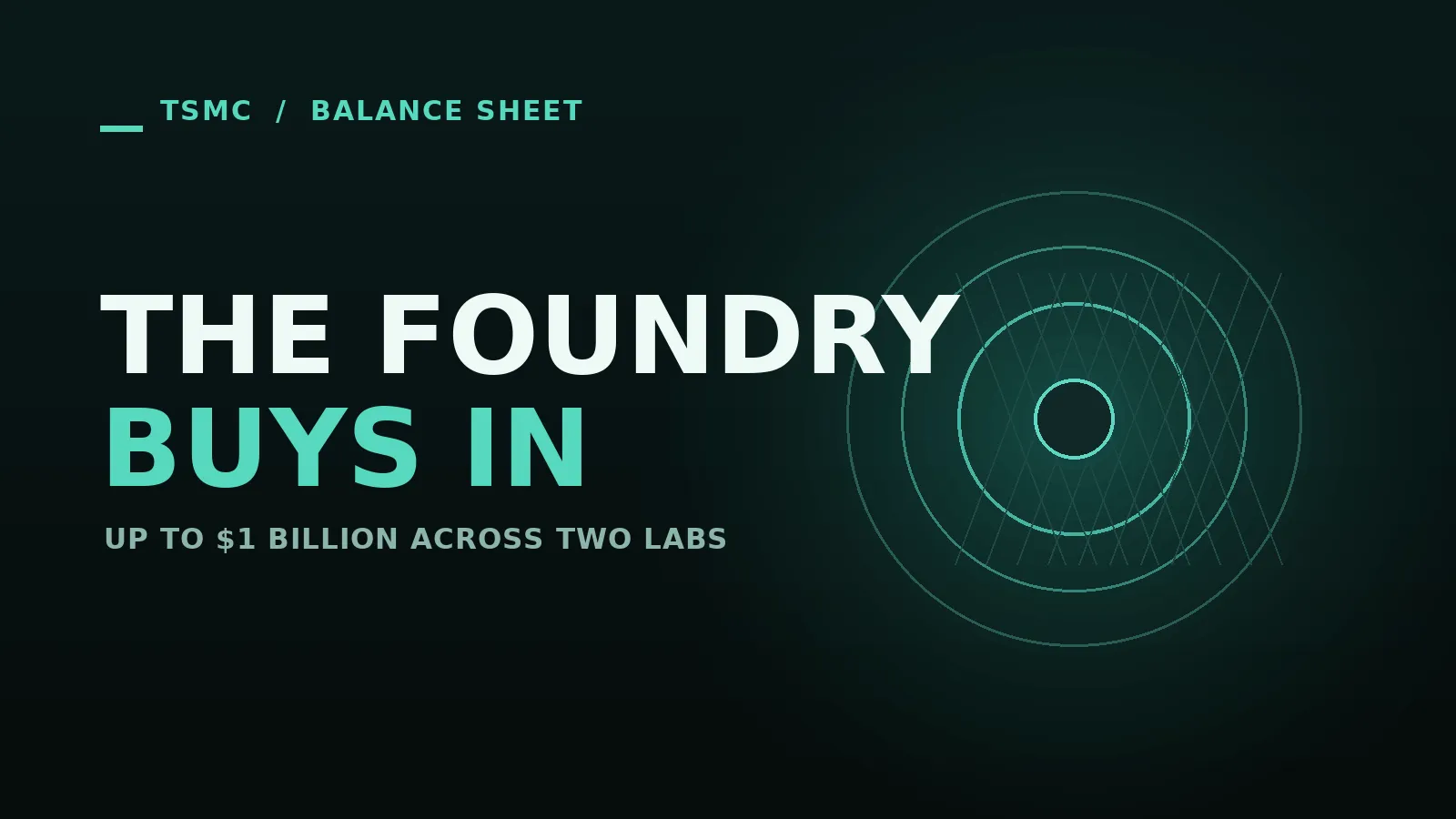
TSMC's board approved an investment of up to $1 billion in Anthropic and OpenAI on November 11, a day after Reuters reported the plan. Seoul Economic Daily put the split at up to $500 million each.
The shares rose on the news, per Investing.com. The same week brought October sales up about 60% year on year, which is the sort of number that makes a $1 billion check look like a rounding decision.
Why a TSMC Anthropic investment is unusual
Suppliers sell to their customers. They don't normally own a piece of them.
The chain of who builds what explains why this case is different. Anthropic doesn't own a fab. OpenAI doesn't own a fab. Their accelerators are designed by partners, and every one of those designs has to pass through a contract manufacturer before it becomes silicon. TSMC is that manufacturer for the accelerators both labs depend on, and it's the largest contract chipmaker in the world.
So the money runs in an odd direction here: from the company that builds the chips to the two companies that buy them and pay the bills. That's a supplier taking equity in demand.
Read it as a hedge and the logic gets clearer. TSMC's revenue depends on how many wafers the labs order, and the labs' orders depend on whether they can raise money to pay for compute. Owning a slice of the customer softens the second link in that chain.
The TSMC OpenAI stake and the investment company beside it
Anthropic gets the headline because of timing, but the OpenAI half is the same trade.
Two labs. One supplier.
Reporting also describes a plan to set up an investment company focused on chip companies alongside the stakes, which suggests the board is thinking about more than two cheques. Treat that part as reported rather than settled policy, because TSMC hasn't published terms for it.
What TSMC has published is close to nothing. No stake size, no ownership percentage, no price per share, and no word on whether the shares were bought at the IPO price or in a private deal beforehand. Those blanks matter more than the headline figure, and they're the first thing to look for in the next quarterly filing.
What the TSMC $1 billion won't buy
It doesn't buy influence, at least not on paper. Nothing in the reporting mentions board seats, voting agreements or capacity guarantees.
That's worth stating plainly, because the obvious assumption is that a chipmaker putting money into a customer wants something in return. Maybe it does. TSMC hasn't said so, and a stake large enough to matter strategically would normally come with disclosure requirements.
Nor does the money fund anyone's compute bills. A supplier taking a stake isn't a bailout, and the labs' spending plans are far larger than this cheque. Anthropic alone disclosed roughly $895 billion of purchase commitments and leases in its amended filing, most of it tied to compute and infrastructure.
So what's the point? Two things, and neither needs a conspiracy. TSMC gets a financial position in two of the fastest-growing buyers of advanced silicon. And it gets a seat closer to the demand signal, which is worth real money to a company that has to decide years ahead how much capacity to build.
Every AI chip investment runs through one company
Here's the uncomfortable part. There's exactly one company standing under every frontier AI roadmap, and this week it became a shareholder in two of them.
If TSMC has a bad year, both labs' plans slip. If either lab stumbles, TSMC books a writedown on a stake it bought at the top of the market. Concentration cuts both ways, and the investment makes the link explicit rather than hidden.
For a reader in Europe or the US watching chip policy, the number to focus on isn't $1 billion. It's that the same firm appears in every supply chain diagram, at the one step with no real substitute.
Taiwanese retail investors already treat TSMC as a proxy for the entire AI trade, and the ADR on the New York exchange does the same job for American buyers. This deal makes that proxy relationship a little more literal.
The AI chip investment timing, days before Anthropic lists
The calendar is the part that raises eyebrows. The board vote landed in the same week as Anthropic's IPO roadshow, days before the listing is expected to price.
That's where the circular financing question comes from. Nvidia and Alphabet have been reported as ready to buy about $10 billion of stock each at the IPO price. Now the foundry that builds everyone's chips is buying in too.
Circular or not, the structure has a familiar shape: the same small group of companies supplying, funding and owning each other. It works while demand grows. It gets uncomfortable when one of them has a bad quarter, because the losses travel along the same edges as the orders.
TSMC hasn't explained the timing, and there may be nothing to explain. A board meeting is a board meeting, and the Anthropic listing has been public since late October.
Still, anyone holding the stock should know that the company just became more exposed to the outcome of a bet it can't control. That's the trade-off in one line.
What to watch in the next TSMC filing
Three details are worth waiting for. The size of each stake, the price paid, and whether the shares carry any commercial terms at all.
Until those land, the safest reading is the plain one. A very large supplier decided its customers were a reasonable place for a small part of its cash, and told the market so on the same day it reported strong sales.
That's not a strategy memo. It's a signal about where TSMC thinks the demand is coming from.