

AdSpawn
AdSpawn · Marketing
AdSpawn is an AI platform for mobile game ad creatives. Feed it a store link and it handles asset discovery, editing and delivery for user acquisition teams.
About AdSpawn
What Is AdSpawn
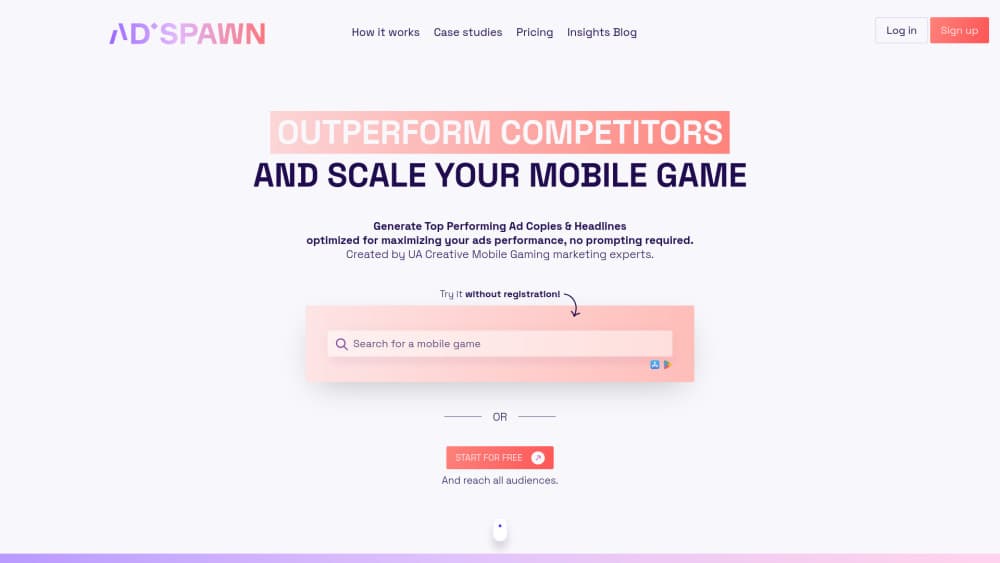
AdSpawn builds video ads for mobile games, mainly for teams that pay for installs. You hand it a store link. It finds gameplay footage and art, picks moments worth showing, and cuts short-form game ads built on structures that UA campaigns already use.
The pitch is speed. AdSpawn produces AI video ads in minutes and sends a download link by email, so nobody has to brief an agency or sit in an editor for a week. That matters when a studio needs fresh angles every month to fight creative fatigue.
The limit is scope. AdSpawn works on mobile game advertising, not on brand films or install campaigns for other kinds of apps. Pricing runs from a free entry point to paid tiers that start at €99 per month, and the company doesn't document a public API.
Getting Started
- Paste your game's App Store or Google Play link on the AdSpawn site.
- Wait while the platform scans public assets for your title and generates extra material.
- The system reviews gameplay scenes, picks key moments, and assembles ads with a hook, body and outro.
- Open the delivery email, follow the link, and download your new creatives.
- Load the files into your ad account and start testing.
Product Information
A quick look at AdSpawn's pricing, supported platforms, and performance.
Best for
The users, tasks, and scenarios where this tool fits best.
Users
- Mobile game UA managers
- Small studios with no in-house creative team
- Performance agencies running several game accounts
Tasks
- Refreshing tired ad sets
- Testing new hooks
- Producing ad volume for a launch
Scenarios
- Soft launch in a small market
- Scaling after a hit
- Agency pitches
Key features
Store Link Onboarding
The entire brief is a URL. AdSpawn reads the store listing to learn the genre, art style and core loop, then starts production without a kickoff call or a creative brief. For a UA manager juggling five titles, that removes the slowest part of the process.
Automatic Asset Discovery
The platform scans publicly available material for your game and generates additional assets where the store page is thin. Studios with a small marketing library get usable footage without a capture session. Titles that already publish trailers and screenshots simply give the system more to work with.
Gameplay Scene Selection
AdSpawn processes gameplay footage, analyzes scenes and picks the moments most likely to read on a phone screen. It looks for action beats and clear visual changes rather than random clips. The result feels like a highlight reel instead of a screen recording dump.
Mobile UA Ad Structures
Every creative follows a pattern familiar to user acquisition creatives: a fast hook, a short demonstration, and a call to action at the end. AdSpawn built these templates from campaigns it has run for gaming clients. That's the argument for UA creative automation: the format stays stable while the footage changes.
Email Delivery
Finished files arrive as a link in your inbox, usually within minutes according to the company. There's no dashboard to learn and no seat to provision for a designer. That keeps the tool out of the way of the rest of your stack.
Volume That Scales With Your Plan
Paid tiers raise the number of creatives you can generate and manage inside the platform, from a handful of tests to hundreds per month. Volume matters in mobile game marketing because most concepts fail. More shots on goal improves the odds of finding a winner.
Reported Campaign Results
AdSpawn cites a case study with 100 million impressions, a 44% lower cost per install and 90% less spent on creative production. Those numbers come from the company and its client work, so treat them as a vendor claim rather than an independent benchmark.
Pros and cons
Pros
- One input, no brief: a store link is enough to start, which suits lean teams.
- Built for game ads: hooks, pace and outro follow formats that UA buyers already test.
- Fast turnaround: delivery by email in minutes cuts the wait between idea and live test.
- Lower production spend: the company reports 90% savings against traditional creative production.
Cons
- Game-only focus: apps outside mobile gaming won't get relevant templates or asset logic.
- Limited creative direction: you can't storyboard a specific scene, so brand-led concepts need another route.
- No documented API: hooking AdSpawn into an automated reporting or asset pipeline isn't possible today, which means manual steps for large accounts.
- Pricing above the entry tier isn't published: you have to request an offer to compare costs at volume.
Frequently asked questions
It produces video ad creatives for mobile games from a store link. The platform gathers assets, cuts the footage into short ads and sends you the files by email.
Related content
Explore related tools, skills, and articles for AdSpawn.
AdSpawn Alternatives

Emailwritr
Emailwritr · Writing · MarketingEmailwritr is an AI email copywriting tool built for affiliates, course creators, and online businesses that want more revenue from the list they already own. Instead of blank pages or generic chatbot prompts, this AI email writer generates welcome sequences, launch campaigns, cart recovery emails, and promo series from frameworks modeled on well-known direct-response copywriters. You connect your autoresponder, answer a few questions about your offer, and it writes the copy for you.

Prosp
Prosp · Writing · Voice & Language · MarketingProsp is an AI LinkedIn outreach tool built for agencies and sales teams, and it writes the message and the voice note in your own voice for each prospect so they actually reply. You connect your accounts, find leads, and let the AI draft and send personalized messages at scale, all from one inbox. It's built for people running outbound at volume. That's the whole pitch. Every touchpoint still has to feel human.

On Model
On Model · Image · MarketingOn Model is an AI fashion model tool that places your clothing on virtual models so online stores can get on-model product photos without booking a photoshoot. It runs as a Shopify app, letting you swap the model in an existing image, change backgrounds, and generate faces for cropped or headless shots. The goal is simple: match your product photos to your customers and stand out from competitors using the same supplier images.