

AI-Writer
AI-Writer · Writing
AI-Writer is an AI research and writing tool that answers questions using open scientific literature and cites every claim, with a review paper generator for longer projects.
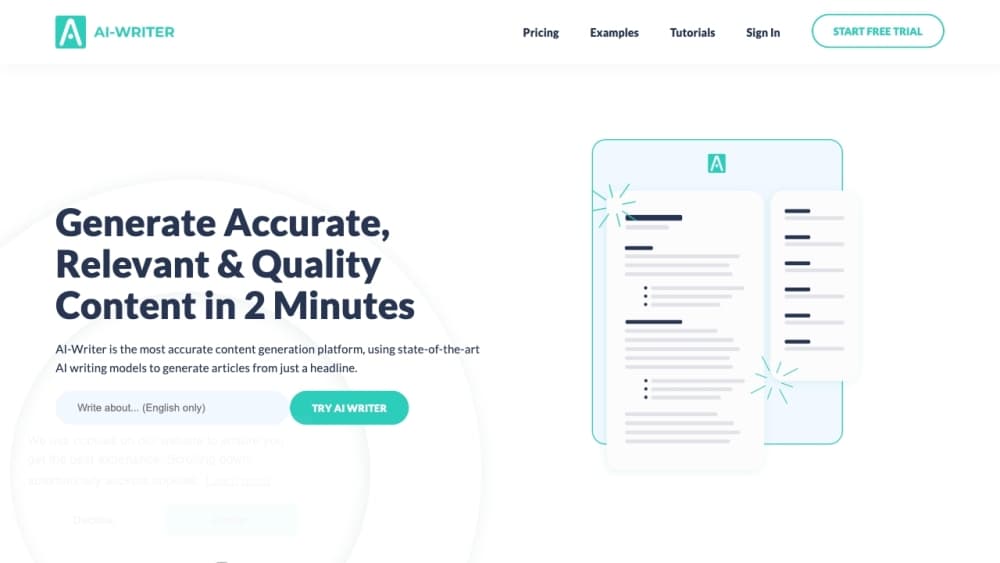
About AI-Writer
What Is AI-Writer
AI-Writer is an AI research assistant and academic writing tool for people who have to defend every sentence they publish. You hand it a question, not a prompt, and it builds the answer from peer-reviewed and open access papers. The company says its corpus holds more than 100 million open science papers.
That single-minded focus is the whole pitch. Most chatbots can string together a plausible paragraph about a protein pathway or a market trend. Far fewer can show you the paragraph in the paper that backs it up. AI-Writer shows the source paragraph, links to the paper, and hands over full bibliographic data in several citation styles plus BibTeX.
The catch is scope. This is not a tool for cover letters, ad copy, or blog intros. If you need polished marketing text, you'll be happier elsewhere. And since answers lean on published literature, fast-moving topics that academics haven't written about yet come back thin.
Getting Started
- Open ai-writer.com and start the seven day trial. No card is needed, and the trial ends on its own instead of rolling into a subscription.
- Type your research question in plain language. Skip the prompt engineering, since the tool takes a question and nothing else.
- Run Topic Explorer first if the subject is unfamiliar, and let it list the sub-questions you ought to cover.
- Read the answer with its citation trail open, then click through to the source paragraphs to check the claims against the papers.
- Add your own follow-up questions to the list, drag the sections into the order you want, then export the finished piece as an HTML file or share it by link.
Product Information
A quick look at AI-Writer's pricing, supported platforms, and performance.
Best for
The users, tasks, and scenarios where this tool fits best.
Users
- Graduate students
- Academic researchers
- Science and tech writers
Tasks
- Literature reviews
- Fact checking a claim
- Topic scoping
Scenarios
- Starting a thesis chapter
- Due diligence on a technical claim
- Preparing a reading list
Key features
Answers Built from Scientific Papers
Every response is drawn from peer-reviewed and open access literature rather than open web pages. The company says this makes answers more factually reliable than general chatbots, including their deep research modes. You can test that claim yourself by opening the sources on any answer.
Traceable Citations on Every Claim
Each answer comes with a summary, a detailed breakdown, and a list of the exact paragraphs used. One click takes you to the source paper. That trail is the feature that separates AI-Writer from writing assistants that only sound confident.
Topic Explorer for Scoping a Field
Give the tool a broad subject and it returns the critical questions a thorough understanding would need to cover. Doctoral candidates use it to spot gaps in a proposal outline. Consultants use it to see what a technical field treats as settled.
Review Paper Generator
Combine the Topic Explorer questions with your own, drag sections into order, and the tool writes a full structured review paper. Export it as a standalone HTML file or share a live link that updates as you edit.
Multiple Citation Styles and BibTeX
Sources double as a citation generator: each one comes with a direct link, full bibliographic details, and entries in APA, Chicago, Harvard, or MLA. A ready-to-use BibTeX entry saves the step of retyping references into a reference manager.
Team Seats on Higher Plans
The Standard plan covers three users and the Power plan covers ten, so a lab group or a research team can share one account. That matters for departments that want a shared source trail rather than everyone running separate searches.
Pros and cons
Pros
- Every claim links to the exact paper paragraph behind it, so you can verify instead of trusting.
- Answers come from a corpus the company puts at over 100 million open science papers.
- BibTeX and four common citation styles come standard, which saves manual reference work.
- The review paper generator turns scattered answers into a structured draft you can reorder.
- The seven day trial needs no card and doesn't convert into a paid subscription.
Cons
- The cheapest plan starts at $24 a month billed annually, with no free tier for occasional users.
- Coverage skews toward published academic literature, so breaking news and niche commercial topics come back shallow.
- Question caps on the Basic and Standard plans will slow a heavy researcher, and the site doesn't publish the exact numbers.
- No public API, so teams can't wire the research output into their own tools or a shared database.
Frequently asked questions
It answers research questions using published scientific papers and shows the sources behind every claim. Typical jobs are literature reviews, fact checking technical claims, and scoping an unfamiliar field before you commit to a research direction.
Related content
Explore related tools, skills, and articles for AI-Writer.
AI-Writer Alternatives

Google EmbeddingGemma 2
Google DeepMind · Writing · Image · CodingGoogle EmbeddingGemma 2 is a 740M-parameter open model that turns text, code, images, audio, and video frames into vectors in one 768-dimension space, running on phones and laptops.

MePersona
MePersona, Inc. · Writing · Productivity · MarketingMePersona is an AI unified inbox for creators. It learns your voice, drafts replies to fan messages from 12 platforms, and sends only what you approve.

Fluence
Yay Software (Yannick Huchard) · Writing · Voice & Language · ProductivityFluence is an Android app that reads PDFs, EPUBs, Word files and web articles aloud, follows each sentence as it speaks, and answers questions about the text on the phone itself.