

Alaya AI
Alaya AI · Other
Alaya AI is a Web3 AI data platform where people label and annotate training data for token rewards, and AI teams buy custom sampling and auto-labelling work.
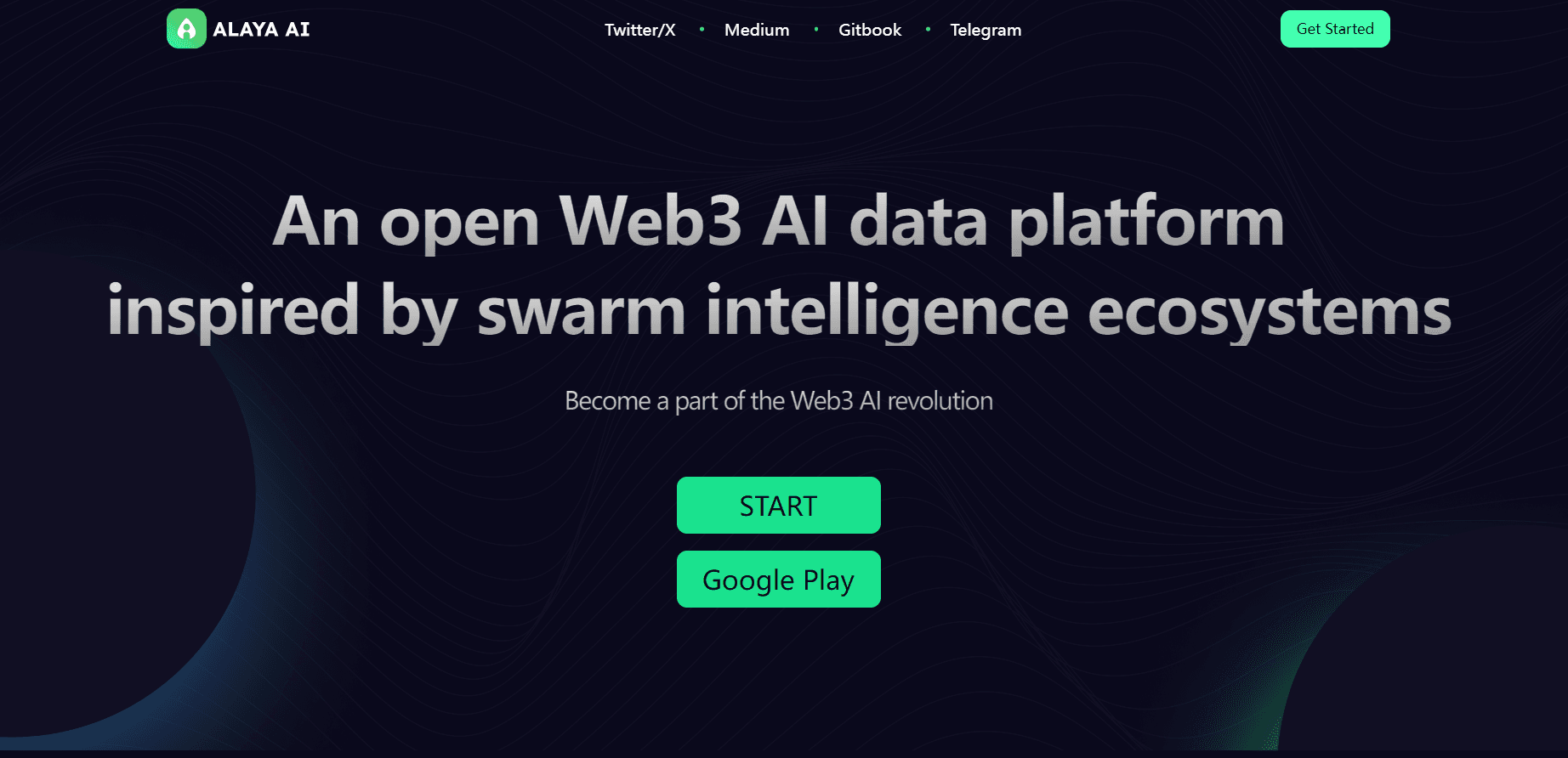
About Alaya AI
What Is Alaya AI
Alaya AI is an open data platform built for one job: getting training data labelled without the cost of a full annotation department. It has two sides. Contributors work through short tasks and earn AGT tokens plus achievement NFTs. AI developers and enterprises submit data requests, set their own reward pools, and receive a cleaned dataset. Alaya positions the service as an AI training data marketplace where demand meets supply without a recruiter in between.
The company's pitch rests on automation plus human judgement for AI data labeling. Proprietary auto-labelling models handle the first pass on common data types, then contributors check and correct the output. Alaya says its system reaches above an 80% verification rate for most common data categories and can process static and dynamic visual data in real time. Those numbers come from Alaya, not from an independent benchmark.
The limits are real. Contributors get paid in a crypto token, so earnings move with the market. Task volume follows client demand, which means quiet weeks happen. Buyers get a quote instead of a public rate card, and specialised work sits behind achievement NFTs that take time to earn. None of this is hidden, but it shapes who gets value from the platform.
Getting Started
- Sign up at aialaya.io with an email address and a verification code. No wallet is needed at this stage.
- Open the Task page and start with general tasks, which are open to every registered user. Energy points cap how many you can finish in a day.
- Bind a wallet on Arbitrum or opBNB from the wallet icon when you want to collect NFTs and AGT tokens.
- For data buyers, send Alaya your data specification, agree on the reward pool and output format, then review the delivered set before it goes into training.
Product Information
A quick look at Alaya AI's pricing, supported platforms, and performance.
Best for
The users, tasks, and scenarios where this tool fits best.
Users
- Freelance data contributors
- Small AI teams
- Domain experts
Tasks
- Image annotation and semantic segmentation
- RLHF data collection for model tuning
- Multilingual and dialect datasets
- Pre-labelling a custom dataset before internal review
Scenarios
- Earning from spare time on a commute
- Bootstrapping a training set before a funding round
- Covering a sprint when an in-house team is behind
Key features
Distributed Contributor Network
Tasks are routed to contributors based on their track record in each subject area, not first come first served. Alaya describes the routing as swarm-inspired sampling, and the point is to reduce bias by pulling labels from many people instead of a small room. Contributors see tasks matched to their verified strengths, which raises the odds that specialised work lands with someone who can actually do it.
Auto-Labelling for Common Data Types
The auto-labelling toolset runs a first pass on images, text, and video, then hands uncertain cases to humans. Alaya built it on a three-layer optimisation architecture with RLHF fine-tuning, and says it handles both static and dynamic visual data in real time. For buyers, the practical effect is fewer paid human hours per thousand rows.
Custom Reward Pools for Data Buyers
A client can fund a request with its own token instead of AGT, on-chain or off-chain. That matters for Web3 projects that already have a community holding their token and want to turn it into a labelling incentive. The pool model also means pricing is negotiated per dataset rather than published as a fixed rate.
Specialised Tasks Behind Medallion NFTs
General tasks are open to anyone. Specialised work, such as radiology images or uncommon dialects, needs a Medallion NFT in that field. Alaya awards these wallet-bound NFTs from performance rather than paperwork, and treats them as a private way to confirm expertise without asking for identity documents.
AGT Staking and Model Pools
Contributors and token holders can stake AGT into auto-labelling model pools. Staking signals support for a model and adds a penalty for bad behaviour, since a malicious labeler risks the stake. Alaya frames this as a way for communities to fund model fine-tuning directly, and it doubles as the access gate for advanced task formats.
Wallet-Level Privacy Controls
Data passes through ZK encryption and desensitisation before delivery, and the platform keeps contributor identities separate from the labels they produce. For a hospital or a fintech sending sensitive samples, that separation is often the difference between signing and walking away.
Pros and cons
Pros
- Email signup means you can test the platform and finish tasks before you ever touch a wallet.
- Custom reward pools let Web3 projects pay contributors in their own token, which fits communities that already hold one.
- Auto-labelling cuts the manual pass on common categories, so budgets stretch further per dataset.
- Specialised tracks give domain experts a route to better paid work without formal certification.
- ZK encryption and desensitisation are built into delivery, not sold as an add-on.
Cons
- Payouts arrive in AGT, so the dollar value of a week's work can drop before you convert it.
- Task supply depends on client demand, and general tasks can dry up for days.
- Advanced formats require NFTs or staked AGT, which slows down new contributors who want the better paying work.
- Buyers get no public price list and no documented API, so planning a large order starts with a sales conversation.
Frequently asked questions
Alaya AI is used to collect, label, and clean AI training data. Contributors complete annotation tasks for token rewards, while AI teams buy sampling, auto-labelling, and RLHF data through custom data requests.
Related content
Explore related tools, skills, and articles for Alaya AI.
Alaya AI Alternatives

Odyssey 3
Odyssey · OtherOdyssey-3 is Odyssey's foundation world model. It simulates physics in real time, turns a prompt into an interactive environment, and adapts to robots, cars and games.

JarvisCore
Prescott Data · Coding · Productivity · OtherJarvisCore is an open source Python runtime where AI agents work as equal peers on an agent mesh, claim tasks from a shared ledger, and reach external services through a zero-trust broker.
Clef
Cloudflare · Business · OtherClef is Cloudflare's open-source decision model for Workers AI. It returns calibrated probabilities for typed questions, not generated text, so agents can classify, route, and act fast.