

Algolia
Algolia · Coding
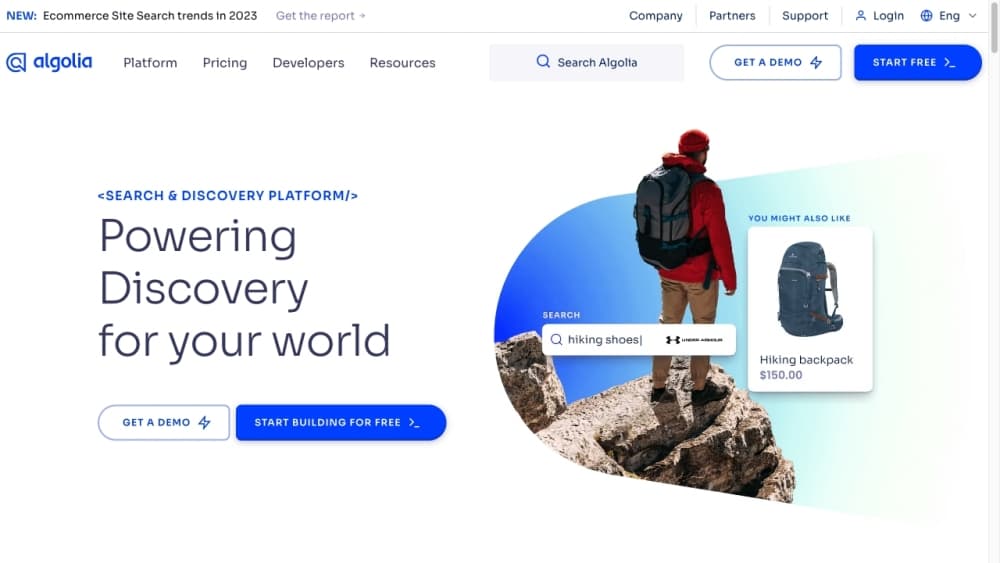
Algolia is an API-first AI search platform. It adds instant, relevant search to websites and apps with typo tolerance, AI ranking, personalization, and recommendations.
About Algolia
What Is Algolia
Algolia is a hosted search and discovery platform that developers plug into their own websites and apps. Rather than building a search engine from scratch, you push your content into an Algolia index and call its API to return results. The company says more than 18,000 customers in over 150 countries use it, from small shops to large retail and media brands.
The core pitch is speed and relevance without constant babysitting. Algolia answers a query with typo tolerance, so a misspelled product name still finds the right item. Underneath, its ranking setup blends keyword matching with AI signals that learn from what users click and buy. That means results improve as traffic grows instead of sitting on a fixed set of rules.
The main tradeoff is that Algolia is a paid, hosted service, not a self-hosted download. You don't run it on your own servers, and Algolia pricing scales with search requests and records, so a site search API budget grows with traffic. Free plan users get a working search box but hit usage caps, so a fast-growing site will move onto a paid plan quickly.
Getting Started
- Create a free account in the Algolia dashboard, no credit card needed.
- Create an application and an index, then add your data as records through the API or a connector.
- Configure relevance: synonyms, ranking, and facets that match how people search your content.
- Drop in a UI library such as InstantSearch or Autocomplete, or call the API from your own front end.
- Go live, then use analytics and A/B testing to tune results over time.
Product Information
A quick look at Algolia's pricing, supported platforms, and performance.
Best for
The users, tasks, and scenarios where this tool fits best.
Users
- Developers
- Ecommerce teams
- Product managers
Tasks
- Adding instant search to an app
- Boosting conversion on a store
- Handling messy queries
- Scaling search with traffic
Scenarios
- A store launching a new catalog
- A site with growing traffic
- A team without search engineers
Key features
Instant, Typo Tolerant Search
Algolia returns results as a user types, and it forgives typos and partial words. A shopper who types "hedphones" still finds "headphones" instead of a blank page. This keeps people in the search bar rather than bouncing to a competitor or a support line.
NeuralSearch Hybrid Engine
NeuralSearch blends keyword matching with vector based semantic search. It handles the messy, natural language queries people actually type, not just clean keywords. When a shopper searches by describing what they want, the hybrid engine reads the intent and returns closer matches.
AI Ranking and Personalization
AI Ranking uses real interaction data to decide which results should rise, learning from clicks and conversions instead of a fixed rule list. Personalization then tailors results to each user's behavior. For a store, that can mean showing the item a shopper is most likely to buy near the top.
Recommendations API
Alongside search, Algolia runs a recommendations engine with types like related products, frequently bought together, trending items, and looking similar. These slots help a site cross sell without extra merchandising work. Each request and record draws on the same plan limits as search.
Merchandising and A/B Testing
Business teams can hand place items, run promotions, and test ranking changes with A/B experiments. You see why a result appeared where it did, so tuning relevance becomes measurable rather than guesswork. The visual editor keeps rule changes out of engineering's queue.
Prebuilt UI Libraries and Integrations
Algolia ships InstantSearch, Autocomplete, and UI kits so you can put a search box on a page with a few lines of code. Connectors cover platforms like Shopify, Salesforce, and Adobe Commerce. That lowers the setup cost for teams that want search working fast, not a research project.
Crawler and Data Transformations
The Crawler indexes sites and non-html sources without a custom pipeline, and Data Transformations clean records before they enter the index. Together they cut the work of keeping a catalog or knowledge base searchable. Scheduled crawls keep content fresh on their own.
The Agentic Layer
Beyond search, Algolia offers Agent Studio, Generative Experiences, Ask AI, and an MCP server. These let a site turn its search bar into a conversational interface or let AI agents query and update the index directly. It's the clearest sign of where Algolia is heading: search as the base for agent driven experiences.
Pros and cons
Pros
- As a search API, its speed and typo tolerance are the headline: results return in milliseconds even under peak load.
- AI ranking, personalization, and recommendations live in one platform, so you don't bolt on separate tools to improve relevance.
- Prebuilt UI libraries and connectors like Shopify and Salesforce cut setup time for common platforms.
- Usage based pricing with a real free plan lets a small project start free and scale up only when traffic grows.
- A clear enterprise path with NeuralSearch, SSO, and higher availability covers teams that outgrow the self serve plans.
Cons
- As a hosted platform, you don't run it on your own servers, so teams with strict data residency needs must check the hosting options first.
- Pricing is usage based, and a high traffic site can see costs climb quickly once it passes the included requests and records.
- The AI ranking and personalization features sit on the higher plans, so the cheapest plans are keyword search rather than the full AI stack.
- Search relevance still needs some setup, and getting it right takes attention to synonyms, ranking, and testing early on.
Frequently asked questions
Algolia adds search and discovery to websites and apps. Developers index their content through an API, then call it to return fast, typo tolerant search results, recommendations, and, on higher plans, AI driven ranking and personalization.
Related content
Explore related tools, skills, and articles for Algolia.
Algolia Alternatives

Base Code
Base44 (Wix) · Coding · ProductivityBase Code is a shared cloud development environment from Base44. Teammates describe changes to an existing GitHub codebase in chat, preview them live and send them back as pull requests.

Google EmbeddingGemma 2
Google DeepMind · Writing · Image · CodingGoogle EmbeddingGemma 2 is a 740M-parameter open model that turns text, code, images, audio, and video frames into vectors in one 768-dimension space, running on phones and laptops.

GitGlow
GitGlow · Coding · ProductivityGitGlow is a local-first desktop Git client that lets independent developers review their own code and their AI agents' changes in one place before shipping.