

AnChainAI
AnChain.AI · Marketing · Leaning · Business
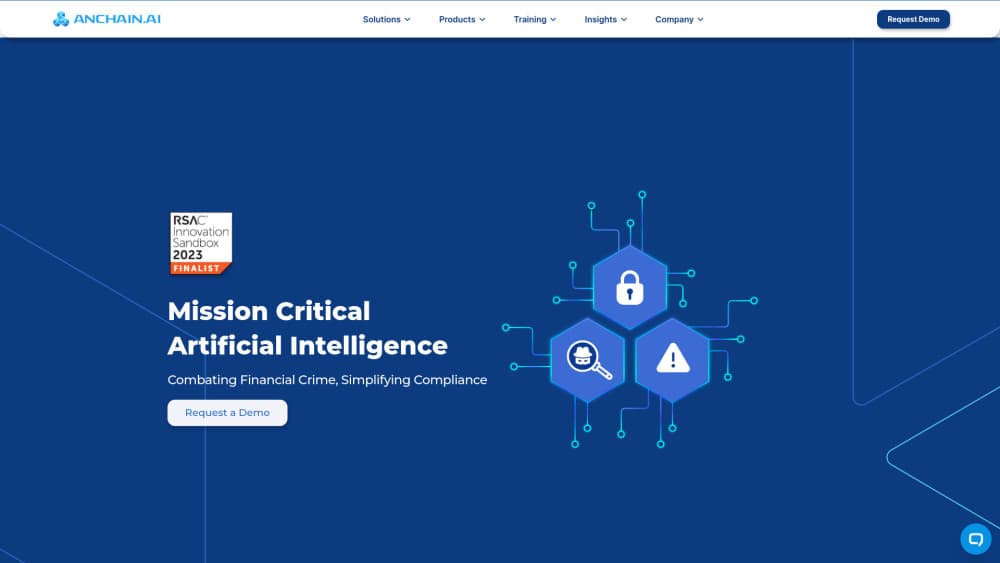
AnChain.AI is an AI blockchain analytics platform for crypto investigations, AML screening and payment risk scoring, with tracing agents, a REST API and MCP access.
About AnChainAI
What Is AnChain.AI
AnChain.AI is a blockchain analytics and crypto compliance platform from a San Jose company of the same name. Investigators, exchanges and payment providers use it to follow money across chains, flag risky wallets and write blockchain forensics reports that hold up in court. The product line splits into three parts: Insights crypto investigation AI agents, SCREEN for checks before a transfer leaves, and an Intelligence API with an MCP server for teams that build their own tools.
Speed and explainability are the pitch. AnChain.AI says customers cut investigation time by up to 85% and that the platform screens more than 70 million transactions a day. Every risk score comes with the wallet labels and graph evidence behind it, which matters when a compliance team has to defend a decision to a regulator.
The catch is the buying process. Public pricing doesn't exist, most plans start with a demo, and the free tier is a credit allowance for API testing rather than the full product. A small team with no compliance workflow won't get much from it on day one.
Getting Started
- Sign up on anchain.ai or data.anchainai.com and claim the free API credits to test the endpoints.
- Install the SDK with
pip install crypto-amlfor Python or the npm package for JavaScript, then store your key as an environment variable. - Send a wallet address or transaction hash to a screening endpoint and read the risk score next to the labels that produced it.
- Set your own allow, review and block thresholds, then route alerts into Slack, email or a case queue.
- For investigations, book a demo of Insights and run a first trace in the agent chat instead of clicking through graph nodes.
Product Information
A quick look at AnChainAI's pricing, supported platforms, and performance.
Best for
The users, tasks, and scenarios where this tool fits best.
Users
- Compliance analysts at exchanges and payment firms
- Blockchain investigators and public sector units
- Law firms and forensic accountants
- Developers building wallet or checkout flows
Tasks
- Screening a transfer before funds move
- Tracing stolen funds across chains and bridges
- Checking sanctions exposure
Scenarios
- A payment app needs to stop a sanctioned wallet in real time
- A DeFi exploit just drained a pool
- A case is heading to court
Key features
Ask Tracer Investigation Agents
Insights lets an analyst ask questions about a wallet or transaction in plain language instead of building a graph by hand. The agents run on OpenAI and Anthropic models, and AnChain.AI says a grounding layer keeps answers tied to on-chain evidence rather than model guesswork. Output arrives as a written finding with the addresses and paths cited, which shortens the step between research and a filed report.
Auto Trace Across Chains
Auto Trace is patented heuristic graph search for both UTXO chains like Bitcoin and smart contract chains. It follows funds through DeFi pools, stablecoins, bridges and privacy services, then draws the path. The company reports support for 41 or more blockchains, so a case that hops between networks doesn't need a second vendor.
Crypto Payment Screening API
SCREEN checks a wallet or transaction before money is sent rather than after it lands. It returns a risk score from 0 to 100 along with the policy outcome, so engineering teams can map results to allow, review and block rules. The company points to 17,000 plus MetaMask users on the same screening stack and reports roughly 100ms latency on most endpoints.
Risk Scoring and Entity Intelligence
A billion plus labels sit behind the scoring, covering exchanges, mixers, sanctioned entities and scam clusters. Wallet clustering groups addresses that belong to one operator, and smart contract analysis classifies DeFi behavior and bytecode similarity. Each signal stays separate from inferred links, which keeps an investigation honest when a lawyer asks where a claim came from.
Intelligence API and MCP Server
The data layer is a low-latency REST API with structured JSON, and the same data is exposed through an MCP server for agent tool calls. That means a compliance copilot can query blockchain intelligence without a custom adapter. Endpoints cover risk scores, entity clustering, sanctions checks and transaction monitoring, and the docs sit at data.anchainai.com.
Forensic Reports and Tracing Service
Beyond software, AnChain.AI runs a tracing service for stolen crypto, asset recovery and litigation support. Analysts produce fund-flow visualizations, a written narrative and expert witness statements, and the company credits the work with $870 million in seizures and recoveries. For teams without an in-house forensics unit, that service covers the gap.
Pros and cons
Pros
- 41 or more supported blockchains with cross-chain tracing in one workspace
- Free API credits and maintained Python and JavaScript SDKs make a proof of concept cheap
- Risk scores ship with labels and graph evidence, so findings survive review
- Patented tracing models plus LLM agents remove a lot of manual graph clicking
- Reports are written for regulators, courts and counterparties, not just internal dashboards
Cons
- No public price list, so budgeting needs a sales conversation first
- Free credits disappear fast once you screen production volume
- Entity labels and thresholds need interpretation, and a wrong cutoff creates false positives
- Coverage is thinner on newer or smaller networks, which can leave gaps in a trace
Frequently asked questions
It analyzes blockchain data for compliance and investigations. Teams use it to trace crypto flows, score wallet risk, screen payments against sanctions lists and produce forensic reports.
Related content
Explore related tools, skills, and articles for AnChainAI.
AnChainAI Alternatives

ngram 2.0
ngram · Video · Marketingngram 2.0 is an AI video generator for teams. It turns a prompt, a screen recording, or a product URL into a narrated explainer, product demo, or AI avatar video, and every scene stays editable.

shippedit.me
Krawlup · Marketing · Businessshippedit.me now redirects to Krawlup, a web platform that audits SEO, AEO and page speed every week, then hands the fixes to AI coding agents over MCP.

MePersona
MePersona, Inc. · Writing · Productivity · MarketingMePersona is an AI unified inbox for creators. It learns your voice, drafts replies to fan messages from 12 platforms, and sends only what you approve.