

Andy AI
Andy AI, Inc. · Writing · Image
Andy AI is an ambient scribe for home health nurses. It records the visit, drafts the OASIS and narrative, then sends the chart to human-reviewed coding.
About Andy AI
What Is Andy AI
Andy AI is an AI medical scribe built only for home health. A nurse taps twice before the visit, talks with the patient as usual, and the app turns that conversation into a draft chart: OASIS responses, the clinical narrative, medications, wounds, vitals, and the M-items your agency still uses. The draft arrives in the EMR your team already works in. The company was founded in 2023, went through Y Combinator's W24 batch, and is based in San Francisco.
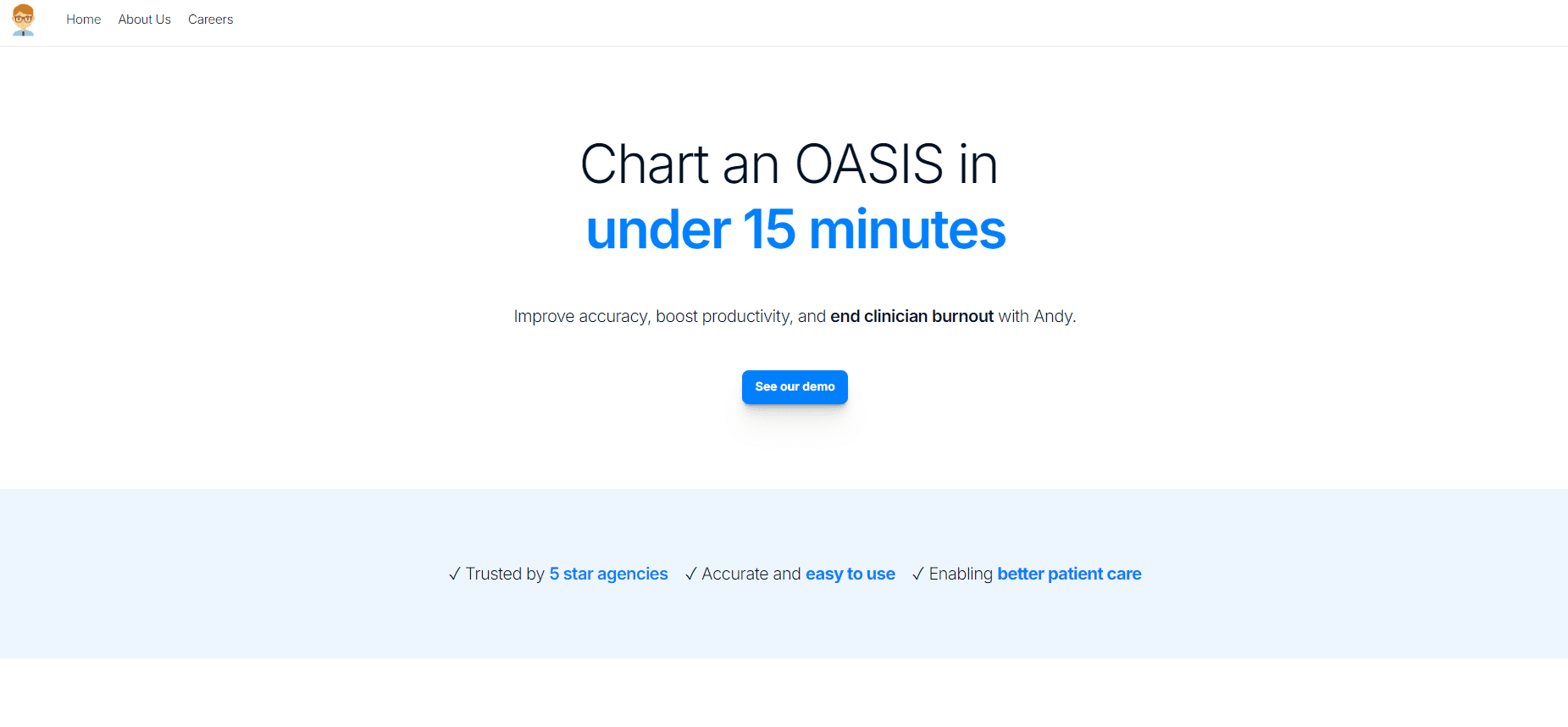
The problem it targets is the evening chart. A start of care visit can run 90 minutes of OASIS documentation after the patient has been seen, which is why home health documentation burns out nurses and delays billing. Andy AI compresses that work into a review pass, and the company puts the number at roughly 15 minutes per OASIS. The agency gets notes out the same day instead of a week later.
Three limits matter before you sign up. It covers home health only, so hospital, clinic, and hospice teams are out of scope. Pricing is quoted per agency, so you need a demo call before you know the cost. And the clinician still owns every response. The tool drafts, the nurse verifies, and nothing is submitted until a person signs off.
Getting Started
- Book a demo through with-andy.com. The team walks through your current charting flow and confirms which EMR you run.
- Set up the agency account. Andy AI connects to your EMR and loads patient history, so the draft has prior visits and the H&P to check against.
- Install the mobile app. Nurses and therapists download the iOS or Android app and sign in with agency credentials.
- Record a visit. Two taps start recording, and the app works in dead zones by storing the audio until it reconnects.
- Review and submit. The nurse checks the drafted OASIS and narrative, corrects anything the AI misread, and pushes the chart back through the normal EMR workflow.
Product Information
A quick look at Andy AI's pricing, supported platforms, and performance.
Best for
The users, tasks, and scenarios where this tool fits best.
Users
- Registered nurses doing start of care and recertification visits
- Physical, occupational, and speech therapists
- Home health agency owners and clinical managers
- QA reviewers and coders
Tasks
- Writing OASIS-E2 responses at point of care
- Capturing a medication list
- Documenting wounds
- Getting charts out the door on time
Scenarios
- A Friday start of care that used to eat the weekend
- Visits in rural areas with no signal
- An agency drowning in QA back-and-forth
Key features
Ambient Visit Recording
Recording starts with two taps and runs in the background while the nurse examines the patient. The app handles noisy rooms and holds the audio locally when there's no signal, then uploads once the phone is back online. That matters in home health, where the visit happens in a living room, not a quiet exam room.
OASIS Drafting With Skip Logic
Andy AI drafts OASIS responses rather than handing back a transcript. It follows item intent and skip logic, produces the scored responses, and leaves each one for the clinician to confirm. The company ships updates when CMS changes the data set, which is the difference between a general scribe and a home health AI scribe. OASIS-E2 went live in April 2026, and older cheat sheets already miss items like A0810 and A1110.
Built-In QA Checks
Before the chart leaves the app, Andy AI cross-checks the visit against the patient's history and physical and their prior visits. It flags things like a hip replacement code with no surgical incision documented, or post-op pain that never made it into the narrative. Reviewers get a short list instead of a full re-read, which is where most QA hours disappear.
Human-Reviewed Coding
Coding is generated by the model and then reviewed by home health coders, with every code verified before it lands. The agency gets primary and secondary diagnoses mapped to the chart. Andy AI quotes 7% higher case-mix weight across agencies using the full stack, a figure the company measures itself, so treat it as a vendor claim rather than an independent benchmark.
EMR Integration
The completed chart goes back into the agency's existing EMR instead of a separate portal. Andy AI says it works with the major home health EMRs, and setup happens during onboarding so patient history and prior visits load before the first recording.
Patient History at a Glance
Clinicians who work per diem can open a patient's prior visits and summary before walking in. That turns a blind visit into a prepared one, which matters for PRN staff who may not have seen the patient before.
Pros and cons
Pros
- Built for home health rather than adapted from a hospital scribe, so OASIS items, skip logic, and GG scoring are handled in the product.
- One app covers scribing, QA, and coding, which removes the handoff between three vendors and three invoices.
- Works offline, a requirement for rural visits that most cloud-only scribes fail.
- Human coders review every chart, which gives agencies a defensible audit trail on diagnosis coding.
- Nurses report getting their evenings back, and the company's own numbers put 94% of notes inside 24 hours.
Cons
- No public pricing. You have to book a demo to get a quote, which slows down comparison shopping.
- Home health only. If your agency also runs hospice or private duty, you'll keep a second documentation tool.
- The AI draft still needs a clinician review pass, so the time saving is real but not zero.
- Small vendor with a short track record, so agencies with strict procurement rules will want references and a security review before committing.
Frequently asked questions
Andy AI records a home health visit and drafts the clinical documentation from it: OASIS responses, the clinical narrative, medications, wounds, and vitals. The clinician reviews the draft and submits it through the agency's EMR.
Related content
Explore related tools, skills, and articles for Andy AI.
Andy AI Alternatives

Google EmbeddingGemma 2
Google DeepMind · Writing · Image · CodingGoogle EmbeddingGemma 2 is a 740M-parameter open model that turns text, code, images, audio, and video frames into vectors in one 768-dimension space, running on phones and laptops.

MePersona
MePersona, Inc. · Writing · Productivity · MarketingMePersona is an AI unified inbox for creators. It learns your voice, drafts replies to fan messages from 12 platforms, and sends only what you approve.

Fluence
Yay Software (Yannick Huchard) · Writing · Voice & Language · ProductivityFluence is an Android app that reads PDFs, EPUBs, Word files and web articles aloud, follows each sentence as it speaks, and answers questions about the text on the phone itself.