

Astra Security
Astra Security · Other
Astra Security is an AI-powered continuous pentesting platform that pairs an automated vulnerability scanner with human pentesters. It runs offensive tests against web apps, APIs, and cloud assets behind login, then helps teams fix what it finds. The pitch is simple: keep security testing running at the pace your code ships, not once a quarter. It works as a penetration testing service for small security teams and SaaS companies that want clearer, less noisy coverage than a one-off scan. But is it worth the per-target cost? Read on to see who gets the most out of it.
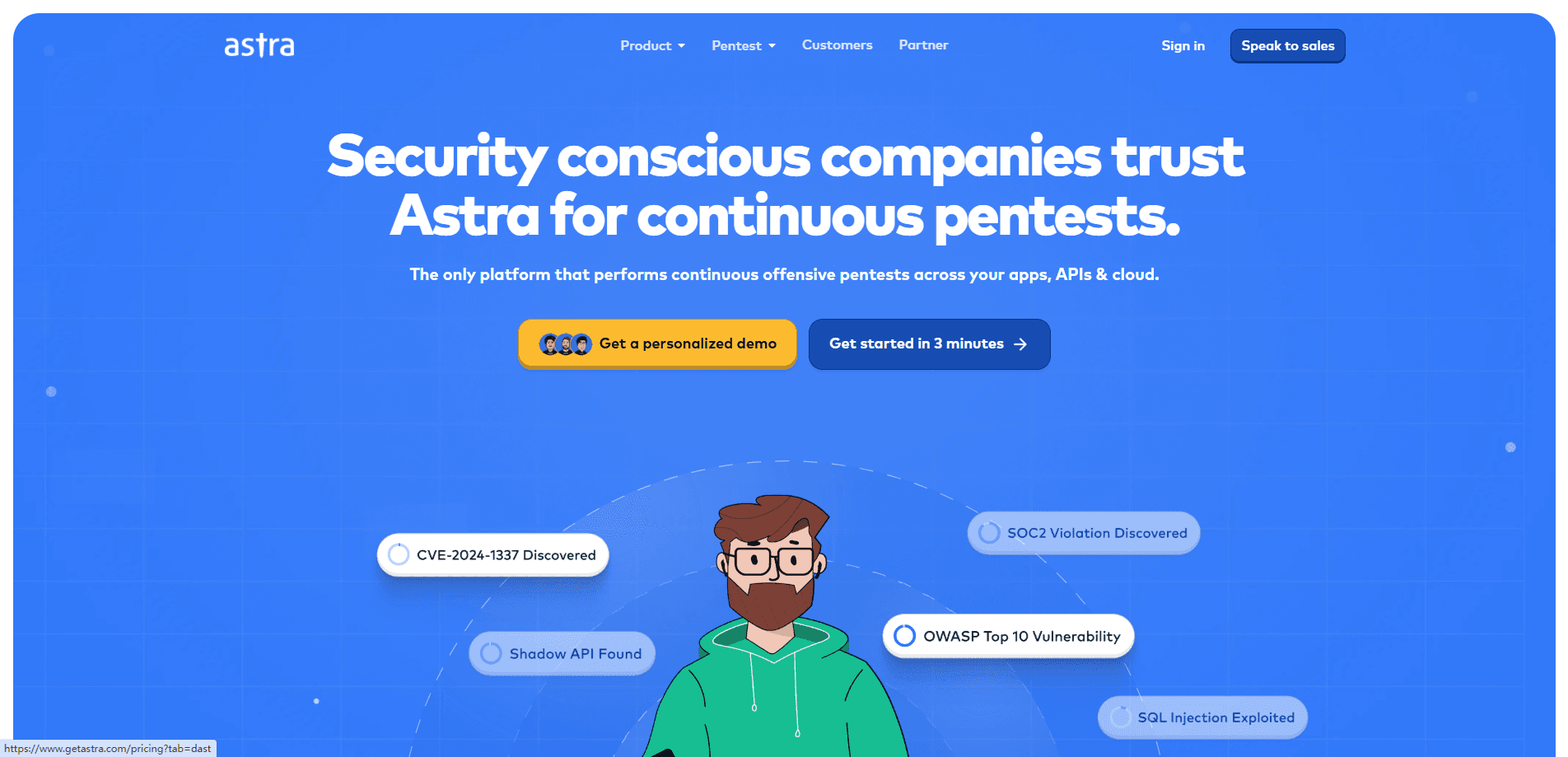
About Astra Security
What Is Astra Security
Astra Security is a pentest and vulnerability management platform built around a DAST scanner. That acronym stands for application security testing done live against a running app, rather than reading its source. Instead of a single annual test, it keeps scanning your web apps, APIs, and cloud environments on a schedule, so new bugs show up soon after they land. The scanner pushes past login screens and crawls the site tree, which matters because most real issues hide behind authentication.
The platform mixes automation with people. Automated scans cover thousands of test cases from OWASP, SANS, and known CVE checks, while security experts review findings and help you understand the risk. Integration with CI/CD, Slack, and Jira keeps alerts where your team already works. That combination is the main draw for teams without a dedicated security engineer.
The tradeoff is scope and setup. The platform is web-based and priced per target, so costs scale with how many assets you need to watch. It's also a testing tool, not a full fix-it suite: you still need someone to act on findings. That's the catch. If you want a scanner your team runs on autopilot with light oversight, it fits. If you want hands-off compliance paperwork only, look elsewhere.
Getting Started
- Sign up on the Astra Security site and open the dashboard.
- Add a target, which for the platform means a domain plus its site tree URLs; you can attach extra hosts for API calls without buying another target.
- Connect the domains you want scanned and, if needed, set login credentials so the scanner can test behind authentication.
- Link an integration like Slack, Jira, or your CI/CD pipeline so findings reach the right people.
- Run the first scan and work through the prioritized report; the platform's AI assistant helps explain each vulnerability and how to fix it.
Product Information
A quick look at Astra Security's pricing, supported platforms, and performance.
Best for
The users, tasks, and scenarios where this tool fits best.
Users
- Small security teams
- SaaS and fintech companies
- Developers without a security background
Tasks
- Continuous vulnerability scanning
- Authenticated DAST scanning
- API security monitoring
- Finding and fixing vulnerabilities
Scenarios
- Preparing for a security audit or compliance review, when you need documented findings and fixes.
- Shipping fast and wanting automated checks tied to your CI/CD pipeline, so risky code doesn't reach production.
- Early-stage projects that need a first security baseline without buying a full manual pentest engagement.
Key features
Continuous DAST Scanner
The core engine runs offensive scans against your live web apps rather than reading static code. It covers 15,000+ test cases drawn from OWASP, SANS, and CVE databases, and it can schedule scans monthly or on your own cadence. No more guessing. The result is a moving picture of your risk instead of a snapshot from last year.
Authenticated Scanning Behind Login
Many scanners stop at the front door. Astra logs in first and then crawls the site tree behind the authentication wall. That's where most impactful flaws live. The tool tests the pages and flows your real users reach, so exposure gets a more honest picture.
Human-Reviewed Pentests
Alongside automation, Astra runs expert-led manual pentests. Reviewers check findings, cut down the false positives that make automated reports hard to trust, and add context on severity. For teams that need a real pentest report, not just raw scanner output, this is the part that matters. It's the difference between a list of alerts and a clear verdict.
API and Cloud Coverage
The platform extends testing to APIs and cloud environments. That includes API calls which cross into other domains. You can add those extra hosts during setup without buying another target. It gives one place to watch web, API, and cloud surfaces instead of juggling tools.
AI Fix Assistance
When a scan flags something, an AI assistant explains the vulnerability in plain language and suggests how to fix it. It's conversational, so you can ask follow-up questions about a finding. That matters. It lowers the barrier for developers who know their stack but not security jargon.
Workflow Integrations
Astra connects to CI/CD pipelines, Slack, and Jira. Findings land in your tickets and chat threads, so remediation becomes part of normal work rather than a separate chore. Sound familiar? If your team already lives in Jira, this just slots in. Teams routing issues through their ticketing system get resolution tracking without leaving their existing setup.
Pros and cons
Pros
- Combines automated scanning with manual pentest review, so reports carry expert context, not just raw output.
- Authenticated scanning reaches behind login, where the most serious vulnerabilities usually sit.
- Broad surface coverage across web apps, APIs, and cloud from a single dashboard.
- Integrations with CI/CD, Slack, and Jira drop findings into the tools teams already use.
- AI fixing assistant explains findings in plain terms, useful for developers without a security background.
Cons
- No free plan; the entry point is a paid $7 weekly trial, which limits casual evaluation.
- Pricing scales per target, so wide asset coverage adds up for larger organizations.
- It's a testing and reporting tool, not a fix-it service: you still need someone to apply the changes.
Frequently asked questions
It runs continuous pentests and vulnerability scans against your web apps, APIs, and cloud assets, then helps you understand and fix what it finds. Think of it as a web application security tester that keeps running instead of a once-a-year audit.
Related content
Explore related tools, skills, and articles for Astra Security.
Astra Security Alternatives
BinkBink
BinkBink · OtherBinkBink is a free online game platform and AI game maker that lets anyone turn a short text description into a playable browser game. You can jump into hundreds of community-made games. Or describe your own idea and play it in seconds, then share it with friends. Want to create your own game? You don't need to code. No engine setup, no download, no hassle.

Audiogen
Audiogen Inc. · OtherAudiogen is an AI music generator built by Audiogen Inc., a small research team that spent about 2.5 years training its own generative music model and designing a web interface around it. Instead of a plain text box, this AI music tool turns the timeline into a beginner-friendly Generative Audio Workstation, or GAW, where inpainting, extending, remixing and stem editing work more like painting on a canvas. The product is still in beta, so access runs through a waitlist or an invite. Paid plans aren't published yet.

Aiml API
AIMLAPI OÜ · OtherAiml API is a unified AI model API that puts more than 1000 models from OpenAI, Google, Anthropic, and others behind one endpoint and one bill. You write code against a single OpenAI-compatible schema, then switch between chat, image, video, and audio models by changing a model string. It suits developers and small teams who want multi-model access without juggling a dozen separate provider accounts, and it removes the usual billing headache that comes with testing several vendors. One key covers it all.