

Autify
Autify, Inc. · Coding
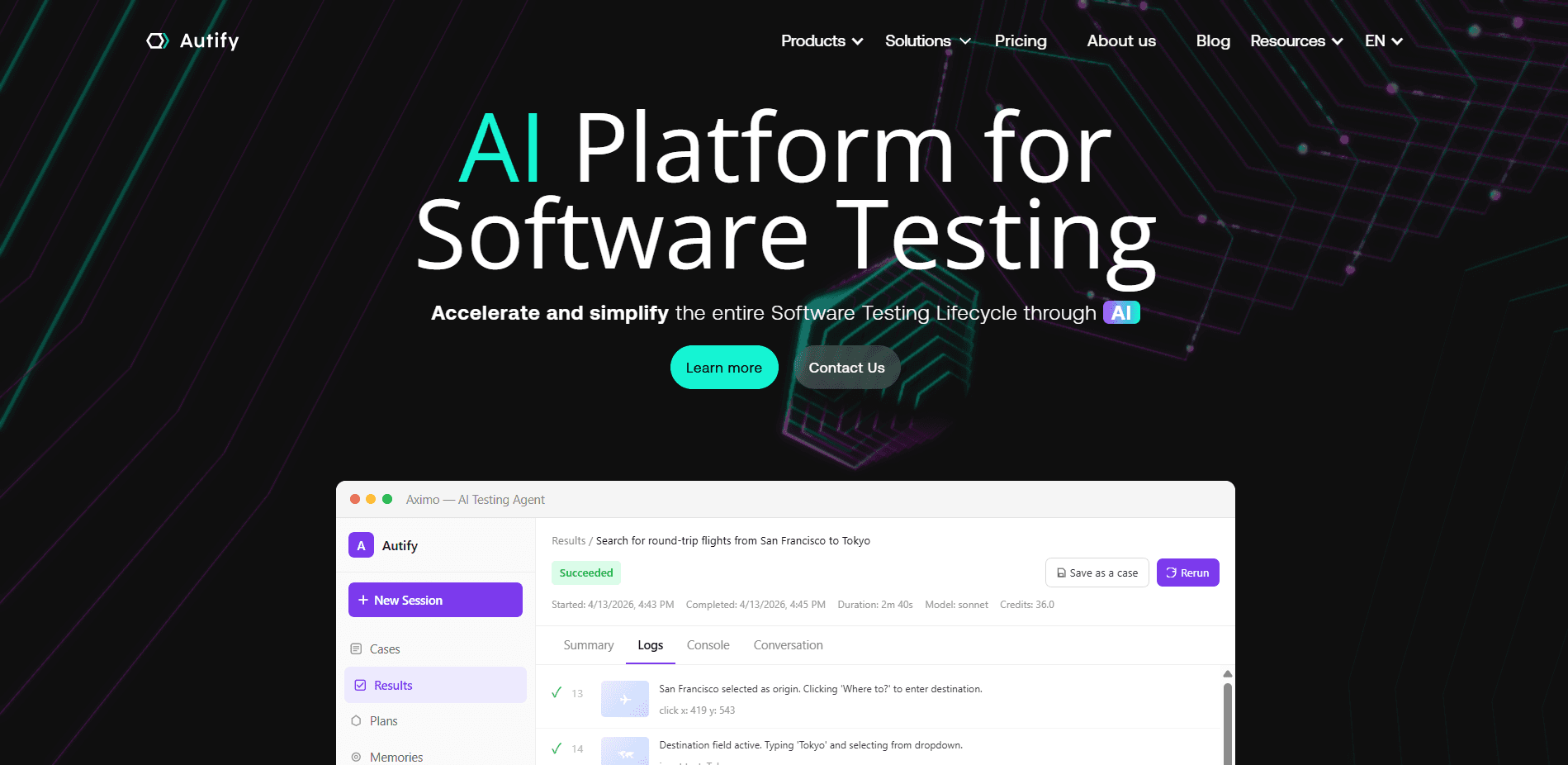
Autify is an AI testing platform built around Aximo, an agent that runs end-to-end web, mobile, and desktop tests from plain-English descriptions, plus Genesis for AI test case design.
About Autify
What Is Autify
Autify is an AI test automation platform from Tokyo-based Autify, Inc. The company started in 2016 with a no-code tool for recording browser tests, then rebuilt the product around AI. Today the platform has two main parts. Aximo is an autonomous testing agent that reads a written scenario, opens your app, clicks through the flow, and reports whether the result matched expectations. Genesis handles test case generation, turning requirements and source code into structured cases.
The core promise is less upkeep. Traditional automation breaks when a button moves or a class name changes, and someone has to fix the script. Aximo works from what it sees on screen, so a redesigned page doesn't automatically mean a failed run. Autify says fewer than 1% of failures on its platform come from UI changes, and that teams cut maintenance time by about 90%. Those figures come from the vendor, so treat them as marketing claims rather than independent benchmarks.
The limits matter too. Aximo is a hosted cloud service on the Free, Core, and Team plans, so regulated teams that need on-premise deployment have to go Enterprise. Desktop testing, including Windows and macOS apps, is also Enterprise only. Everything else runs on credits, and heavy test suites burn through them quickly.
Getting Started
- Create a free account at aximo.autify.com and confirm your email address. The free plan arrives with 2,000 credits that don't expire.
- Add the application you want to test. For web, paste the starting URL. For mobile, connect a device or use the hosted device cloud.
- Write your first scenario in plain English, for example "log in with a valid account, add an item to the cart, and check that the total updates." Pick the AI model you want to drive the run.
- Run the session, then read the summary, logs, and console output. Save the scenario as a reusable test and add it to your regular suite.
Product Information
A quick look at Autify's pricing, supported platforms, and performance.
Best for
The users, tasks, and scenarios where this tool fits best.
Users
- QA teams without dedicated automation engineers
- Startups shipping weekly
- Engineering managers tracking test maintenance cost
- Mobile teams testing on real devices
Tasks
- Regression testing before a release
- Turning requirements into test cases
- Visual regression checks
- Generating framework-native scripts
Scenarios
- A checkout flow that changes every sprint
- A small team with no SDET
- Auditing a legacy web app before migration
Key features
Plain-English Test Execution
Aximo takes a written scenario and works through it like a user, entering data, clicking, and checking the end state. This is no-code test automation in the literal sense: you don't write selectors or step definitions, which is the main reason teams without automation specialists can use it. Each run produces a summary, logs, and console output you can share with developers.
Visual Recognition Over Selectors
The agent identifies elements by how they look and what they do on screen rather than by CSS paths. When a developer renames a class or moves a button, the test keeps working. This is the feature that separates Aximo from record-and-playback tools, and it's where most of the maintenance savings come from.
Cross-Platform Coverage
One agent covers web apps, iOS and Android apps, and desktop software, including operating-system level interactions. Mobile app testing on a real device or the hosted device cloud uses the same scenario format as a browser run. Desktop coverage requires the Enterprise plan, so budget accordingly if you ship a Windows or macOS client.
Genesis Test Design
Genesis starts from product requirements and source code and drafts test cases with features, testing viewpoints, and step-level detail. Reviewers edit the output before it goes into the suite. It fills the gap between a spec document and an executable test, which is usually the slowest part of a QA cycle.
Visual Regression Testing
Screenshot comparison runs on every paid plan and on Free. You catch spacing, color, and layout problems that pass a functional check. Reviewers still need to confirm intentional design changes, so expect some noise after a redesign.
Script Generation Through MCP
Aximo shares test context over the Model Context Protocol, so Claude, Cursor, Copilot, or a homegrown agent can produce test code in Playwright, Selenium, Cypress, or another framework. The code belongs to your repo and runs in your existing CI pipeline, which keeps you from locking test assets inside the vendor.
Pros and cons
Pros
- Scenarios written in plain English cut the ramp-up time for manual testers moving into automation.
- Visual recognition removes most of the breakage that comes from UI refactors, so fewer runs fail for reasons unrelated to bugs.
- The free plan includes 2,000 credits with no expiry, which is enough for a real trial on a small app.
- Mobile testing on iOS and Android is available on every plan, not gated behind Enterprise.
- MCP script generation lets teams keep test code in their own repository and CI pipeline.
Cons
- Credits are the only consumption unit, and a long end-to-end flow can eat hundreds per run. Heavy suites get expensive fast.
- Concurrency is low on cheap plans: one simultaneous web run on Free, five on Core. Parallel testing needs the $450 Team plan or above.
- Desktop app testing and on-premise hosting are Enterprise only, which rules out the lower plans for regulated industries.
- Results depend on how well a scenario is written. Vague wording produces vague checks, and the platform won't infer intent for you.
Frequently asked questions
Autify is a software testing platform that automates checks with AI. The Aximo agent executes end-to-end tests from written descriptions on web, mobile, and desktop apps, and Genesis generates test cases from requirements and code.
Related content
Explore related tools, skills, and articles for Autify.
Autify Alternatives

Base Code
Base44 (Wix) · Coding · ProductivityBase Code is a shared cloud development environment from Base44. Teammates describe changes to an existing GitHub codebase in chat, preview them live and send them back as pull requests.

Google EmbeddingGemma 2
Google DeepMind · Writing · Image · CodingGoogle EmbeddingGemma 2 is a 740M-parameter open model that turns text, code, images, audio, and video frames into vectors in one 768-dimension space, running on phones and laptops.

GitGlow
GitGlow · Coding · ProductivityGitGlow is a local-first desktop Git client that lets independent developers review their own code and their AI agents' changes in one place before shipping.