

Avallon
Avallon · Other
Avallon is an AI claims automation platform built for insurance carriers, MGAs, and TPAs that want to take manual work out of claims operations. It pairs autonomous AI agents with a context engine that plugs into a claims management system, handling claims intake automation, document processing, third-party outreach, and data entry so adjusters can spend more time on decisions. Teams across the US and Europe use it to resolve cases faster without ripping out the systems they already run. The short version: it targets claims processing AI that lifts adjuster productivity.
About Avallon
What Is Avallon
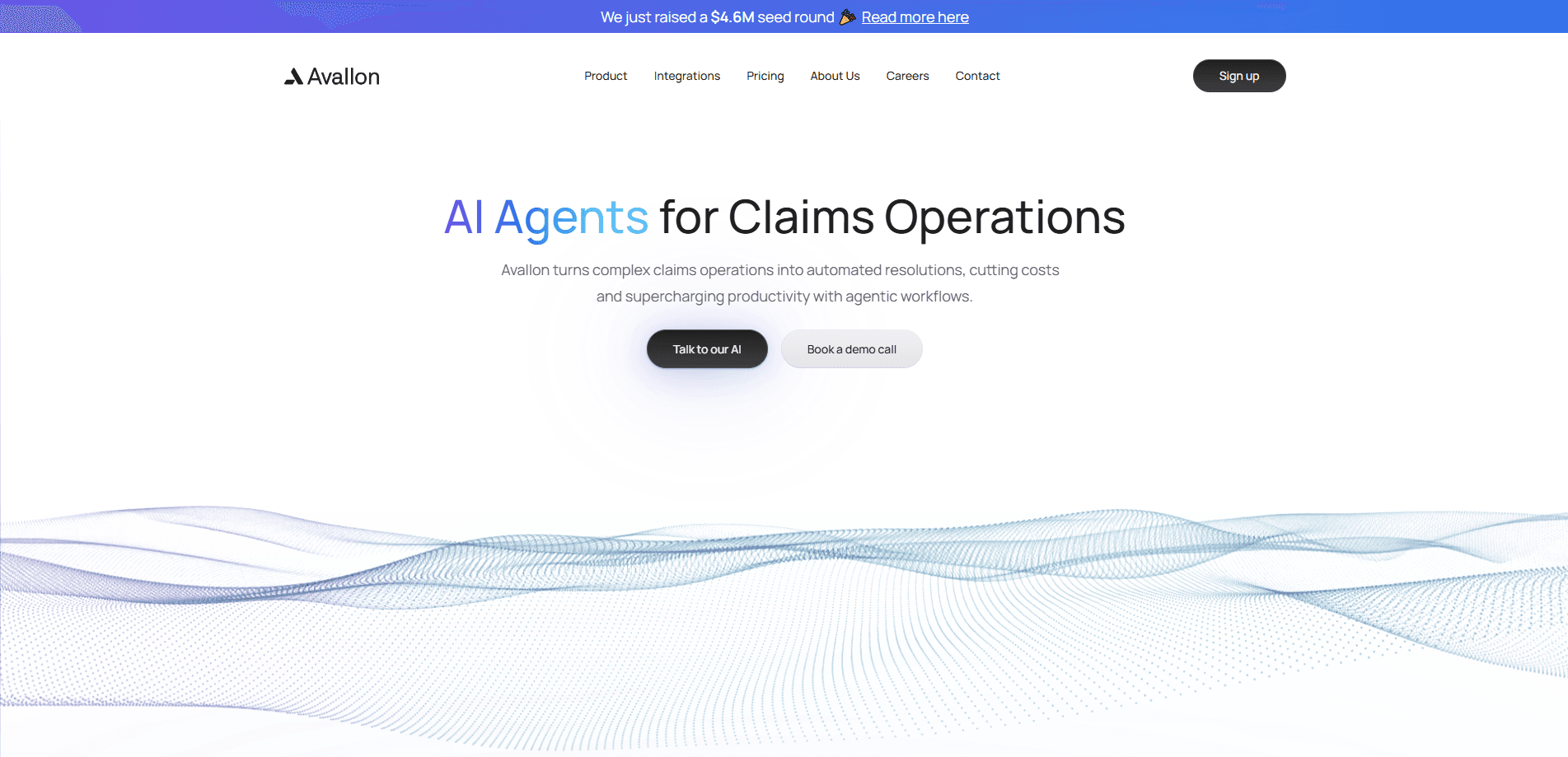
Avallon is a platform that puts AI agents to work on the back office of insurance claims. It targets the parts of the job that eat up an adjuster's day: answering routine status calls, chasing employers and providers, reading unstructured files, and typing the same details into a claims management system over and over. Instead of replacing your stack, Avallon integrates with it and runs these tasks on top.
The company was formed at Cornell University by a team of engineers and operators with backgrounds at FINN, Agentive, Taktile, and EY. It's backed by venture investors and has raised early funding to scale its agentic workflows for claims teams.
The limits are worth naming. Avallon sells to organizations, not individuals. Pricing is custom-quoted rather than published. You also won't get far without an integration project, since the platform is meant to sit inside an existing claims workflow. If you're a solo adjuster or a small shop looking for a self-serve tool, this isn't it.
Getting Started
- Book a demo call through the site to walk the team through your current claims workflow and systems.
- Run a proof of value on real production claims inside your own environment, so leadership can see it work before committing.
- Let the forward-deployed engineering team integrate Avallon with your claims management platform, REST APIs, ERP, email, and phone systems.
- Configure the agents for your lines of business, such as workers' comp, life and health, or P&C, and connect the scripts your team already uses.
- Go live, then monitor call handling, extraction accuracy, and case throughput through the platform.
Product Information
A quick look at Avallon's pricing, supported platforms, and performance.
Best for
The users, tasks, and scenarios where this tool fits best.
Users
- Claims teams at carriers and MGAs
- TPAs managing high-volume intake
- Adjusters buried in admin work
Tasks
- First notice of loss intake
- Document processing and chronologies
- Third-party outreach
Scenarios
- After-hours and overflow calls
- Multilingual claims handled in one queue
- Scaling intake during seasonal surges
Key features
Autonomous inbound and outbound agents
Avallon's agents handle both sides of a conversation. Inbound agents field first notice of loss and status checks, while outbound agents call employers, providers, and claimants to gather information or send demands. No phone tag. Each agent adapts its script to the policy and the specifics of the claim.
Context-aware claims engine
The platform reads your workflows and claims data end to end so agents answer with the right information at the right moment. That context is what lets a status call pull real claim details instead of giving a generic response. Agents that work blind get things wrong. This engine keeps them grounded.
Document parsing and auto-entry
The Parser takes any claim file, including scanned forms and medical records, and turns it into chronological, indexed data. It then syncs the extracted fields directly into your claims management system, which removes a big chunk of manual typing. That's the part adjusters hate most.
Avallon Copilot
Copilot is a chat layer over your claim files. It pulls facts, cites the sources it used, analyzes the claim, and suggests next steps. Adjusters can ask it questions about a file and get answers grounded in the actual documents rather than a summary written from memory.
Human handoff and compliance
When a call gets sensitive or falls outside the agent's scope, it transfers to a person with the context attached. Every call and outreach carries a full audit trail and logging, which matters for regulated claims work where you need to show what was said and when.
Multichannel support
Avallon works across phone, email, text, chat, and fax. Claim information arrives through every one of those channels. The platform routes it into one structured flow instead of leaving teams to stitch it together by hand.
Pros and cons
Pros
- Agents integrate with existing claims management platforms, REST APIs, and ERP systems instead of forcing a system migration.
- Handles inbound and outbound workflows in one platform, covering intake, status calls, outreach, and document processing.
- Scales to unlimited concurrent calls and supports multilingual claims, which fits high-volume and cross-border operations.
- Ships with a proof of value on production claims, giving teams evidence before a full rollout.
- Full audit trails and logging support compliance needs in regulated insurance work.
Cons
- Pricing is custom-quoted only, so you can't estimate cost without talking to sales.
- Everything depends on an integration project, which rules it out for teams wanting a quick self-serve setup.
- It's built for organizations, so solo adjusters and small independent shops won't get much use from it.
Frequently asked questions
Avallon automates back-office claims work with AI agents. They answer intake and status calls, make outbound calls to employers and providers, read claim documents, and enter the extracted data into your claims system, cutting the manual load on adjusters.
Related content
Explore related tools, skills, and articles for Avallon.
Avallon Alternatives
BinkBink
BinkBink · OtherBinkBink is a free online game platform and AI game maker that lets anyone turn a short text description into a playable browser game. You can jump into hundreds of community-made games. Or describe your own idea and play it in seconds, then share it with friends. Want to create your own game? You don't need to code. No engine setup, no download, no hassle.

Audiogen
Audiogen Inc. · OtherAudiogen is an AI music generator built by Audiogen Inc., a small research team that spent about 2.5 years training its own generative music model and designing a web interface around it. Instead of a plain text box, this AI music tool turns the timeline into a beginner-friendly Generative Audio Workstation, or GAW, where inpainting, extending, remixing and stem editing work more like painting on a canvas. The product is still in beta, so access runs through a waitlist or an invite. Paid plans aren't published yet.

Aiml API
AIMLAPI OÜ · OtherAiml API is a unified AI model API that puts more than 1000 models from OpenAI, Google, Anthropic, and others behind one endpoint and one bill. You write code against a single OpenAI-compatible schema, then switch between chat, image, video, and audio models by changing a model string. It suits developers and small teams who want multi-model access without juggling a dozen separate provider accounts, and it removes the usual billing headache that comes with testing several vendors. One key covers it all.