

Base for Music
Base for Music (SAS Base for Music, Paris, France) · Marketing
Base for Music is a music marketing platform that links ad spend, fan CRM and streaming data, so artists and labels can run Spotify-focused campaigns and measure the return.
About Base for Music
What Is Base for Music
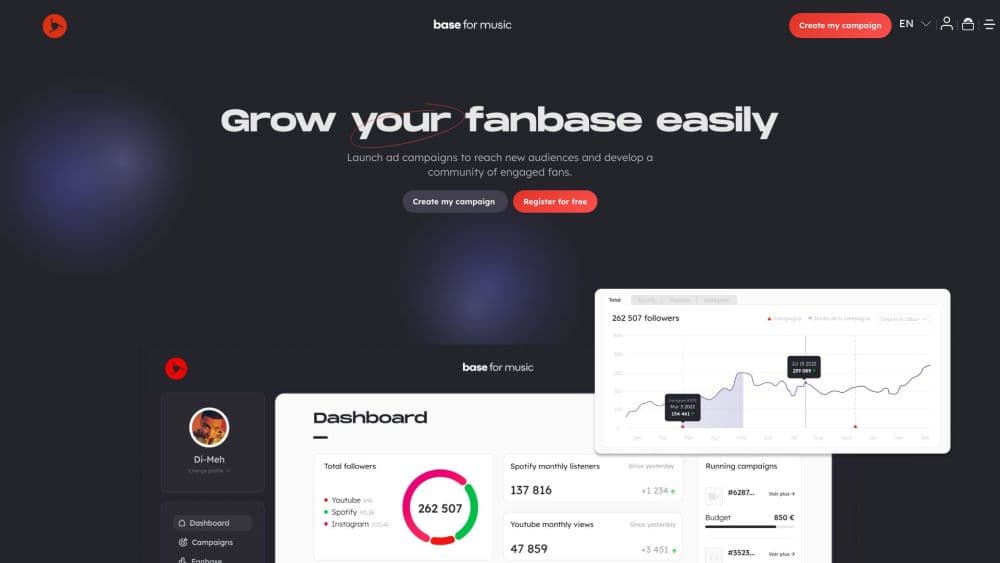
Base for Music is a marketing platform built for people who sell music rather than software. It pulls ad accounts, fan data and streaming stats into one dashboard, then points out which tracks are worth pushing and which campaigns actually moved the numbers. The company is a French SAS based in Paris and counts more than 10,000 artists and labels among its users, according to its own site.
The product replaces a familiar mess: Spotify for Artists open in one tab, Meta Ads in another, a spreadsheet of fan emails somewhere else. Base for Music puts those sources side by side, so a campaign decision rests on listening behavior instead of a hunch. Campaigns run on Meta, Instagram, TikTok and Spotify, and a media buying team handles the day to day work on paid plans.
The catch is scope. Base for Music is a paid service with an ad management fee on top of your media budget, and the smallest sensible campaign starts at €100. It also leans hard on Spotify signals, which suits artists with catalog data but helps less if your audience lives on YouTube or Apple Music.
Getting Started
- Create a free account with your email, no card needed, and pick the profile that fits you: artist, team or roster.
- Connect your Spotify artist profile, then your ad accounts and smartlinks, so the dashboard can read your catalog data and past spend.
- Set a campaign goal, choose an audience and a budget from €100, and let the platform propose a strategy for the platforms you picked.
- Launch the campaign, then follow streams, Popularity Score and cost per result in the dashboard while the media buying team adjusts the delivery.
Product Information
A quick look at Base for Music's pricing, supported platforms, and performance.
Best for
The users, tasks, and scenarios where this tool fits best.
Users
- Independent artists
- Small labels and artist teams
- Music companies and agencies
Tasks
- Promoting a new single
- Timing a campaign around momentum
- Building a fan email list
- Proving ROI to a manager or investor
Scenarios
- A track is climbing on its own and you want to amplify it before the algorithm cools
- You run ads already but can't say which platform works
- A label releases twenty singles a year across a roster
Key features
Campaign Builder With Audience Targeting
You choose a goal, a budget and the platforms, and the builder suggests audiences built from listeners of comparable artists. Spotify promotion sits at the center of the build, and campaigns also run on Meta, Instagram and TikTok, with every asset attached to the campaign so results are traceable. The point is speed: a workable setup takes minutes, not a call with an agency.
Spotify Popularity Score Tracking
The dashboard follows Popularity Score, monthly listeners, followers and streams for every release in your catalog. Because the score feeds Spotify's own recommendations, a rise there can lead to Radio, Release Radar and Discover Weekly placements after the ads stop. Base for Music frames this as the part of the return that arrives later, which is why the platform pushes you to watch the score rather than only the campaign window.
Smartlinks With Attribution
Smartlinks send fans to the right streaming service and record what happens next, including saves and repeat listens. Unlimited links, retargeting pixels and lifetime data are included, and custom slugs and design options keep the page on brand. Every click ties back to the campaign that produced it, so a link becomes a measurement tool rather than a landing page.
Fan CRM and Fanbase Insights
The fan CRM collects listener data from smartlinks and campaigns, then scores engagement so you can see who keeps coming back. Direct messages to fans are available on paid plans, which turns a streaming audience into something you can reach again. Track level insights show which songs pull the strongest reaction, useful when you plan the next release.
Base Intelligence Recommendations
Base Intelligence reads your own data and returns specific suggestions: which track to promote, which audience to target, when to launch. It also sends weekly and monthly performance summaries by email. The value here is deciding what to skip, since most artists waste budget on the wrong song at the wrong moment.
Media Buying Team and Account Manager
Campaigns don't run on autopilot. A media buying team manages delivery, shifts budget between platforms and checks in during the campaign. Access adds a shared account manager and one strategic report per month, while Premium adds a dedicated manager and three reports, including similar artist and ROI analyses.
White Label OS With API Access
Companies can run the platform under their own name, connect their own ad accounts, add users and reach the data through an API. Custom pricing applies, and a senior strategist is part of the package. This is the option for agencies that want the engine without building one.
Pros and cons
Pros
- Ad spend, fan data and streaming stats sit in one dashboard, which removes the manual export work between Spotify, Meta and TikTok.
- The media buying team handles optimization, so you don't need in-house ad skills to run a campaign.
- Popularity Score tracking gives a clear signal for timing a push, and the report explains why the score matters.
- Smartlinks include retargeting pixels and lifetime data at no extra cost, which most standalone link tools charge for.
- White Label API access lets agencies resell the workflow instead of rebuilding it.
Cons
- The ad management fee of 15% to 30% sits on top of your media budget, so small campaigns lose a meaningful share to fees.
- The €100 minimum per campaign rules out testing a single track with €20, which is how many new artists start.
- The product assumes Spotify is your main platform, and artists whose listeners sit on YouTube or Apple Music get less from the data.
- Popularity Score is a Spotify metric, so the ROI model depends on Spotify's algorithm behaving as it has in the past.
Frequently asked questions
It runs and measures music advertising. You connect your ad accounts and Spotify profile, launch campaigns to listeners of comparable artists, and track streams, Popularity Score and revenue in one dashboard.
Related content
Explore related tools, skills, and articles for Base for Music.
Base for Music Alternatives

ngram 2.0
ngram · Video · Marketingngram 2.0 is an AI video generator for teams. It turns a prompt, a screen recording, or a product URL into a narrated explainer, product demo, or AI avatar video, and every scene stays editable.

shippedit.me
Krawlup · Marketing · Businessshippedit.me now redirects to Krawlup, a web platform that audits SEO, AEO and page speed every week, then hands the fixes to AI coding agents over MCP.

MePersona
MePersona, Inc. · Writing · Productivity · MarketingMePersona is an AI unified inbox for creators. It learns your voice, drafts replies to fan messages from 12 platforms, and sends only what you approve.