

Basejump AI
Basejump AI · Coding · Marketing
Basejump AI is an AI data analytics platform that lets teams ask questions about their databases in plain language and get answers back.
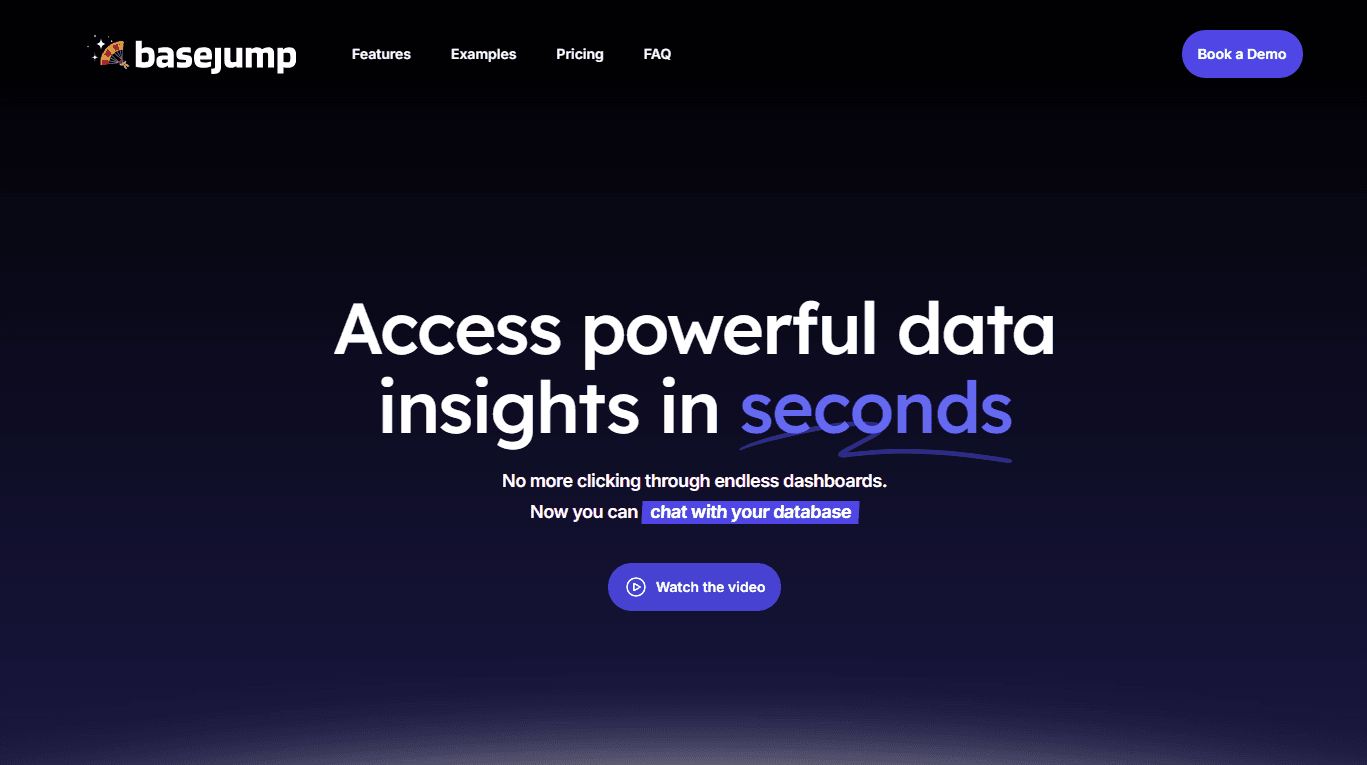
About Basejump AI
What Is Basejump AI
Basejump AI is an AI data agent that sits on top of your company's databases and answers questions in everyday language. You type "How many employees are currently at the company?" and it returns the number, plus the underlying rows and the SQL it ran. The point is to skip the usual chain of writing a ticket, waiting on an analyst, and going back and forth over what you actually meant.
The product targets the people in an organization who don't write SQL, and that group includes product managers, operators, and support leads who have the questions but not the query skills. Analysts aren't pushed aside here. The pitch is that they get their time back for the harder work instead of building one more dashboard that answers a single fixed question.
Basejump says its answers come from querying your data at the source, and that it stores your data in your own storage. That's a meaningful claim if you handle anything sensitive, and worth verifying against your own security requirements before rolling it out. The free tier is capped at 50 credits a month, which works out to roughly 25 queries, so heavy users will hit the ceiling fast. The bigger limit is practical: this is a layer for structured data, so if your key context lives in docs or emails, an AI data agent won't reach it.
Getting Started
- Sign up on the Basejump site and pick a plan; the free tier needs no credit card to start.
- Connect the data source you want to query, keeping your data in your own store.
- Set up teams so people see only the data they should, since access is managed through teams.
- Ask your first question in plain language and check the returned rows against the SQL behind them.
- Add more credits or move to a paid setup once you understand your monthly query volume.
Product Information
A quick look at Basejump AI's pricing, supported platforms, and performance.
Best for
The users, tasks, and scenarios where this tool fits best.
Users
- Product managers
- Business and ops teams
- Data analysts
Tasks
- Ad hoc reporting
- Cross-source lookups
- Verifying insights
Scenarios
- A team meeting where someone needs a number on the spot and no analyst is available to write the query.
- Weekly planning
- Early exploration
Key features
Chat With Your Data in Plain Language
The core of Basejump AI is a chat interface that turns a normal question into a database query. You don't pick filters or drag fields. You ask, then read the answer. It's the difference between a form and a conversation, and it's why non-technical users can get to structured data without a training course.
Answers Grounded in Your Source Data
Basejump says it queries your data at the source, so answers reflect your current figures rather than a stale copy. Each response also shows the rows it used and the SQL it generated, which matters when the honest question is "can I trust this number?" You can check the work instead of taking it on faith.
Built-In Access Control Through Teams
Access is managed by teams, so different groups see different slices of the data. For a company that can't hand everyone the keys to the warehouse, that structure is what makes a self-serve tool realistic. It's also the feature to test hardest during a trial.
Iterative Questioning
Insights rarely come from a single question. Basejump is built for follow-ups, so one answer leads naturally to the next: first the total, then the breakdown, then the trend. Does that beat a dashboard? For moving questions, yes. That loop is where the tool earns its keep over a static report.
API Access for Custom Integrations
The Developer plan includes API access, which lets teams build the agent into their own apps or internal tools. If you want natural language database queries inside a product you already ship, this is the path. It's aimed at developers, not end users, so expect setup work.
Pros and cons
Pros
- Plain-language questions open structured data to people who don't write SQL.
- Answers include the rows and SQL, so you can verify rather than guess.
- Access is controlled through teams, which fits companies with data they can't expose broadly.
- A free tier lets you test whether it suits your data before paying.
- API access on the Developer plan supports custom integrations.
Cons
- The free plan's 50 monthly credits (about 25 queries) run out quickly for regular use.
- It covers structured data only, so anything living in documents or chat threads stays out of reach.
- Credit-based pricing makes costs hard to predict until you track your real query volume.
- The site lists no official rating on major review platforms, so third-party validation is thin.
Frequently asked questions
It's an AI data analytics platform that answers questions about your databases in plain language. You ask, and it queries your data at the source, returning the answer plus the rows and SQL behind it.
Related content
Explore related tools, skills, and articles for Basejump AI.
Basejump AI Alternatives

Base Code
Base44 (Wix) · Coding · ProductivityBase Code is a shared cloud development environment from Base44. Teammates describe changes to an existing GitHub codebase in chat, preview them live and send them back as pull requests.

Google EmbeddingGemma 2
Google DeepMind · Writing · Image · CodingGoogle EmbeddingGemma 2 is a 740M-parameter open model that turns text, code, images, audio, and video frames into vectors in one 768-dimension space, running on phones and laptops.

GitGlow
GitGlow · Coding · ProductivityGitGlow is a local-first desktop Git client that lets independent developers review their own code and their AI agents' changes in one place before shipping.