

BeingAI
beingAI Corporation · Voice & Language · Chatbot
BeingAI is a platform for building AI beings, agents with a set persona, grounded knowledge and a voice. It suits brands, educators and creators that need AI companions for long-term engagement.
About BeingAI
What Is BeingAI
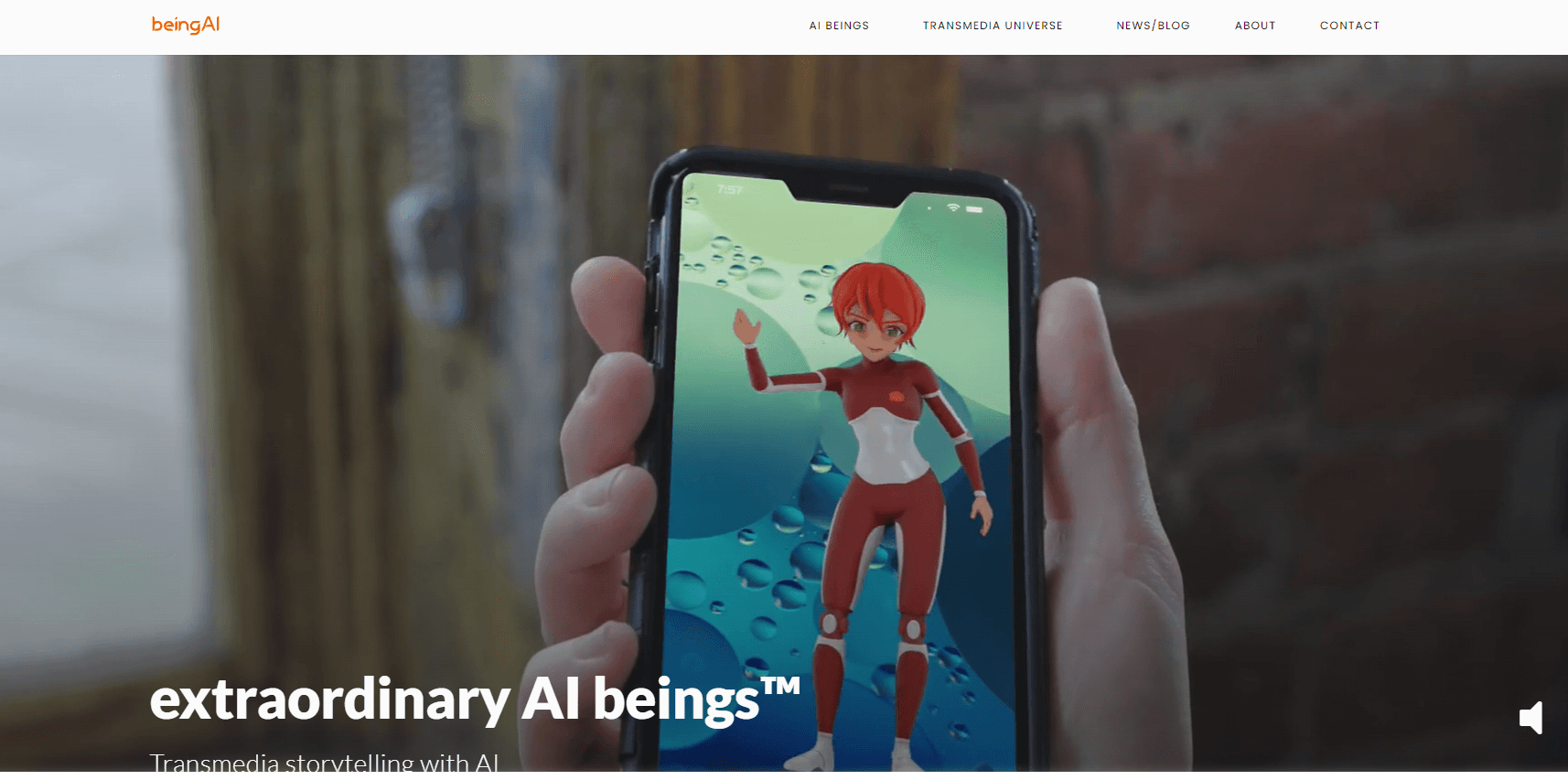
BeingAI is a company and a platform for building AI beings, which it describes as human-centric agents that support people and adapt to context. Rather than a plain chatbot, an AI being gets a character, a purpose and a way of speaking, then shows up across screens and media.
The problem it targets is engagement, not raw intelligence. A generic assistant answers a question and the session ends. BeingAI aims at the opposite case, where a brand, a teacher or an artist wants a presence a person returns to, remembers and trusts over time. Its public examples point the same way: Una, an AI environment champion built for the United Nations Development Program; Emi Jido, an ordained AI Buddhist priest; and Zbee, a character meant to live and work among people.
The main limits sit on the creative and pricing side. You need to supply the persona, the knowledge and the content, and the platform charges by the workspace, the avatars and the language model tokens you burn, so a large rollout gets expensive fast. Live physical presences, such as holograms, are part of the roadmap rather than a shipped feature. The work is also meant to promote responsible, transparent AI, which rules out the kind of unfiltered bot someone might expect from a hobby project.
Getting Started
- Create an account on the BeingAI site. The free tier does not ask for a card.
- Make an AI being. Pick an avatar, then write its persona: name, character, purpose and spoken style.
- Ground it in knowledge. Upload your own documents or lean on broader language models so answers stay on topic.
- Choose how it talks. Set text, voice or both, and pick the language for each livespace.
- Publish a livespace, then embed it on a website or download a video. The analytics dashboard tracks how people interact.
Product Information
A quick look at BeingAI's pricing, supported platforms, and performance.
Best for
The users, tasks, and scenarios where this tool fits best.
Users
- Brand teams
- Educators and trainers
- Artists and creators
- Small organizations
Tasks
- Building a branded persona
- Powering an interactive website
- Producing AI being videos
- Grounding answers in your own material
Scenarios
- Running a launch campaign
- Teaching a language or skill
- Offering a wellbeing check-in
- Extending a story world
Key features
AI Being Creation Studio
The core of the platform is a builder where you define an AI being: avatar, persona, purpose and communication style. The free plan allows one avatar and one livespace, and paid tiers scale to 50 avatars and 30 livespaces. This is the part that separates it from a bare chat interface, since the identity carries across every deployment.
Grounded Knowledge
You decide what the AI being knows. Upload your own documents, add expertise curated with domain experts, or pull from leading language models. Grounding matters most where a wrong answer is costly, such as health, learning or brand messaging, because it keeps replies tied to material you supplied.
Contextual Personalization
AI beings remember users and follow a conversation as it evolves, instead of restarting from zero each time. The platform reads what a person is trying to achieve and adapts responses in real time. That combination is personalization at scale, and it is what turns a one-off question into a relationship. The trade-off is that the AI being holds more user context.
Multi-Modal Interaction
People can talk to an AI being through text, voice or both, and each livespace supports its own languages. The Starter plan allows two voices or languages per livespace, while Pro and Creator go to ten. The choice matters for reaching audiences who read rather than speak, or the reverse.
Transmedia Deployment
Build once, then place the same AI being on mobile, desktop, physical displays, holographic projections and media platforms. The company frames physical presences as a roadmap item rather than a shipped product, so treat on-screen deployment as what is live today. A constant identity across screens is the point here.
Video Generation and Analytics
You can export AI being videos, up to 20 a month on Starter and 500 on Creator, and an analytics dashboard tracks engagement. The video path helps teams that want the character in ads or social clips without embedding a live widget, and the dashboard shows whether people stick around.
Pros and cons
Pros
- Puts persona, knowledge and voice in one builder instead of stitching separate tools together.
- Transmedia design keeps one identity consistent across devices and media platforms.
- A real free tier lets you test the workflow before paying, with no card needed.
- Interesting public references, including work for the UN Development Program, show it can handle serious deployments.
Cons
- Pricing scales by workspaces, avatars and tokens, so a large rollout adds up quickly.
- You supply the persona and the content, which means the heavy creative work is still yours.
- Physical and holographic presences remain on the roadmap, so you cannot buy them yet.
- No public API is documented, so wiring an AI being into your own pipeline means going through the web app.
Frequently asked questions
BeingAI is a platform for building AI beings, which are agents with a defined persona, grounded knowledge and a voice. It is aimed at brands, educators, creators and organizations that want an AI presence for long-term engagement rather than a one-off chat.
Related content
Explore related tools, skills, and articles for BeingAI.
BeingAI Alternatives

Foley
Hanamori Labs, LLC · Voice & Language · Productivity · AI AssistantFoley is a voice to-do list that turns a spoken sentence into a filed task, complete with project, date and time, then helps you plan the day around what is already there.

HireKey
HireKey · Voice & Language · Productivity · LeaningHireKey is an AI job search copilot built by a former tech recruiter. It checks role fit, tailors resumes, runs interview practice and tracks every application.

Fluence
Yay Software (Yannick Huchard) · Writing · Voice & Language · ProductivityFluence is an Android app that reads PDFs, EPUBs, Word files and web articles aloud, follows each sentence as it speaks, and answers questions about the text on the phone itself.