

Blazly Generative Engine Optimization
Blazly AI · Marketing · AI Detection
Blazly Generative Engine Optimization is a web-based platform that helps brands show up inside AI-generated answers. Instead of chasing blue links on a search results page, it structures your content and maps where AI systems like ChatGPT, Gemini and Perplexity pull their citations from, so your product gets named when someone asks for a recommendation. It's built for marketing and content teams who want their brand recognized and referenced in AI search. That's the whole point of generative engine optimization.
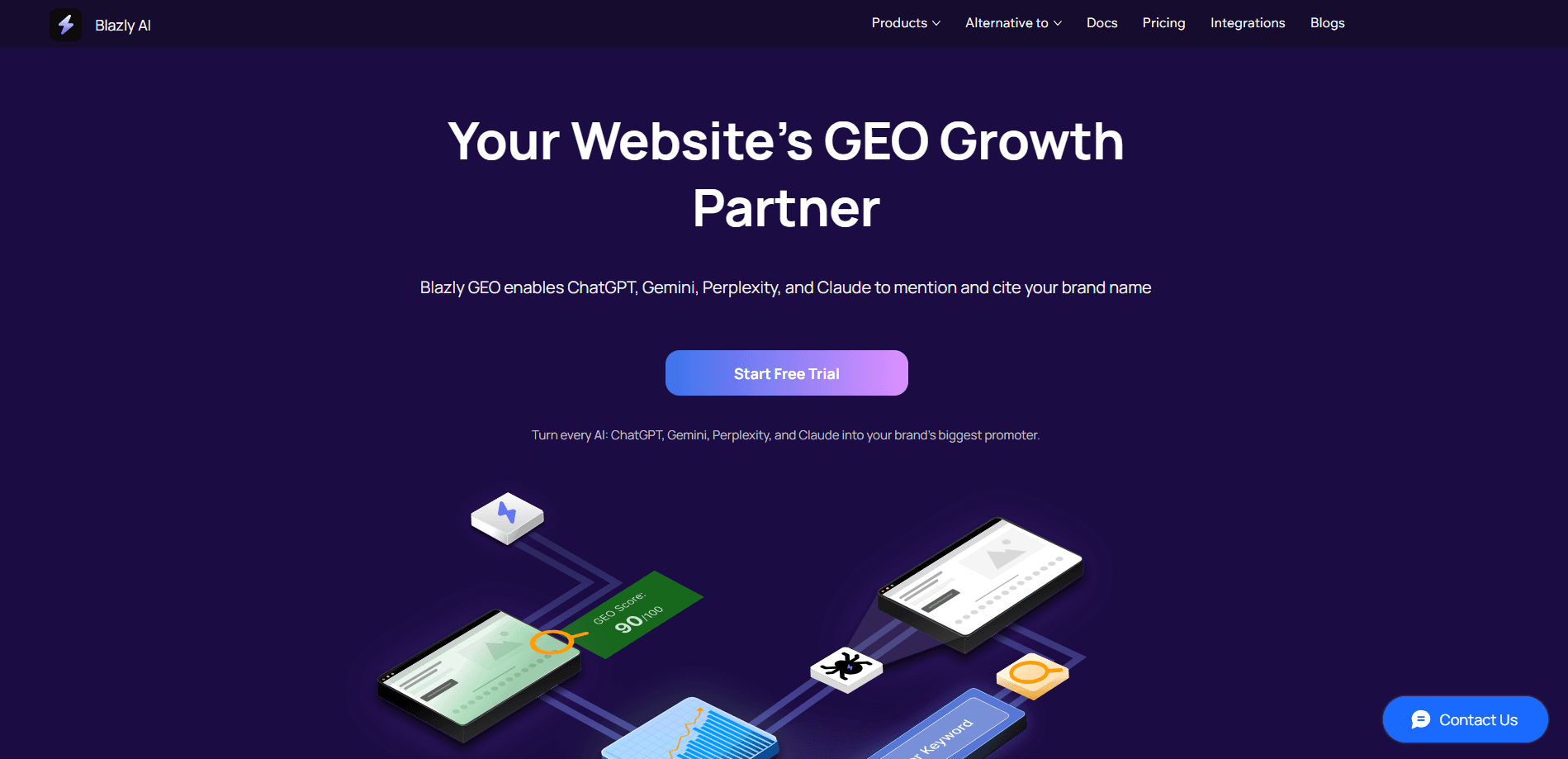
About Blazly Generative Engine Optimization
What Is Blazly Generative Engine Optimization
Blazly Generative Engine Optimization is a generative engine optimization platform, usually shortened to Blazly GEO. The category, generative engine optimization, covers the work of getting a brand mentioned, quoted and recommended by AI chatbots and AI search tools. Traditional SEO optimizes for a page ranking; GEO optimizes for a brand being the source an AI model cites. So what actually changes for you?
The product targets a real shift in how people find things. More buyers now ask an AI assistant to compare options and suggest one, and they never click a link. If your site isn't the page the model lifts its answer from, a competitor's page is, and you don't see that traffic at all. Blazly GEO addresses that by making content easier for models to read, quote and attribute.
The main limitation is scope. This is an optimization and monitoring layer, not a content factory or a magic switch that forces an AI to mention you. No tool controls what a model says. Results depend on your existing content quality and how often models refresh their sources, so expect steady work rather than overnight changes.
Getting Started
- Create a Blazly account and add your brand or website as a project.
- Connect the pages you want AI systems to reference, or let the platform scan your site for candidate content.
- Review the citation map to see which sources AI models currently pull from for your target topics.
- Restructure key pages with clear, answer-first formatting and the structured data the tool recommends.
- Track brand mentions and citation changes over time, then iterate on the pages that fall short.
Product Information
A quick look at Blazly Generative Engine Optimization's pricing, supported platforms, and performance.
Best for
The users, tasks, and scenarios where this tool fits best.
Users
- Marketing teams at SaaS and DTC brands
- SEO specialists moving into AI search
- Content leads and freelance writers
Tasks
- Auditing which sources AI models cite for your category
- Restructuring landing pages so models can lift a clean answer
- Monitoring brand mentions across ChatGPT, Gemini and Perplexity
- Tracking competitor citations
Scenarios
- Pre-launch research for a new product or feature page
- Quarterly brand-visibility reporting
- Post-campaign check-ins
- Competitive positioning
Key features
Generative Engine Optimization Workflow
Blazly GEO centers on a workflow borrowed from SEO but aimed at AI answers: find the questions your buyers ask, build content that answers them plainly, and track whether models pick it up. The platform ties these steps together so you're not juggling separate tools for research, writing and monitoring. It's the core reason to use it over a standard SEO suite.
AI Citation Mapping
The platform maps where AI systems pull their citations from for your target topics. You see which pages, sites and third-party sources models currently lean on, which tells you whether you can win a citation yourself or need to earn mentions elsewhere. This is the feature that separates GEO from rank tracking, since citations, not positions, drive visibility. Without it, AI answer optimization is guesswork.
Content Structured for AI
Blazly GEO recommends how to format pages so models can read and quote them: direct answers near the top, clear headings, and structured data that labels your entities and claims. You apply the changes to your own site. This is the content structured for AI that most sites skip, and it's why pages get ignored by models even when the topic matches. The payoff is an easier lift into an answer. Accuracy and quality stay your job.
Brand Mention Tracking
The tool tracks brand mentions across major AI systems, so you can see whether ChatGPT, Gemini and Perplexity mention your name, how often, and in what context. Over time this shows trends you can act on, like a topic where competitors get named and you don't. It's monitoring, not a guarantee. Worth knowing before you buy. No surprises there.
Competitor and Source Analysis
Beyond your own brand, Blazly surfaces the sources and competitors AI models reference for your keywords. That helps you spot which rival pages are winning citations and study their structure. Use it as a research input, then decide where your content can realistically compete.
Reporting for Marketing Teams
The platform rolls AI visibility data into reports you can share with your team. For teams used to SEO dashboards, this makes AI search performance a trackable line item rather than a black box. The value is mainly in consistency, assuming you review the data regularly. Skip the review and it's just another tab you forget to open.
Pros and cons
Pros
- Targets AI search visibility directly, a gap most SEO tools still handle poorly.
- Citation mapping shows which sources models trust, so you know where to focus.
- Structured content guidance gives writers a concrete format to follow.
- Brand mention tracking across ChatGPT, Gemini and Perplexity in one place.
- Useful for competitive research, since it surfaces rival pages that get cited.
Cons
- No control over AI models, so there's no way to force a citation or mention.
- Value depends on having solid content already; it optimizes, it doesn't create.
- Results lag because models refresh their sources on their own schedules.
- No confirmed public API, so it won't slot into a custom analytics stack yet.
Frequently asked questions
It's a platform for generative engine optimization, the practice you'll often see shortened to GEO. It helps your brand get recognized, cited and recommended by AI systems like ChatGPT, Gemini and Perplexity by structuring your content and mapping the citations those models use. Think of it as SEO extended to AI answers.
Related content
Explore related tools, skills, and articles for Blazly Generative Engine Optimization.
Blazly Generative Engine Optimization Alternatives

ngram 2.0
ngram · Video · Marketingngram 2.0 is an AI video generator for teams. It turns a prompt, a screen recording, or a product URL into a narrated explainer, product demo, or AI avatar video, and every scene stays editable.

shippedit.me
Krawlup · Marketing · Businessshippedit.me now redirects to Krawlup, a web platform that audits SEO, AEO and page speed every week, then hands the fixes to AI coding agents over MCP.

MePersona
MePersona, Inc. · Writing · Productivity · MarketingMePersona is an AI unified inbox for creators. It learns your voice, drafts replies to fan messages from 12 platforms, and sends only what you approve.