

Blix
Blix Ltd · Marketing · Business
Blix is AI text analysis software that turns survey open ends, reviews, and other open-text feedback into coded themes, dashboards, and reports in minutes.
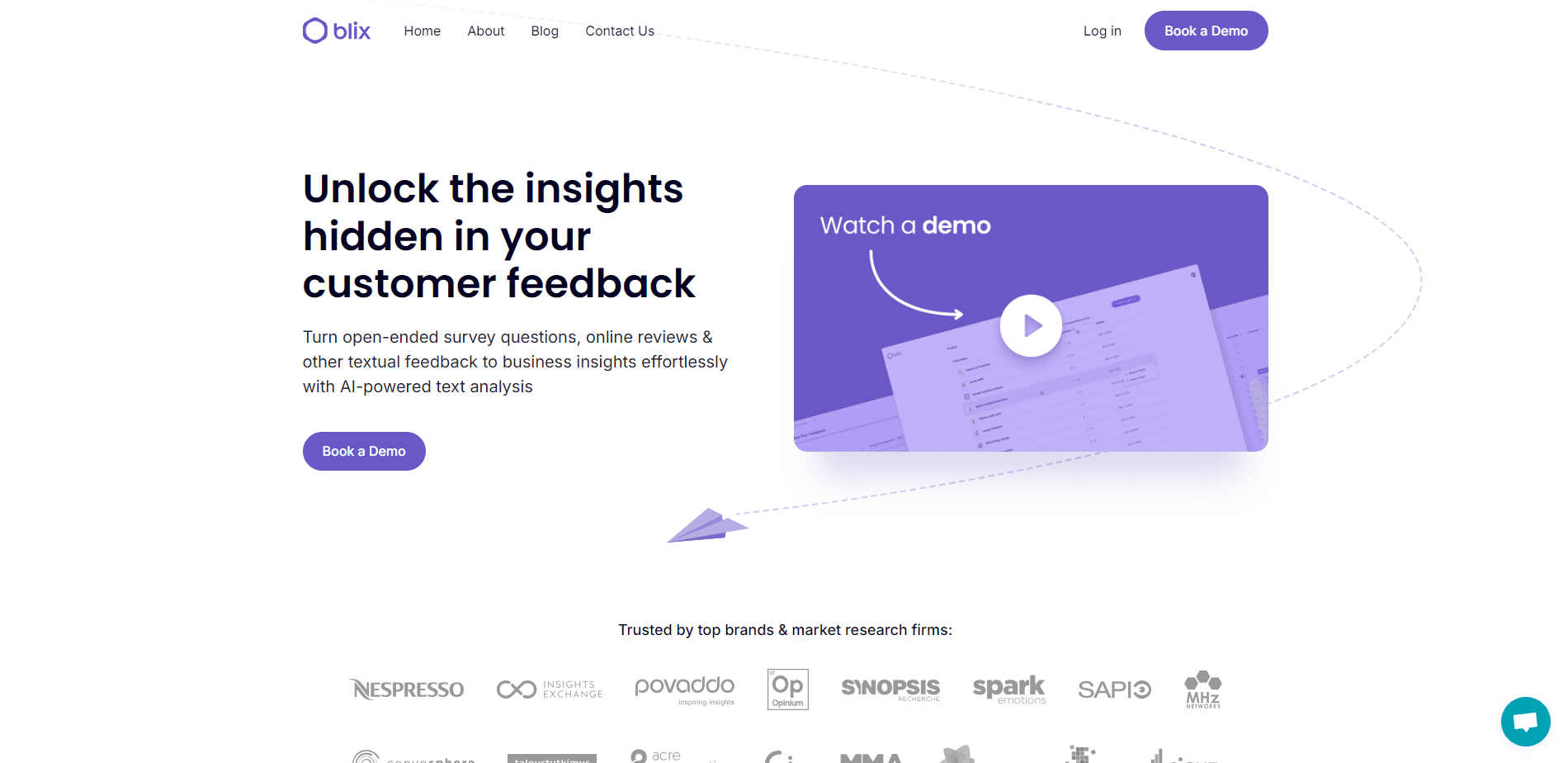
About Blix
What Is Blix
Blix is an AI text analysis platform built for researchers who work with open-text data. It's verbatim coding software at heart: it reads survey open ends, online reviews, support tickets, and similar feedback, then groups that text into topics and themes. The output is structured data you can chart, compare, and share instead of a folder of raw comments.
The problem it solves is manual coding. Reading hundreds of responses by hand and tagging each one is slow, and the results shift depending on who does the tagging. Blix runs that step automatically through thematic analysis, then lets you adjust the categories it proposes so the themes match how your team frames the research.
There are limits worth knowing up front. Blix is a paid, business-focused tool with no free tier beyond a trial, so it doesn't fit one-off personal projects. It also lives in the browser and works from uploaded files, which means it's built for teams that already have a feedback dataset, not for collecting responses in the first place.
Getting Started
- Book a demo through the Blix site and get access to the platform.
- Upload your data as an Excel, CSV, or SPSS file by dragging it into the workspace.
- Let the AI scan the text, discover the main topics, and apply semantic coding.
- Review the coded categories and adjust or rename any that don't fit your framework.
- Export the dashboard, summaries, and the coded Excel file for your team.
Product Information
A quick look at Blix's pricing, supported platforms, and performance.
Best for
The users, tasks, and scenarios where this tool fits best.
Users
- Market research analysts
- Customer insights teams
- Public opinion and polling researchers
Tasks
- Coding survey open ends
- Exploring themes in reviews
- Building a feedback report
Scenarios
- Analyzing a quarterly customer survey
- Comparing feedback across languages
- Handling a spike of support comments
Key features
Automated Topic Discovery
Blix scans your open-text feedback and pulls out the main topics and themes automatically. Instead of deciding the categories before you start, you upload the data and see what the responses are actually about. That makes it easier to catch themes you didn't predict.
AI-Powered Verbatim Coding
The platform categorizes open-ended responses and codes them into structured, quantitative data. Responses that share a meaning land in the same category, so a wall of comments becomes a set of countable themes. You keep control over the final categories.
Automated Reports and Summaries
Once coding finishes, Blix produces a dashboard with charts and written summaries, along with a full Excel file of coded data. Both are ready to share with a team or stakeholder, which cuts the manual write-up that usually follows analysis.
Multilingual Coding
Blix codes feedback from different languages out of the box, so you can analyze responses from several markets in one pass. There's no separate translation stage before the themes are grouped, which keeps the process shorter for global studies.
Text Analysis API
Blix offers a text analysis API for teams that want coding inside their own tools. It lets you push open-text data through the same analysis from a custom workflow, rather than working only inside the Blix interface.
Secure Enterprise Environment
Data stays encrypted inside a closed environment, and Blix says it doesn't use customer data to train models. For teams handling sensitive feedback, that removes a common objection to uploading research data to a third party.
Pros and cons
Pros
- Cuts manual coding time, since the AI tags open-text responses before you review them.
- Handles large datasets and multiple languages without extra setup.
- Generates a dashboard, summaries, and a coded Excel file from one run.
- Lets you adjust the AI categories to match your own framework.
- Offers an API for teams that want analysis inside existing tools.
Cons
- There's no free tier, so you have to book a demo and get pricing to test it.
- You still need to review the AI categories, since the coding isn't fully hands-off for serious research.
- Pricing is quote-based, so budgeting takes a sales conversation rather than a published rate.
Frequently asked questions
Blix analyzes open-text feedback such as survey open ends, online reviews, and support tickets. It codes that text into themes and produces dashboards, summaries, and a coded Excel file you can work with.
Related content
Explore related tools, skills, and articles for Blix.
Blix Alternatives

ngram 2.0
ngram · Video · Marketingngram 2.0 is an AI video generator for teams. It turns a prompt, a screen recording, or a product URL into a narrated explainer, product demo, or AI avatar video, and every scene stays editable.

shippedit.me
Krawlup · Marketing · Businessshippedit.me now redirects to Krawlup, a web platform that audits SEO, AEO and page speed every week, then hands the fixes to AI coding agents over MCP.

MePersona
MePersona, Inc. · Writing · Productivity · MarketingMePersona is an AI unified inbox for creators. It learns your voice, drafts replies to fan messages from 12 platforms, and sends only what you approve.