

Blocks
Blocks Platforms · Coding
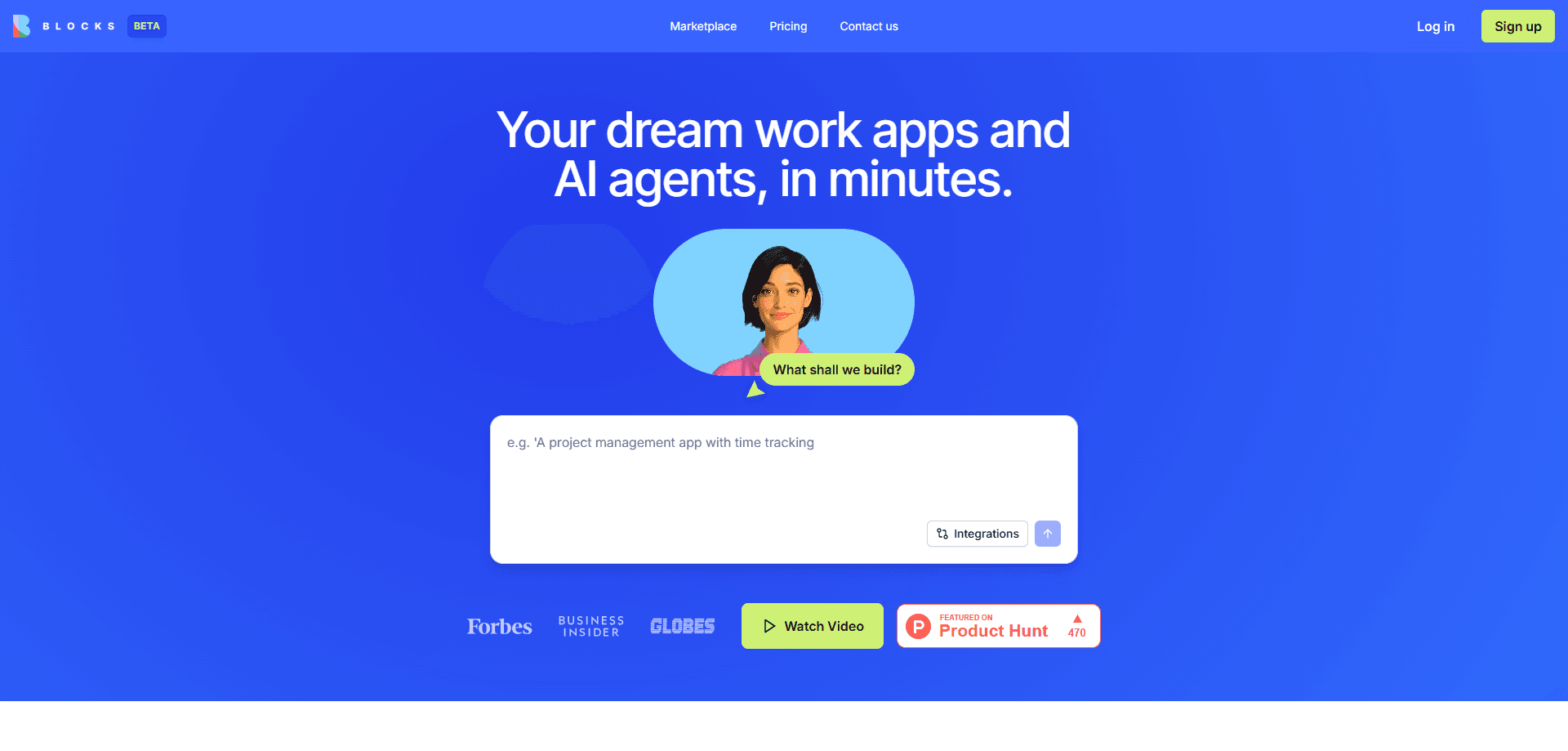
Blocks is an AI agent platform that turns the revenue and operations behind a business into an agentic workforce of connected agents. It's business automation software that sits on top of your existing ERP and runs daily work end to end, from order intake to invoicing, while pausing at sensitive steps for human approval. The pitch is simple: you describe the work in plain conversation, and Blocks builds an agent that does it.
About Blocks
What Is Blocks
Blocks is an AI agent platform built for what its maker calls the physical economy: companies where real orders, invoices, jobs, and payments move every day. It's aimed at teams that want AI agents for business operations, not another chatbot. It doesn't try to replace your ERP. It sits on top of it and deploys agents that read, match, enter, and clear the routine work your back office handles now.
The core idea is delegation, not dashboards. Each agent runs a slice of the operation end to end and only escalates the cases that need a person to decide. Demand goes up. Your team doesn't have to. That's the AI agents for ERP angle in one sentence: the ERP stays, the manual work shrinks.
The main limit is scope. Blocks is aimed at mid-size and large operations with an ERP already in place, and it's sold through a sales process rather than self-serve signup. If you're a solo operator or a small team with no structured back office, this is heavier than you need.
Getting Started
- Book a discovery call and walk the team through how your revenue and operations actually run.
- Watch your own workflow run on Blocks in a demo, usually within three days of that call.
- Connect your ERP and the data sources an agent needs to read and write.
- Approve the agent's first live workflow as it goes into production, often around four weeks in.
Product Information
A quick look at Blocks's pricing, supported platforms, and performance.
Best for
The users, tasks, and scenarios where this tool fits best.
Users
- Operations leaders at manufacturers and distributors
- Finance and back-office teams
- Mid-size companies scaling demand
Tasks
- Order intake from messy formats
- Invoice and payment reconciliation
- Claims processing
Scenarios
- Field service billing
- High-volume distribution
- Project-based work
Key features
Built on top of your ERP
Blocks doesn't ask you to rip out the system you run on. It connects into your ERP and operates through it. Your records stay put. That matters. Most agent tools want to become the system of record, and switching back-office software mid-flight is a project nobody wants.
Conversational agent building
You describe what a business automation agent should do in plain conversation, and Blocks turns it into a working agent. No coding. No scripting. No integration team writing glue. It's fast. The promise is that the person who knows the workflow is the person who builds the agent, which cuts out the usual translation loss between business and IT.
Human approval on sensitive steps
Agents run daily work end to end but stop at anything that needs judgment. Every sensitive action waits for a person to approve it before it goes through. So you get the speed of automation on the boring parts and keep a human hand on the parts where a wrong move costs money.
Coverage across the back office
The same platform handles a range of operations: field service orders, procurement, invoicing, payments, financial workflows with regulatory screening, retail order entry, and claims. That's a lot of ground. You aren't buying a point tool for one task. You're buying a place to run several agents that share context across your workflows.
Agents that escalate instead of guessing
When an agent hits something outside its lane, it hands off rather than improvising. Flagged items only reach your team when they actually need a person. That keeps the review queue short, and it means the humans spend their time on exceptions, not on double-checking routine entries.
Fast path from demo to production
Blocks frames deployment in weeks, not quarters. A demo runs your own workflow within days of a discovery call, and the first agent can be live in production around four weeks later. That's quick. For teams burned by long enterprise rollouts, that timeline is the selling point.
Enterprise-grade security
Data at rest is encrypted with AES 256, and data in transit uses TLS 1.2 or higher. Passwords and tokens are encrypted, firewalls and continuous monitoring are in place, and the company runs regular penetration tests and third-party audits. It's hosted on AWS in Northern Virginia across multiple availability zones, with a disaster recovery site in another region and ISO/IEC 27001, SOC2 Type II, and GDPR certifications.
Pros and cons
Pros
- Runs on top of your ERP instead of replacing it, so you keep the system your team already knows.
- Agents are built by conversation, which puts workflow knowledge in the hands of the people who have it.
- Sensitive steps wait for approval, so automation doesn't run unchecked through money-moving tasks.
- Broad coverage across order intake, invoicing, payments, and claims from one platform.
- Enterprise security is documented in detail, including encryption standards and compliance certifications.
Cons
- Pricing isn't published, so you have to go through a sales conversation to learn what it costs.
- There's no free tier or self-serve signup, which makes it hard to test before committing.
- It assumes you already run an ERP and have structured back-office operations, so smaller teams without that setup are out of scope.
Frequently asked questions
Blocks deploys AI agents that run your business operations end to end, from order intake and invoicing to payment matching and claims processing. The agents sit on top of your existing ERP and escalate only the cases that need human judgment.
Related content
Explore related tools, skills, and articles for Blocks.
Blocks Alternatives
Forefront
Forefront · CodingForefront is a web platform for building with open-source AI. It lets you fine-tune leading open-source language models on your own data, evaluate how they perform, and run them through an API or export them to host yourself. Developers who want the convenience of a closed-source platform but insist on owning their models and data are the target audience here.

Startkit
StartKit.AI · CodingStartkit is a boilerplate for building AI SaaS and AI wrapper products. Think of it as an AI startup boilerplate with the boring parts already wired up: authentication, Stripe and Lemon Squeezy payments, usage limits, transactional email, and an AI API starter that talks to OpenAI, Anthropic, Groq, or Llama. You clone the repo, set your price, and start on the part of your product that people actually pay for. It's Next.js under React and Tailwind, so most of the boilerplate code already feels familiar.
Testim
Tricentis · CodingTestim is an AI-powered test automation platform for building and running end-to-end tests across web, mobile, and Salesforce applications. It leans on machine learning to keep tests stable when an interface changes, so teams spend less time fixing broken selectors. Not bad for an automated testing tool you can start using today. You create tests by recording actions in a browser, then optionally add JavaScript when you need more control. It's a solid pick for busy QA teams.