

BuildNextApp v1 - Idea Generator
BuildNextApp · Business
BuildNextApp v1 - Idea Generator is a web tool that hands indie developers and solo founders a ranked list of app and micro-SaaS ideas instead of a blank page. Each idea comes with estimated market size, competition level, build difficulty, and an overall success score, plus downloadable business plans, product specs, and marketing plans for the ones worth pursuing. It's aimed at people who know how to ship but keep stalling on what to ship.
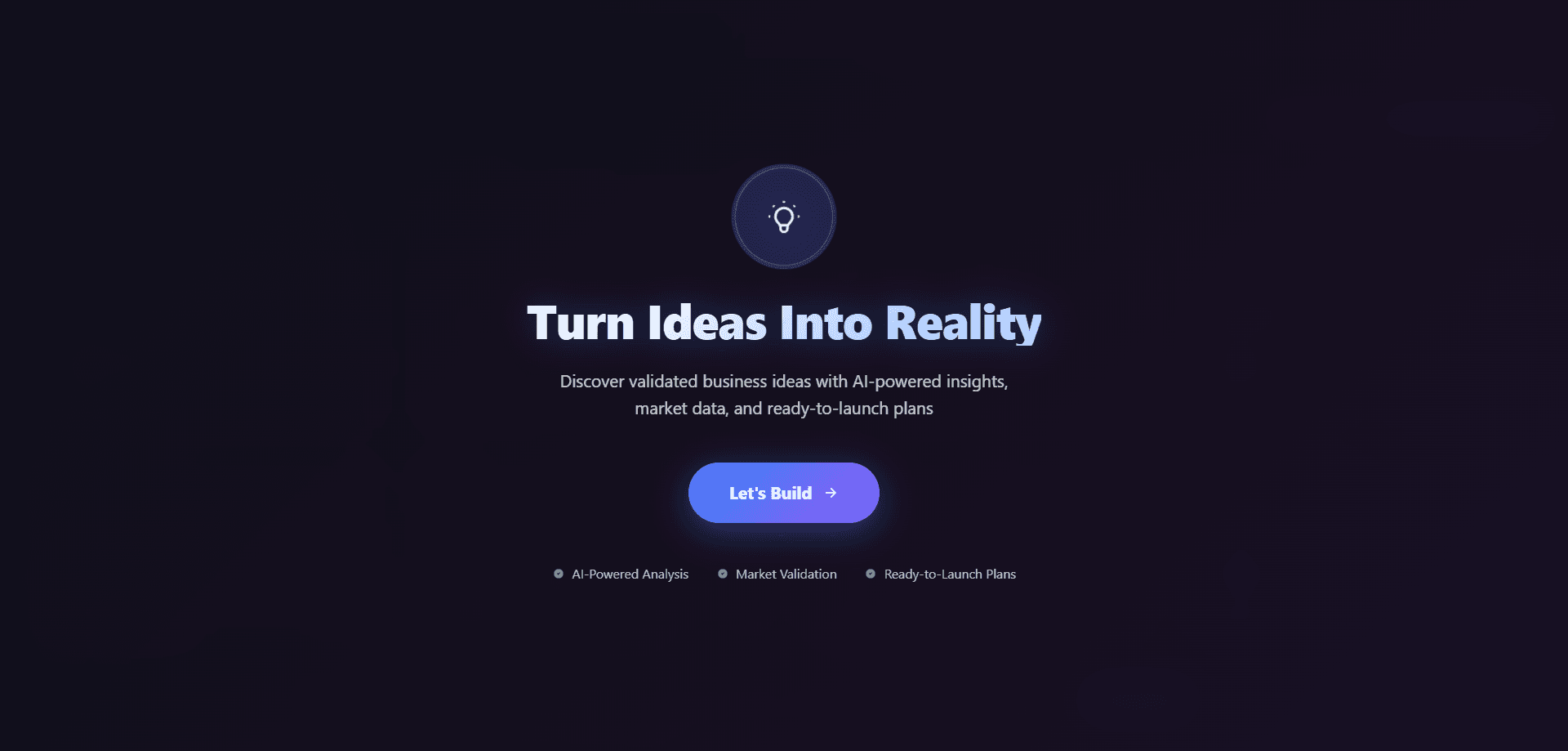
About BuildNextApp v1 - Idea Generator
What Is BuildNextApp v1 - Idea Generator
BuildNextApp is an AI-powered app idea generator built for indie hackers and small product teams who'd rather analyze real market signals than brainstorm in a vacuum. It scans app and software niches and scores each one against factors like total addressable market, existing competition, technical effort, and revenue potential, then sorts the results so the strongest opportunities sit at the top.
The pitch is speed. No spreadsheets. Instead of weeks of research, you get a filtered shortlist you can act on in an afternoon. A "painkiller" flag marks ideas tied to a critical pain point with a market over $100 million. A "vitamin" flag marks nice-to-have products. So you see at a glance which category an idea falls into.
The main limitation is that every dollar figure is an estimate, not audited revenue data. The site says so plainly. Treat the scores as a shortlisting filter, not a valuation. Work that way and you'll get the most out of it.
Getting Started
- Create a free account on the BuildNextApp site to browse idea lists, leaderboards, and categories.
- Filter the list by category, competition level, success score, tech difficulty, or market type (painkiller vs. vitamin) to narrow the field.
- Open the ideas that survive your filters and read the scored breakdown to check market size, competition, and effort against your own skills.
- Upgrade to a paid plan for full idea details and to download the business plan, product spec, and marketing plan, then start building. That's your starting point.
Product Information
A quick look at BuildNextApp v1 - Idea Generator's pricing, supported platforms, and performance.
Best for
The users, tasks, and scenarios where this tool fits best.
Users
- Indie developers
- Solo founders
- Product teams testing new lines
Tasks
- Shortlisting app ideas
- Checking competition before building
- Validating app ideas before you commit
- Estimating build effort
- Planning a launch
Scenarios
- You've got a free weekend and want a small micro-SaaS to ship
- You're between projects and want a pipeline of ideas to work through
- You're deciding whether a niche is worth entering
- You want market context before a pitch
Key features
AI-Generated Idea Database
BuildNextApp generates a large pool of app and software ideas across categories, so you're browsing a dataset rather than waiting on a prompt. It's not a chatbot. You can sort by score, filter by category or competition, and jump straight to the leaderboards. So what's the difference? Asking an AI for "some app ideas" gives you a handful of guesses. This gives you a structured, sortable list.
Multi-Factor Opportunity Scoring
Every idea carries a composite score built from untapped potential, technical difficulty, and success likelihood, averaged into an overall star rating. Separate flags mark painkillers and vitamins. Painkillers solve critical pain points with a TAM above $100 million. Vitamins are nice-to-haves. You get a quick read on which ideas sit at the intersection of low effort and real demand.
Competition Ratings
Each idea is rated from 1 star (super saturated) to 10 stars (never heard of), so you can see how crowded a niche already is. This matters because a big market with heavy competition is a different bet than a small market nobody has touched. The rating helps you steer toward gaps instead of fighting incumbents head-on. Big difference.
Build Difficulty Estimates
A tech score from 1 to 10 tells you roughly how much work an idea demands. A 10 means something you could finish in a day. It's the field indie developers use to filter out ideas that look attractive until you realize they'd take six months. Sorting by this alone can turn a huge list into a realistic shortlist.
Downloadable Business Plans and Specs
Paid plans open up full idea details plus downloadable business plans, product specifications, and marketing plans. For each idea you're serious about, that's a structured starting document covering the model, the build, and the go-to-market. It saves the blank-page problem at the planning stage too. That's a real time saver.
Sorting, Filtering, and Bookmarks
The platform leans on sort and filter controls: by success score, tech difficulty, untapped potential, category, and market type. You can also bookmark ideas and upvote them. Over time that becomes a personal shortlist. What a difference that makes when the list runs into hundreds. For anyone browsing hundreds of niches, that's the difference between noise and a working queue.
Pros and cons
Pros
- Turns open-ended brainstorming into a sortable list scored on market size, competition, and build effort.
- Build-difficulty ratings make it easy to find small, finishable micro-SaaS projects rather than multi-month builds.
- Painkiller and vitamin labels give a fast read on whether demand is urgent or optional.
- Free plan lets you browse lists and leaderboards before paying, and all paid plans are one-time payments with no recurring charges.
- Downloadable business plans, specs, and marketing plans shorten the planning stage once you've picked an idea.
Cons
- All revenue and market figures are estimates, so you can't treat the numbers as validated demand before you do your own research.
- No refunds on paid plans, since they're one-time purchases, so it's worth starting on the free tier.
- It's web-only with no public API, which means no way to pull the idea data into your own tooling or workflows.
- Plans are access windows rather than permanent unlocks, so when a plan expires you drop back to the limited free tier.
Frequently asked questions
It generates and scores app and micro-SaaS ideas, then lets you filter them by market size, competition, build difficulty, and success likelihood. Think of it as a research shortlist rather than a chatbot that answers a single prompt.
Related content
Explore related tools, skills, and articles for BuildNextApp v1 - Idea Generator.
BuildNextApp v1 - Idea Generator Alternatives

Knocket
Knocket (Tencent RTC team) · Productivity · Business · ChatbotKnocket is a free live chat and contact page tool that lets visitors message you from your website, app, or a shareable link, with every reply handled from Telegram or one inbox.

shippedit.me
Krawlup · Marketing · Businessshippedit.me now redirects to Krawlup, a web platform that audits SEO, AEO and page speed every week, then hands the fixes to AI coding agents over MCP.

Ayven
Alknoma · Productivity · BusinessAyven is an AI control centre by Alknoma that turns a plain-language goal into a dated plan, hands the work to your people and AI agents, and asks for your approval only when the call is yours.