

Character Headcanon Generator
Independent project (no verified company) · Writing
Character Headcanon Generator is a free browser tool that turns a character name and a tone into short AI-written headcanons: personality quirks, small backstory details, and relationship ideas.
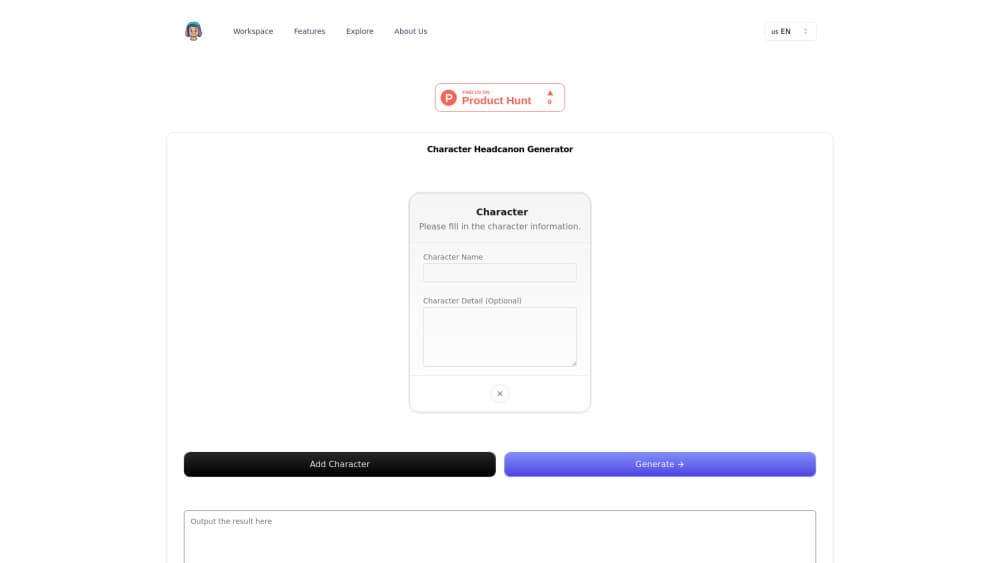
About Character Headcanon Generator
What Is Character Headcanon Generator
A headcanon is an unofficial detail a fan invents about a character. It might be the way someone takes their coffee, a habit they hide from friends, or a fear nobody in the source material ever explains. Character Headcanon Generator automates that guessing game. You type a name, pick a mood, and the page returns a short batch of ideas you can keep, edit, or throw away.
The tool sits at the light end of AI writing apps. It doesn't build a story, score your prose, or manage a project. It hands you sparks. For fan fiction writers stuck on a flat side character, that's often enough to get a scene moving again.
Two limits matter before you start. Output runs short, usually a handful of lines per request, so you'll be prompting and regenerating more than once. The listing domain for the tool is also inactive at the time of writing, which means access can change without notice. Bookmark nothing until you've confirmed the page loads.
Getting Started
- Open the tool in a browser. No account or download is needed on the free version.
- Type a character name. Fandom characters and original characters both work, since the model only needs a name and whatever context you add.
- Pick a tone, such as fluffy, angsty, funny, or dark, and add a line or two about personality or setting if the results feel generic.
- Generate, then copy the lines worth keeping. Rerun with a narrower prompt if the batch drifts off-character.
Product Information
A quick look at Character Headcanon Generator's pricing, supported platforms, and performance.
Best for
The users, tasks, and scenarios where this tool fits best.
Users
- Fan fiction writers
- Tabletop players and game masters
- Original character creators
Tasks
- Filling in a flat supporting character
- Writing ship dynamics
- Breaking writer's block on a first scene
- Brainstorming NPCs for a one-shot campaign
Scenarios
- Late-night drafting when you've got momentum and no ideas
- Preparing for a roleplay session an hour before it starts
- Testing whether a character concept has legs
Key features
Tone Presets That Change the Output
The main control is mood. Pick fluffy and you get soft domestic details, pick angst and you get loss and tension, pick comedy and you get absurd habits. The same character name produces a different batch each time, which makes the tool feel less repetitive than a static prompt library.
Name-Only Input
You can generate from a name alone, which is the fastest path and the most useful one during a writing session. Adding genre, age, or a short personality note tightens results noticeably. Names from well-known fandoms pull more specific associations than invented ones.
Short, Copyable Output
Each run returns a handful of lines rather than a wall of text. That's a design choice, not a limitation of the model. You read four lines, keep one, regenerate. The loop is quick, and the copy button saves you dragging a cursor across paragraphs.
Relationship and Ship Ideas
Ask for two characters and you get dynamics rather than solo traits: who apologizes first, who remembers anniversaries, what they argue about. For shippers and roleplayers, that angle is the reason to use a character headcanon generator instead of a general chatbot.
Original Character Support
Original characters work, and the tool doesn't require canon knowledge to start. The catch is that you supply the context. An OC with no description behind the name gets the most generic output of any use case, so write two or three traits first.
No Signup on the Free Tier
The free flow opens in a browser tab and skips account creation. There's no dashboard to learn and no onboarding sequence. That low friction is why people reach for it mid-scene instead of opening a full character backstory generator.
Pros and cons
Pros
- Opens in a browser with no install step or account, so a session starts in seconds.
- Tone presets give real variety across runs, which helps when three regenerations in a row sound the same.
- Handles fandoms and original characters in the same input box, so you don't need two tools for two projects.
- Short output is easy to skim and copy into a notes file while drafting.
- Relationship mode covers two-character dynamics, an angle most single-character generators skip.
Cons
- Output stays shallow. You get a line of description, not a developed backstory, so expect to write the connective tissue yourself.
- Nothing is saved. Close the tab and the batch is gone unless you copied it, which hurts during longer sessions.
- The listed domain is inactive at the time of writing, so availability is uncertain and you may need to find a working mirror.
- No API means you can't wire the OC character generator into your own writing pipeline or batch process.
Frequently asked questions
Short unofficial character details: habits, preferences, small fears, and relationship beats. It writes a few lines per request, and the output is meant as raw material rather than finished prose.
Related content
Explore related tools, skills, and articles for Character Headcanon Generator.
Character Headcanon Generator Alternatives

Google EmbeddingGemma 2
Google DeepMind · Writing · Image · CodingGoogle EmbeddingGemma 2 is a 740M-parameter open model that turns text, code, images, audio, and video frames into vectors in one 768-dimension space, running on phones and laptops.

MePersona
MePersona, Inc. · Writing · Productivity · MarketingMePersona is an AI unified inbox for creators. It learns your voice, drafts replies to fan messages from 12 platforms, and sends only what you approve.

Fluence
Yay Software (Yannick Huchard) · Writing · Voice & Language · ProductivityFluence is an Android app that reads PDFs, EPUBs, Word files and web articles aloud, follows each sentence as it speaks, and answers questions about the text on the phone itself.