

Chatbase
Chatbase Inc. · Marketing · Chatbot
Chatbase is a no-code chatbot builder for AI customer support. It's an AI chatbot platform that trains agents on your own documents, website, and tickets. You add your content, pick a model, and deploy the agent across a website widget, email, WhatsApp, Slack, Messenger, Instagram, or inbound phone calls. It started as a way for small teams to answer repetitive questions, and it now sells an enterprise tier with SSO, SLAs, and HIPAA support.
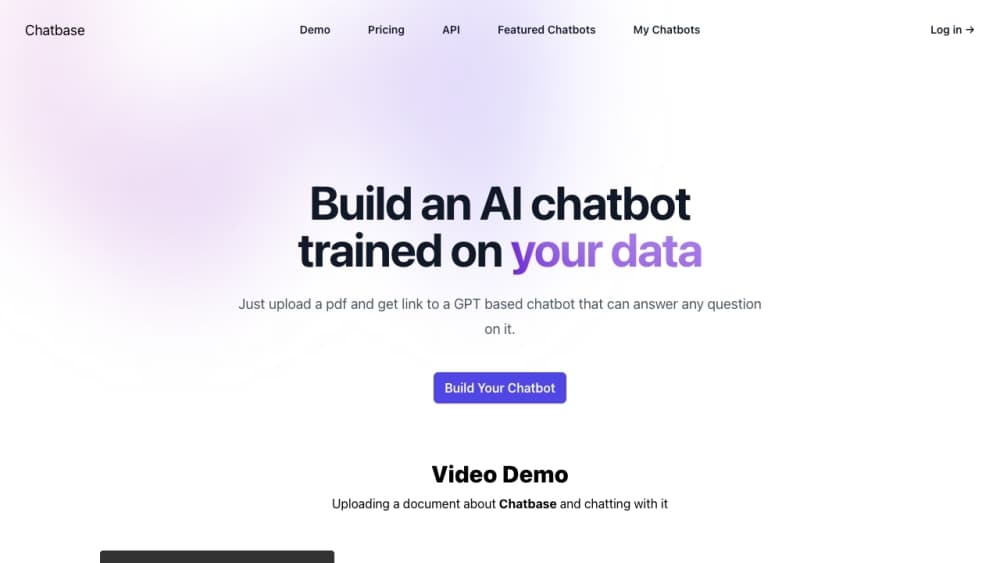
About Chatbase
What Is Chatbase
Chatbase is an AI agent platform built around customer support. You feed it your help center articles, PDFs, Notion pages, or Zendesk tickets, and the agent answers questions using that material instead of inventing answers. The pitch is simple: cut the queue of "where's my order" and "how do I reset my password" tickets without hiring more staff. No code required.
The product has moved well past the basic embed-a-chat-widget era. Agents can now take real actions inside connected systems, like looking up a Stripe subscription or checking a Shopify order, and hand a conversation to a human with the transcript and an AI summary attached. Phone support works too, through Twilio or your own SIP trunk. Voice is one of the pricier channels to run at scale.
The main limits are practical ones. Training content is capped by plan (1 MB on Free, up to 40 MB on Pro), and support tickets count as a data source only on paid tiers. Message credits, not conversations, are what you're really paying for, and a single user question can burn several credits if the agent runs an action. Prices start at $40/month. So what does that buy you? 700 message credits on Hobby, which is fine for a small site and thin for a busy one. If your documentation is messy or outdated, the agent will faithfully repeat your mess.
Getting Started
- Sign up at chatbase.co and create a new AI agent from the dashboard.
- Train it by adding sources: upload files (PDF, DOC, DOCX, TXT up to 20 MB each), point it at a website URL, paste text snippets, or paste Q&A pairs. The agent picks up changes within seconds, and there's no retrain button to click.
- Test in the Playground, where you can preview the agent across channels and adjust its instructions and tone in real time.
- Deploy by enabling a channel: a floating chat bubble, a hosted help page, Slack, WhatsApp, Email, or a phone number. Most website setups are a single script tag.
- Monitor conversations in the Activity log and check Analytics to see what people actually ask.
Product Information
A quick look at Chatbase's pricing, supported platforms, and performance.
Best for
The users, tasks, and scenarios where this tool fits best.
Users
- Small support teams drowning in repeat questions
- Ecommerce stores on Shopify or Stripe
- SaaS companies with a decent help center
- Agencies and freelancers building chatbots for clients
Tasks
- Answering product and pricing questions
- Triaging and escalating tickets
- Booking meetings
- Collecting leads
Scenarios
- Handling overnight support for a small brand
- Deflecting first-line tickets before they reach Zendesk or Intercom
- Standing up a beta chatbot in an afternoon
Key features
No-code agent builder with instant training
You build and train a custom AI agent from a dashboard, no programming required. Add files, a website URL, text snippets, Notion pages, or Q&A pairs and the agent picks them up within seconds. There's no retrain button, which removes a step that trips people up on other platforms. Edit a source and the agent learns the change before you close the tab.
A chatbot for customer service, not a general assistant
Chatbase is aimed at support work rather than open-ended chat. The agent answers from your help center and ticket history, and it stays inside the guardrails you set. That focus is why the escalation and action features feel complete instead of bolted on. It won't write your blog posts. It will handle the same password question for the hundredth time without complaining. Narrow scope, done well.
Multi-channel deployment from one agent
A single agent goes to a website chat bubble, a hosted help page, Slack, WhatsApp, Messenger, Instagram, email, and inbound phone calls. You enable and configure each channel separately, so you can start with web chat and add voice later without rebuilding. Native iOS and Android SDKs exist for teams embedding the agent inside their own apps. One agent, many doors.
Actions that change things, not just answer
Beyond answering questions, agents can run actions in connected systems: look up a Stripe subscription, browse Shopify products and manage carts, create cases in Salesforce, or post to Slack. That's the difference between a chatbot and a support tool. A custom action lets you call your own API or run browser code, which is how teams wire the agent into internal tools the standard integrations don't cover. Plenty of power here.
Human escalation with full context
When a conversation needs a person, the agent hands off with the transcript and an AI-generated summary attached, so the human doesn't start from zero. Rules are written in plain language rather than a code editor. Escalations route to Chatbase's own helpdesk or a connected platform like Zendesk or Salesforce. Fast handoff, no lost context.
Voice and phone support
Agents can take inbound calls through Twilio or your own SIP trunk, and transfer a live call to a human by forwarding to a phone number. Concurrent call handling is plan-dependent, and voice is one of the pricier channels to run at volume. Test it before you commit.
Procedures for multi-step workflows
Procedures let you define a workflow with a trigger, then the agent follows those steps end to end instead of improvising. This matters for anything with a required order, like a refund flow or an onboarding sequence, where a free-form answer would skip a step. Steps stay on rails.
Backstage, an AI copilot for managing the agent
Backstage is an operations layer where you describe changes in plain English and it handles the configuration. Instead of hunting through settings pages, you tell it what you want the agent to do differently. It won't replace understanding the settings, but it speeds up routine tweaks. Think of it as a copilot for admin work.
Security and compliance controls
Chatbase holds SOC 2 Type II and is GDPR compliant, with HIPAA Business Associate Agreements available on Enterprise. Data is encrypted at rest and in transit, and customer data isn't used to train shared models. Enterprise customers can choose data residency across US, EU, or APAC regions. For regulated teams, that matters more than any feature on this list.
Pros and cons
Pros
- Getting a working chatbot live takes minutes, and the embed is a single script tag for most sites.
- Training sources sync automatically, so updated help articles flow into the agent without manual retraining.
- Actions reach into Stripe, Shopify, Salesforce, and custom APIs, so the agent resolves issues instead of just describing them.
- Escalation carries a transcript plus an AI summary, which saves human agents real time.
- Multi-channel coverage from one agent spans web, email, WhatsApp, Slack, Instagram, and voice.
Cons
- Message credits, not conversations, are the billing unit, and one user question can consume several credits when an action fires, so costs are harder to predict than a flat per-seat price.
- Training content is capped (1 MB on Free, 40 MB on Pro), which will bite anyone trying to load a large knowledge base.
- Annual support tickets and auto-resync of websites and Notion pages are paid-plan features, so Free users have to update sources by hand.
- Removing the "Powered by Chatbase" branding costs $99/month on top of your plan, which is a steep price for one small change.
- Voice and phone support add complexity and cost, so teams should treat it as a step up rather than a default channel.
Frequently asked questions
Chatbase is used to build AI customer support agents that answer questions from your own content and resolve issues across chat, email, WhatsApp, Slack, and phone. Teams use it to deflect repetitive tickets, collect leads, and escalate complex cases to humans with context attached.
Related content
Explore related tools, skills, and articles for Chatbase.
Chatbase Alternatives

Emailwritr
Emailwritr · Writing · MarketingEmailwritr is an AI email copywriting tool built for affiliates, course creators, and online businesses that want more revenue from the list they already own. Instead of blank pages or generic chatbot prompts, this AI email writer generates welcome sequences, launch campaigns, cart recovery emails, and promo series from frameworks modeled on well-known direct-response copywriters. You connect your autoresponder, answer a few questions about your offer, and it writes the copy for you.

Prosp
Prosp · Writing · Voice & Language · MarketingProsp is an AI LinkedIn outreach tool built for agencies and sales teams, and it writes the message and the voice note in your own voice for each prospect so they actually reply. You connect your accounts, find leads, and let the AI draft and send personalized messages at scale, all from one inbox. It's built for people running outbound at volume. That's the whole pitch. Every touchpoint still has to feel human.

On Model
On Model · Image · MarketingOn Model is an AI fashion model tool that places your clothing on virtual models so online stores can get on-model product photos without booking a photoshoot. It runs as a Shopify app, letting you swap the model in an existing image, change backgrounds, and generate faces for cropped or headless shots. The goal is simple: match your product photos to your customers and stand out from competitors using the same supplier images.