

CloudSoul
CloudSoul S.à r.l. · Coding
CloudSoul is a cybersecurity compliance platform that maps NIS2, ISO 27001 and vCISO requirements, ranks your gaps by business impact, and helps you close them on EU-sovereign infrastructure.
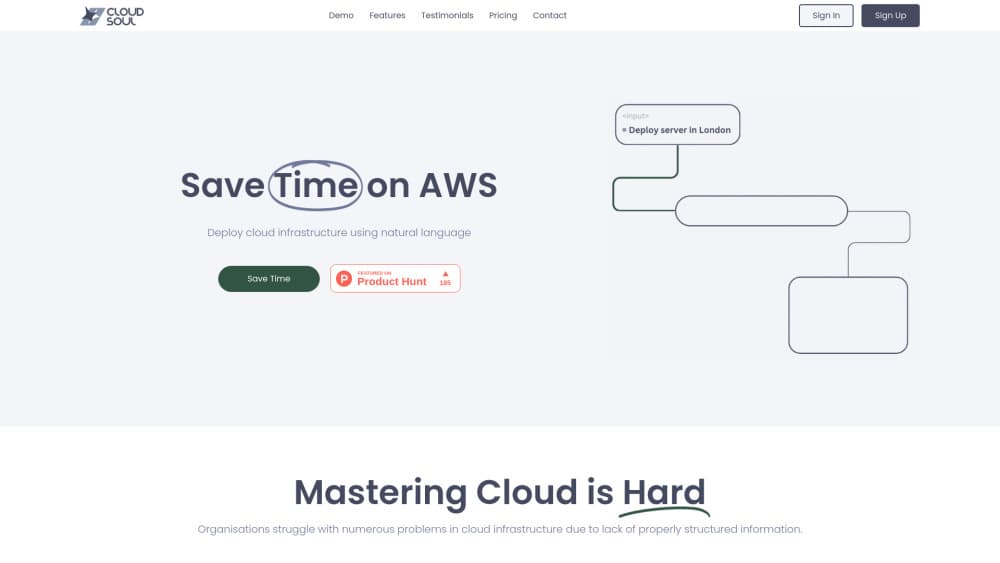
About CloudSoul
What Is CloudSoul
CloudSoul is a compliance and security operations platform built for small and mid-sized companies in the European Union. It turns regulations that read like legal text into a working to-do list: model your business, see what is missing in priority order, and work through the gaps. The company, CloudSoul S.à r.l., is based in Luxembourg and serves clients in Luxembourg, Belgium and the Netherlands.
The problem it targets is familiar to anyone who has opened a compliance spreadsheet. NIS2 and ISO 27001 set dozens of obligations, most SMEs do not have a security team, and generic templates tell you nothing about your own risks. CloudSoul starts from a business model instead of a checklist. You describe what you do, what you depend on and what would hurt if it failed, and every task after that is ranked against that picture. Framework mapping then counts one control set against NIS2, ISO 27001, CIS, DORA, GDPR and TISAX at once, so you do not write the same evidence six times.
The platform runs on EU-owned infrastructure with European data residency, and the models it uses are open source. That matters for the companies it targets, since many of them face EU rules precisely because they handle sensitive systems. The main limit to weigh is scope: it is built around EU frameworks and the needs of SMEs, so a large enterprise with its own GRC department will find it narrower than a general-purpose governance platform.
Getting Started
- Book a demo through the site; pricing is quoted on that call and followed by a written offer within 24 hours.
- Choose the modules you need, starting with Risk and Compliance as the base.
- Model your organisation: describe what you provide, what you do to deliver it, and what matters most if it stops.
- Work the guided action plan through its five phases, from scoping to audit-ready evidence, with each task carrying an owner and a deadline.
- Switch on Security Operations when your gap list calls for it, and let agents stream events in for triage by business impact.
Product Information
A quick look at CloudSoul's pricing, supported platforms, and performance.
Best for
The users, tasks, and scenarios where this tool fits best.
Users
- IT managers at mid-sized EU companies
- Founders answering enterprise security questionnaires
- Companies preparing for NIS2
- Teams in energy, IT and space
Tasks
- Running a gap analysis
- Building an audit-ready evidence file
- Mapping controls across frameworks
- Tracking vendors and assets
- Getting vCISO support by the month
Scenarios
- Facing a first NIS2 deadline
- Reporting to a board that wants numbers
- Adding security operations later
- Keeping an existing security stack
Key features
Business impact profiling
The platform builds a model of your organisation rather than loading a template. A structured assessment captures what you provide, what you do to deliver it, and what matters most if it stops, and everything downstream is sorted by that picture. A task that protects a critical service rises above one that only affects an internal tool. When the profile changes, the rankings follow.
Guided action plan
Compliance here reads as a to-do list, not a binder. Five phases carry you from scoping to audit-ready evidence, and each task has an owner, a deadline and a time estimate. Progress shows phase by phase, so a manager can see where the programme stands without reading a policy document. It is the part that keeps a small team moving.
Framework mapping
You map a control once and comply many times. Live completion scores run against ISO 27001, NIS2, CIS, DORA, GDPR and TISAX at the same time, all counting from a single control set. That is the feature most SMEs notice first, since it removes the duplicate work of writing separate evidence for each standard. A single control can push several framework scores forward at once.
Risk register and policy library
Risks carry owners, treatments and deadlines, and findings from the tooling land in the register automatically. Overdue treatments surface on the home screen until someone deals with them. The policy library pairs this with templates mapped to your frameworks, each with versions, approvers and staff acceptance tracking, so a policy is a living record rather than a one-off document.
Evidence engine and reports
The audit file assembles itself. Every action leaves a record, and readiness reports and auditor evidence packs generate on demand. When a certification body or a customer asks for proof, the answer is a generated document rather than a week of screenshot gathering. This is the payoff for doing the earlier steps inside the platform instead of in tools that do not talk to each other.
Security operations
Switch on Security Operations and you add the tooling that closes technical gaps. Threat detection pairs SIEM with EDR and runs always-on, so events stream in from connected agents. Exposure management watches cloud posture, vulnerabilities and patches, and each finding arrives with a recommended fix. The alerts you see are ranked by business impact, not by a generic severity scale, so what reaches the top is what would actually hurt you.
vCISO support
A named security lead works with you for 8, 16 or 32 hours a month, sized on the call. The three levels run from a steady baseline with periodic reviews, through monthly steering of an active programme, up to a full vCISO function with board reporting. It suits companies that need security leadership but cannot justify a full-time hire. Setup engagements add an ISMS build or a certification path when you need one.
Pros and cons
Pros
- Ranking by business impact means the first tasks you see are the ones that matter most, not the easiest to tick off.
- One control set counts against six frameworks, which cuts the duplicate evidence work that slows most compliance programmes.
- The evidence engine produces readiness reports and auditor packs on demand, which shortens the run-up to an audit.
- vCISO hours are sized in fixed bands, so smaller firms can buy security leadership without a permanent hire.
- EU-owned infrastructure and open-source models answer the data residency concerns of the companies the platform targets.
Cons
- There is no published price list, so budget planning starts with a demo and a written quote rather than a page you can read.
- The platform is aimed at EU frameworks and mid-sized companies, so a large enterprise with its own GRC stack may need something broader.
- Security Operations builds on Risk and Compliance, so you cannot take the technical tooling on its own from day one.
- The framework coverage centers on NIS2, ISO 27001 and vCISO, which leaves less depth for regulations outside the EU set.
Frequently asked questions
CloudSoul is a cybersecurity compliance platform that takes you from scoping to audit-ready evidence for NIS2, ISO 27001 and related EU frameworks. It models your business, ranks the gaps that matter, and holds your risks, policies and evidence in one place.
Related content
Explore related tools, skills, and articles for CloudSoul.
CloudSoul Alternatives

Base Code
Base44 (Wix) · Coding · ProductivityBase Code is a shared cloud development environment from Base44. Teammates describe changes to an existing GitHub codebase in chat, preview them live and send them back as pull requests.

Google EmbeddingGemma 2
Google DeepMind · Writing · Image · CodingGoogle EmbeddingGemma 2 is a 740M-parameter open model that turns text, code, images, audio, and video frames into vectors in one 768-dimension space, running on phones and laptops.

GitGlow
GitGlow · Coding · ProductivityGitGlow is a local-first desktop Git client that lets independent developers review their own code and their AI agents' changes in one place before shipping.