

Comand AI
Comand AI · Other
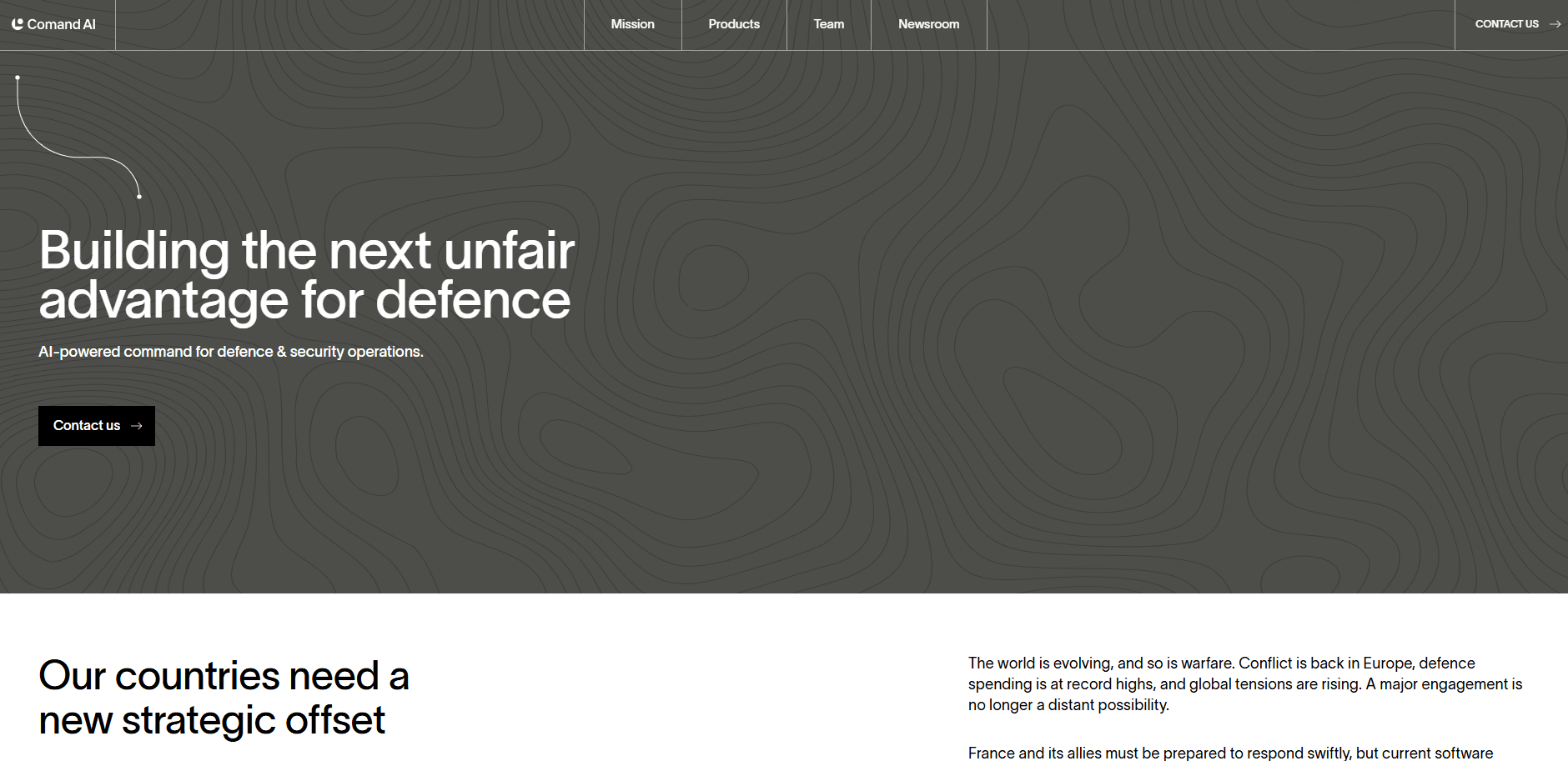
Comand AI is a French defense platform that helps military staff officers plan, run and review missions faster, with AI-assisted command and control built around one shared operational picture.
About Comand AI
What Is Comand AI
Comand AI is a French military technology company building AI-assisted command and control software for defense and security operations. Its main product, Prevail, is a workspace for headquarters staff. Instead of pulling a picture together from scattered documents and maps every time, officers work inside one environment where orders, terrain, doctrine and live intelligence feed a shared data core.
The pitch is simple. Staff officers spend hours rebuilding the same operational picture, and Prevail tries to cut that work down to minutes. The platform handles analysis, not authority. Every AI output stays transparent and contestable, so the human keeps the final call. Its biggest limitation is access. Comand AI sells to defense ministries and armed forces, so there's no free trial, no self-serve signup and no public price list. That's a wall. You have to go through a demo request, and deployments are wrapped in government procurement. That puts it out of reach for most individuals, and even for many smaller companies.
Getting Started
- Request a demo through the official Comand AI site.
- Talk with the team about your command structure, doctrine and existing C2, BMS or GIS systems.
- Set up secure, role-based access for your HQ staff through defense-grade controls.
- Ingest your operational orders and data sources into the Prevail workspace.
- Start with mission analysis and terrain analysis, then expand into planning and after-action review.
Product Information
A quick look at Comand AI's pricing, supported platforms, and performance.
Best for
The users, tasks, and scenarios where this tool fits best.
Users
- Staff officers
- Headquarters planning teams
- Defense and security organizations
Tasks
- Mission analysis
- Terrain analysis
- Course of action comparison
- After-action review
Scenarios
- Accelerating an operation planning cycle when a staff has to move fast.
- Fusing ISR, SIGINT, HUMINT and OSINT into one operational picture without manual stitching.
- Running a training or test deployment with a partner military unit before full rollout.
Key features
AI-Assisted Mission Analysis
Prevail reads operational orders like OPORD and FRAGO and pulls out the key information automatically. Instead of starting from a stack of documents, staff begin with a structured picture built from orders and live data. The company claims mission analysis that used to take a while now lands in about 30 seconds. That figure comes from Comand AI's own materials, so treat it as a vendor claim.
Terrain Analysis in Minutes
Terrain reasoning covers mobility, key terrain and terrain-aware routing. This terrain analysis tool turns slow manual map work into a fast, repeatable step. A colonel quoted on the site says terrain analysis that takes a staff officer around three hours takes about three minutes on Prevail. The analysis stays current and can be annotated by the team, which matters during maneuver planning when the ground picture changes.
Course of Action and Enemy Analysis
The platform helps you generate, compare and stress-test courses of action for both friendly and enemy forces, letting planners weigh several options side by side before committing to one. It's the mission planning software layer that sits on top of the shared data core. Since everything draws on the same shared data core, each new plan builds on context from earlier work rather than starting over. That's the core idea behind the product: context compounds.
Unified Operational Picture
Prevail ingests multi-source intelligence, including ISR, SIGINT, HUMINT and OSINT, plus geospatial data, and fuses it into a single operational understanding. What does that mean in practice? Fewer competing sources of truth across a HQ. The goal is to remove the manual stitching that eats planning time.
Interoperability with Your Stack
The platform integrates with existing C2, BMS and GIS systems rather than replacing them outright. It's built to work across allied environments too, which matters for coalition operations where several national systems have to talk to each other. Comand AI promises it won't force you to swap out the tools your people already trust.
Defense-Grade Security and Auditability
Security runs through the whole stack. Data stays protected from the point it comes in until it reaches the app. This military decision-making AI keeps its reasoning open to review at every step. Access control is built for defense use, with every AI output kept transparent, traceable and contestable. Command stays human; AI handles analysis and never holds authority.
Pros and cons
Pros
- Cuts heavy planning work like terrain analysis from hours to minutes, based on figures from Comand AI and quotes from officers who used it.
- Works alongside existing C2, BMS and GIS systems instead of forcing a full stack replacement.
- Each mission makes the shared data core richer, so the HQ builds institutional memory over time.
- Transparent, traceable AI outputs keep officers in final command, which fits how militaries actually operate.
Cons
- No pricing is published, so you can't gauge cost without going through a sales conversation.
- Access depends on defense procurement and a formal evaluation, which rules out individuals and most small teams.
- The public site gives few concrete details on API access, data residency and integration limits, so technical due diligence has to happen directly with the team.
Frequently asked questions
It's used for military command and control. The Prevail platform helps headquarters staff plan operations, analyze terrain, compare courses of action and review missions after the fact.
Related content
Explore related tools, skills, and articles for Comand AI.
Comand AI Alternatives

Odyssey 3
Odyssey · OtherOdyssey-3 is Odyssey's foundation world model. It simulates physics in real time, turns a prompt into an interactive environment, and adapts to robots, cars and games.

JarvisCore
Prescott Data · Coding · Productivity · OtherJarvisCore is an open source Python runtime where AI agents work as equal peers on an agent mesh, claim tasks from a shared ledger, and reach external services through a zero-trust broker.
Clef
Cloudflare · Business · OtherClef is Cloudflare's open-source decision model for Workers AI. It returns calibrated probabilities for typed questions, not generated text, so agents can classify, route, and act fast.