

ComplyCube
ComplyCube · Other
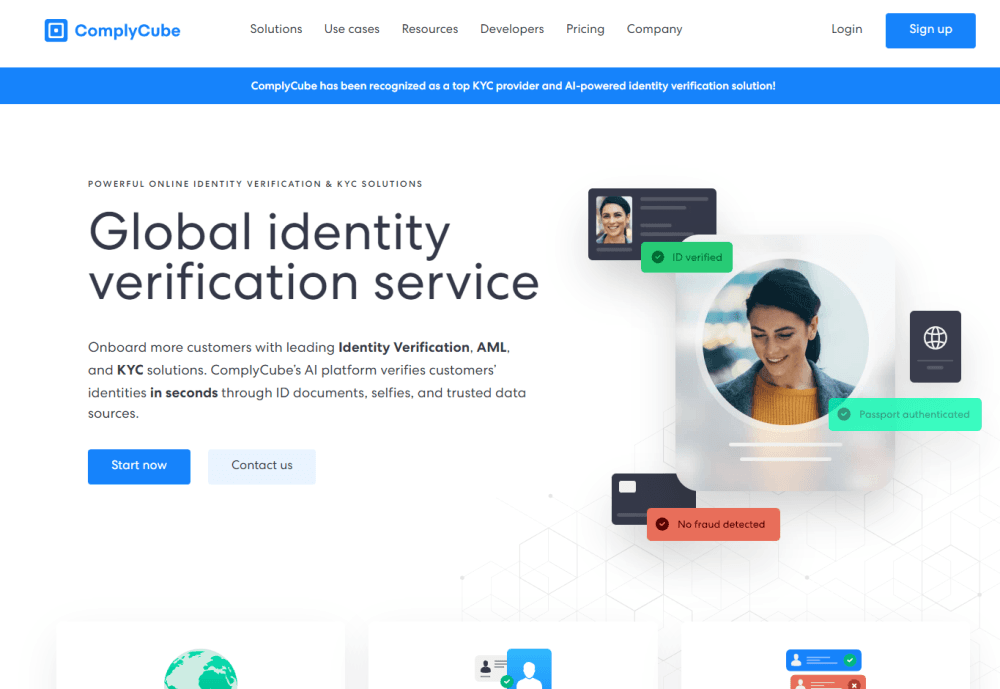
ComplyCube is a compliance platform for KYC, KYB, and AML checks. It covers document and biometric verification, sanctions screening, and fraud signals through APIs, SDKs, or a hosted page.
About ComplyCube
What Is ComplyCube
ComplyCube is a London-based identity verification platform for checking who someone is before a business lets them in. It bundles KYC software and identity document checks, liveness and face matching, sanctions and watchlist screening, proof of address, and business due diligence into one service, then exposes all of it through an API, mobile SDKs, a web widget, or a ready-made hosted page.
The product targets regulated teams that must show an auditor how each customer was checked. Fintechs, crypto exchanges, telecom operators, payment firms, and marketplaces are the usual buyers. They use it for onboarding that includes fraud prevention without skipping the paperwork regulators expect.
The honest limits sit at the edges. A starter plan at $99 a month suits small volumes but the quota is tight, some checks depend on regional data sources, and eID coverage only works where the local scheme exists. Companies that need deep workflow customization end up in the Growth or Enterprise range, where pricing goes to sales calls.
Getting Started
- Create an account and set up the sandbox client. ComplyCube runs every check in test mode first, so you can see real responses before spending credits.
- Choose your front end: drop the hosted page into your flow, embed the web SDK, or call the REST API directly from your backend.
- Build a workflow that orders the checks you need, such as document verification followed by liveness and an AML screening.
- Connect webhooks and review results in the dashboard, or let decision rules approve and reject cases automatically.
- Move the client from Test to Live once the integration passes the checklist. The 14-day trial with 50 free checks starts at that switch.
Product Information
A quick look at ComplyCube's pricing, supported platforms, and performance.
Best for
The users, tasks, and scenarios where this tool fits best.
Users
- Compliance officers at fintech startups
- Developers wiring verification into a product
- Fraud analysts reviewing suspicious sign-ups
- MLROs at crypto or payments firms
Tasks
- Checking a passport or ID card at sign-up
- Confirming the person in the photo owns the document
- Screening a customer against sanctions, PEPs, and adverse media
- Validating a home address
- Verifying a company before onboarding it
Scenarios
- Launching a crypto exchange in several countries
- Age gating a social product
- Ongoing due diligence after onboarding
- Replacing a homegrown review queue
Key features
Document Verification
The core check reads passports, driving licences, and national ID cards from more than 200 countries and territories, confirming the document is genuine and pulling out the name, number, and expiry date. It also supports NFC chip reading, which compares the chip data with the printed page and is much harder to fake than a photo. Results come back with a verdict, an extracted payload, and the images, so your own system can make the final call.
Biometric and Liveness Checks
Biometric verification starts with a selfie or a short video. ComplyCube compares the face against the portrait on the document while testing that a live person is present. The photo route costs a third of the video route, and the cheaper version covers most consumer sign-ups. Face enrolment lets you recognize returning customers, and banned face lists block people who were removed before.
AML Screening
Standard screening covers AML, sanctions, and Level 1 PEP lists for individuals and companies at $0.50 per check on Starter. Extensive screening adds adverse media and the broader PEP range for $1.05. Continuous monitoring costs three cents per profile per month and reruns the screen as lists change, which is the part auditors ask about most often.
KYB and Company Checks
Business onboarding gets its own path. Company lookup and insights pull registration data from official registries, and multi-bureau checks in the US, UK, and international markets corroborate what a customer claims. Driving licence and SSN checks cover the US, while the identity fraud check draws on UK sources only.
Workflow Builder and Case Management
Compliance Studio turns checks into a sequence with decision rules: approve, reject, or send to manual review, depending on score and result. The Starter plan includes two workflows, Core allows five, and Growth opens up dynamic routing. Every action lands in an audit trail with PDF reports, which is what an examiner wants to see.
Fraud Intelligence Signals
Device intelligence, email intelligence, and mobile intelligence score each sign-up on its own, at seven to eleven cents per check. A device that has opened forty accounts in a week, or a disposable email domain, shows up before a human looks at the file. These signals run alongside identity results rather than replacing them.
Developer Integrations
The API is the main surface, with REST endpoints, Node and PHP libraries, webhooks, and an MCP integration for AI agents that arrived later in the roadmap. A Zapier connector and a Salesforce integration cover teams that don't want to write code. The hosted page handles the whole flow on ComplyCube's domain if you would rather not build a front end at all.
Pros and cons
Pros
- Identity, screening, and fraud checks share one credential and one dashboard, so you avoid stitching together three vendors.
- Pricing is per successful check, and failed or abandoned journeys aren't billed, which makes budgeting predictable at low volume.
- The 14-day trial includes 50 free checks and a full sandbox, so you can test real documents before committing.
- Every plan includes API access, web SDK, mobile SDKs, and the hosted page, with no enterprise gate on integration.
- Monthly credits work across all check types, so one budget covers documents, biometrics, and screening.
Cons
- The Starter quota of 1,000 checks runs out fast for consumer apps, and overage bills at standard rates.
- Cheaper checks sit on the Starter and Core plans only, so specialized tools like multi-bureau checks and face authentication require a sales conversation.
- eID verification depends on local schemes, which means coverage varies by country and some markets rely on document checks alone.
- Branding, SSO, custom data retention, and dedicated infrastructure are Enterprise features, which prices out smaller teams that need them.
Frequently asked questions
ComplyCube verifies identity documents and faces, screens customers against sanctions and watchlists, checks business records, and scores fraud signals. Businesses use it to run KYC, KYB, and AML checks during sign-up and after onboarding.
Related content
Explore related tools, skills, and articles for ComplyCube.
ComplyCube Alternatives

Odyssey 3
Odyssey · OtherOdyssey-3 is Odyssey's foundation world model. It simulates physics in real time, turns a prompt into an interactive environment, and adapts to robots, cars and games.

JarvisCore
Prescott Data · Coding · Productivity · OtherJarvisCore is an open source Python runtime where AI agents work as equal peers on an agent mesh, claim tasks from a shared ledger, and reach external services through a zero-trust broker.
Clef
Cloudflare · Business · OtherClef is Cloudflare's open-source decision model for Workers AI. It returns calibrated probabilities for typed questions, not generated text, so agents can classify, route, and act fast.