

Content at Scale
BrandWell (formerly Content at Scale) · Writing · Marketing
Content at Scale is an AI platform for long-form SEO content. Give it a keyword, a URL, or a video and it drafts a full blog post you can refine and publish.
About Content at Scale
What Is Content at Scale
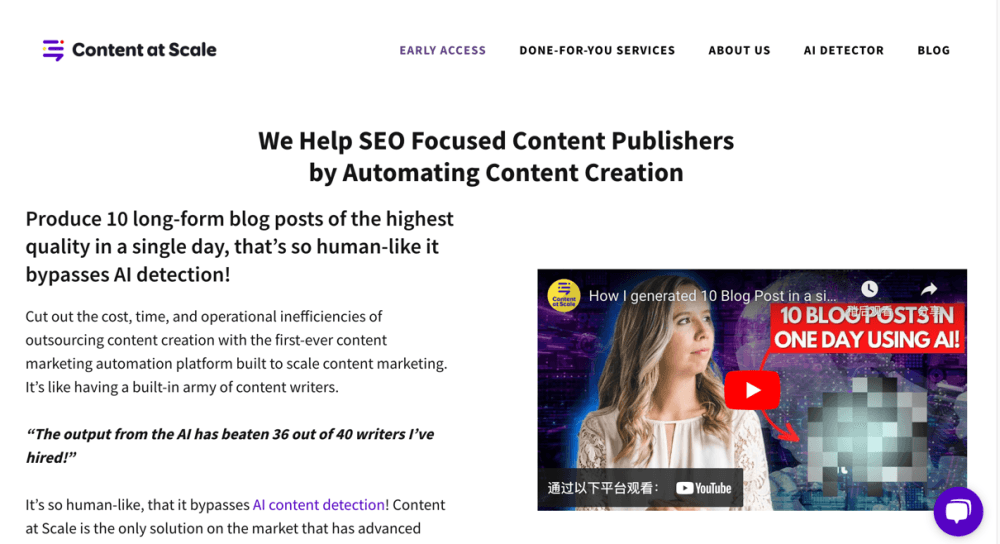
Content at Scale is an AI writing tool built for one job: turning a search keyword into a publishable long-form article. It came out of the wave of AI copywriters that appeared in 2022, and it positioned itself around length and SEO depth rather than short marketing snippets. You hand it a keyword, a YouTube video, a podcast, or an existing post, and it builds a researched draft of a few thousand words in a few minutes.
The product has since become part of BrandWell. The core writing engine now ships as RankWell, and the company pitches the whole suite as growth automation software that also covers keyword research, link building, and publishing. For people who used the original tool, the writing workflow still looks familiar. You bring a topic, get a draft, and refine it in an editor that scores the article as you go.
Two limits are worth knowing before you pay. It's aimed at people who publish SEO content regularly, so the pricing assumes a content program rather than a one-off article. And the drafts still need a human editor. There's no free plan either. The AI gets a structure and a rough argument onto the page, but facts, brand voice, and accuracy are on you.
Getting Started
- Sign up at contentatscale.ai, which now redirects to the BrandWell platform, and pick a plan.
- Start a new article and give it a target keyword, a URL, a YouTube link, or source material you want it to work from.
- Let the engine generate the draft. It researches the topic and writes a long-form piece with headings, sections, and supporting points.
- Open the draft in the editor. Review the SEO score, keyword coverage, and recommendations, then edit the text to match your brand voice.
- Add a featured image, check the metadata, and publish through the WordPress or Contentful integration, or export the text to your own tool.
Product Information
A quick look at Content at Scale's pricing, supported platforms, and performance.
Best for
The users, tasks, and scenarios where this tool fits best.
Users
- Content marketers running a blog
- Small agencies handling several clients
- SEO freelancers
Tasks
- Filling a content calendar
- Refreshing an old post
- Turning a video or podcast into an article
Scenarios
- Scaling output without scaling headcount
- Testing new topics cheaply
- Keeping a solo site consistent
Key features
Long-Form Drafts From a Keyword or Source
Content at Scale works as an AI blog post writer that builds full articles, not snippets. You give the tool a keyword, a competing URL, a YouTube video, a podcast, or an uploaded audio file, and it produces a multi-section piece rather than a short blurb. For teams that publish several posts a week, that's the difference between a stalled calendar and a full one. For teams that publish several posts a week, that's the difference between a stalled calendar and a full one. The draft arrives with headings and a rough argument already laid out, so your editor has a skeleton to work from.
SEO Scoring and Keyword Coverage in the Editor
As you edit, the workspace shows an SEO content scoring view, a search preview, and recommendations beside the text. It tracks keyword coverage and points out gaps and overuse, so you can fix weak spots without switching to another tool. The score is guidance, not a guarantee. Rankings still depend on competition and site quality, and the tool says as much.
Research and Source Material Workflow
You can attach URLs, documents, and source material to a brief, and keep the facts and source context beside the article while you work. This matters for anyone who needs an article to reflect real research instead of generic filler. It also means the AI has something concrete to draw on beyond its training data, which is where most lonely-prompt AI writers fall short.
Brand Voice Rules
You write voice guidelines once, add sample articles, and set defaults for the whole project. Every draft the tool generates then follows those instructions. For agencies and multi-brand publishers, this keeps different clients sounding different rather than flattening everyone into the same AI tone.
Content Planning and Queue
The content plan ranks what to create, improve, merge, or monitor from your own search data, and a priority queue writes in that order. That shifts the tool from a blank prompt box to a content operation with a reason behind each article. You decide the next piece based on demand, not on a whim.
Publishing and Delivery Integrations
Approved articles can go straight to WordPress or Contentful, or be delivered as Google Docs. The publishing step stays a human approval, but the handoff to your CMS is automated. That cuts the copy-paste step between writing and going live, which is usually where formatting and metadata get lost.
Visibility and AI Citation Monitoring
Every plan bundles Visibility, which tracks search performance, rankings, site audits, and mentions in AI answers. It shows where you appear in search and in AI-generated responses, and feeds that evidence back into the content strategy. As AI search grows, knowing whether a model cites your page becomes part of the job, and bulk article generation without that feedback is a shot in the dark.
Pros and cons
Pros
- Works as an AI content writing software platform that produces full long-form drafts from a keyword, URL, or video source, not just short snippets
- SEO score, search preview, and keyword coverage sit in the editor, so optimization happens in one place
- Brand voice rules and per-project defaults keep multiple clients from blending together
- Native WordPress and Contentful publishing plus a Google Docs path reduce manual copy-paste
- Bundled Visibility tracking covers rankings and AI citation location, useful as AI search grows
Cons
- No free plan, and the entry price is $249/mo, so it only makes sense if you publish consistently
- Drafts still need a human editor for facts and accuracy, so this speeds work up rather than removing it
- Article and rewrite-word caps on each tier mean heavy publishers may hit limits and need to upgrade
- The product now lives inside the larger BrandWell suite, so anyone wanting the old standalone tool has to navigate a broader platform
Frequently asked questions
Content at Scale is an AI writer that produces long-form SEO articles from a keyword, a URL, a video, or a podcast. You supply the topic and it drafts a full blog post with headings and sections, which you then edit and publish.
Related content
Explore related tools, skills, and articles for Content at Scale.
Content at Scale Alternatives

Google EmbeddingGemma 2
Google DeepMind · Writing · Image · CodingGoogle EmbeddingGemma 2 is a 740M-parameter open model that turns text, code, images, audio, and video frames into vectors in one 768-dimension space, running on phones and laptops.

MePersona
MePersona, Inc. · Writing · Productivity · MarketingMePersona is an AI unified inbox for creators. It learns your voice, drafts replies to fan messages from 12 platforms, and sends only what you approve.

Fluence
Yay Software (Yannick Huchard) · Writing · Voice & Language · ProductivityFluence is an Android app that reads PDFs, EPUBs, Word files and web articles aloud, follows each sentence as it speaks, and answers questions about the text on the phone itself.