

Credibl ESG
Credibl Innovations Pvt. Ltd. · Marketing
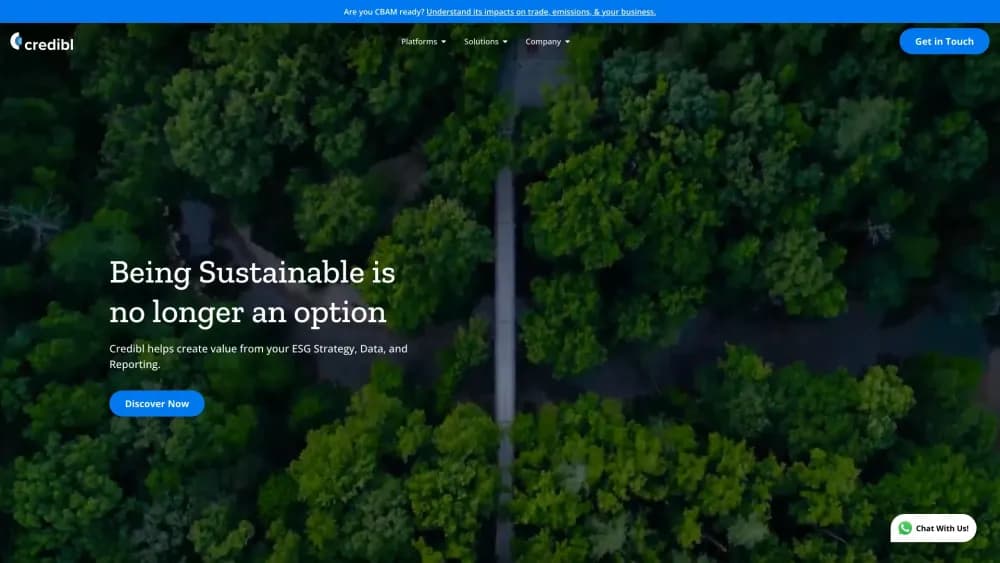
Credibl ESG is an AI-powered sustainability platform that collects ESG data, calculates Scope 1 to 3 emissions, and drafts reports for CSRD, BRSR, TCFD, and other frameworks.
About Credibl ESG
What Is Credibl ESG
Credibl ESG is an ESG reporting platform built around ESG data management for companies that have to measure, manage, and disclose environmental, social, and governance performance. It connects three jobs that usually live in separate tools: pulling activity data from facilities and suppliers, turning that data into emissions and KPI numbers, and publishing the results in the format a regulator or investor expects. The company behind it is Credibl Innovations Pvt. Ltd., and its customer list leans toward manufacturers, consumer goods brands, banks, and energy firms.
The product covers more than 1000 ESG KPIs and a long list of reporting frameworks, including CSRD and ESRS, GRI, SASB, TCFD, CDP, BRSR from SEBI, CBAM, PCAF, SFDR, and IFRS S2. It also handles financed emissions for banks and investors, plus lot-level and batch-level supply chain traceability. That breadth is the main reason teams pick it over a narrow carbon calculator.
Two limits matter before you sign up. Pricing is quote-based, so you can't compare plans on a public page or start without a sales conversation. And the platform expects real configuration work: facility structures, data owners, emission factor choices, and review workflows all need decisions from your team. Credibl describes the result as audit-ready, but audit readiness still depends on the evidence your organization feeds in.
Getting Started
- Book a demo through crediblesg.com. Credibl's team scopes your reporting obligations, entity structure, and the frameworks you need to cover.
- Set up your organizational boundary. Add legal entities, facilities, and business units, then assign data owners for each site.
- Connect or upload activity data. Pull exports from ERP and HRMS systems, or upload utility bills, fuel logs, and supplier files for the AI agents to clean and map.
- Configure calculations and controls. Choose emission factors and methodology per scope, set review and approval steps, and define the KPIs that feed each disclosure.
- Draft, review, and publish. Generate framework reports, check every figure against its source evidence, then export or share dashboards with auditors and stakeholders.
Product Information
A quick look at Credibl ESG's pricing, supported platforms, and performance.
Best for
The users, tasks, and scenarios where this tool fits best.
Users
- Sustainability managers at mid-size and large companies
- Finance and risk teams at banks and investors
- Export-focused manufacturers and consumer goods brands
Tasks
- Building a greenhouse gas inventory
- Preparing a CSRD or BRSR report
- Running a double materiality assessment
- Collecting supplier data across tiers
Scenarios
- Your first year of mandatory ESG disclosure
- A portfolio-wide financed emissions review
- Preparing for external assurance
Key features
Automated ESG Data Collection and Validation
Credibl collects data through uploads, templates, integrations with ERP and HRMS systems, and supplier portals. Validation rules catch missing units, outliers, and inconsistent periods before the data reaches a calculation. Each record keeps its source document, so a reviewer can open the bill or meter reading behind a number. For teams moving off spreadsheets, that audit trail is the difference between a number you can defend and one you can only hope is right.
Carbon Accounting for Scope 1, 2, and 3
The carbon accounting software follows GHG Protocol guidance and supports activity-based and spend-based methods. It covers direct emissions, purchased energy, and value chain categories, with an emission factor library that draws on EPA, DEFRA, BEIS, EXIOBASE, GLEC, and Credibl's own hub. Banks can run financed emissions calculations under PCAF, including per-loan analysis and portfolio comparisons. The output is an emissions inventory that can be exported for CSRD, TCFD, BRSR, or internal target tracking.
Multi-Framework Reporting and Cross-Mapping
One dataset can produce reports for CSRD and ESRS, GRI, SASB, TCFD, CDP, BRSR, CBAM, IFRS S2, and other standards. The cross-mapping layer links a single datapoint to every framework where it appears, which cuts duplicate entry and keeps definitions consistent. Report builders can draft sections, attach evidence, and export a formatted document. For companies reporting to more than one regulator, this is the feature that saves the most time.
Incredibl AI Agents
Credibl added a team of five ESG AI agents in 2026. EVA is the front door and routes requests to the right specialist. Argus extracts and cleans data from utility bills, meter photos, CSV files, and supplier documents. Cira recommends emission factors and explains methodology choices. Quill drafts disclosures and links each figure to its source. Verity checks evidence, confidence, audit trail, and readiness before an auditor sees the report. Every agent works behind an approval step, so nothing commits without a human decision.
Supplier Assessment and Product Traceability
Supplier assessment modules collect emissions, labor, and governance data from vendors and score them against your criteria. The traceability side goes further, tracking materials and finished goods at lot and batch level with QR codes, IoT devices, and blockchain records. That matters for Scope 3 accuracy, CBAM declarations, and brands that need to prove where a raw material came from. Internal traceability also covers production, warehouse, dispatch, and waste flows.
Dashboards, Goal Tracking, and Assurance Readiness
Real-time dashboards show emissions, KPI progress, and facility comparisons, with filters for business unit, geography, and period. Goal tracking supports science-based targets and net zero plans, including task-level ownership and progress updates. The assurance layer keeps evidence links, confidence scores, and a full change history for every figure, which turns audit preparation from a last-minute scramble into an ongoing state.
Pros and cons
Pros
- Framework coverage is unusually broad for one platform, spanning CSRD, BRSR, GRI, SASB, TCFD, CDP, CBAM, PCAF, and IFRS S2.
- The AI agents do real work on data cleaning and drafting, and every action sits behind a preview and approval gate.
- Evidence-linked records and confidence scores make the output easier to defend in front of an assurance provider.
- Strong fit for companies that report to both Indian and EU regulators, since BRSR and CSRD share one data layer.
Cons
- There is no public pricing and no self-serve free plan, so evaluation starts with a sales call and a custom quote.
- No documented public API is available. ERP and HRMS integrations exist, but custom connections need implementation support.
- AI drafts and extracted data still need review by someone who knows the methodology, so the platform doesn't remove the need for ESG expertise.
- Setup takes real effort. Facility structures, data owners, and emission factor choices have to be decided before the first report is useful.
Frequently asked questions
Credibl ESG manages sustainability data from collection through disclosure. Teams upload or connect activity data, calculate emissions and ESG KPIs, and generate reports for frameworks such as CSRD, BRSR, TCFD, and GRI. It also covers supplier assessments, financed emissions, and supply chain traceability.
Related content
Explore related tools, skills, and articles for Credibl ESG.
Credibl ESG Alternatives

ngram 2.0
ngram · Video · Marketingngram 2.0 is an AI video generator for teams. It turns a prompt, a screen recording, or a product URL into a narrated explainer, product demo, or AI avatar video, and every scene stays editable.

shippedit.me
Krawlup · Marketing · Businessshippedit.me now redirects to Krawlup, a web platform that audits SEO, AEO and page speed every week, then hands the fixes to AI coding agents over MCP.

MePersona
MePersona, Inc. · Writing · Productivity · MarketingMePersona is an AI unified inbox for creators. It learns your voice, drafts replies to fan messages from 12 platforms, and sends only what you approve.