

Datacurve
Datacurve · Coding
Datacurve builds training and eval data for AI labs, and its Shipd platform pays expert engineers to solve hard coding quests that turn into that data.
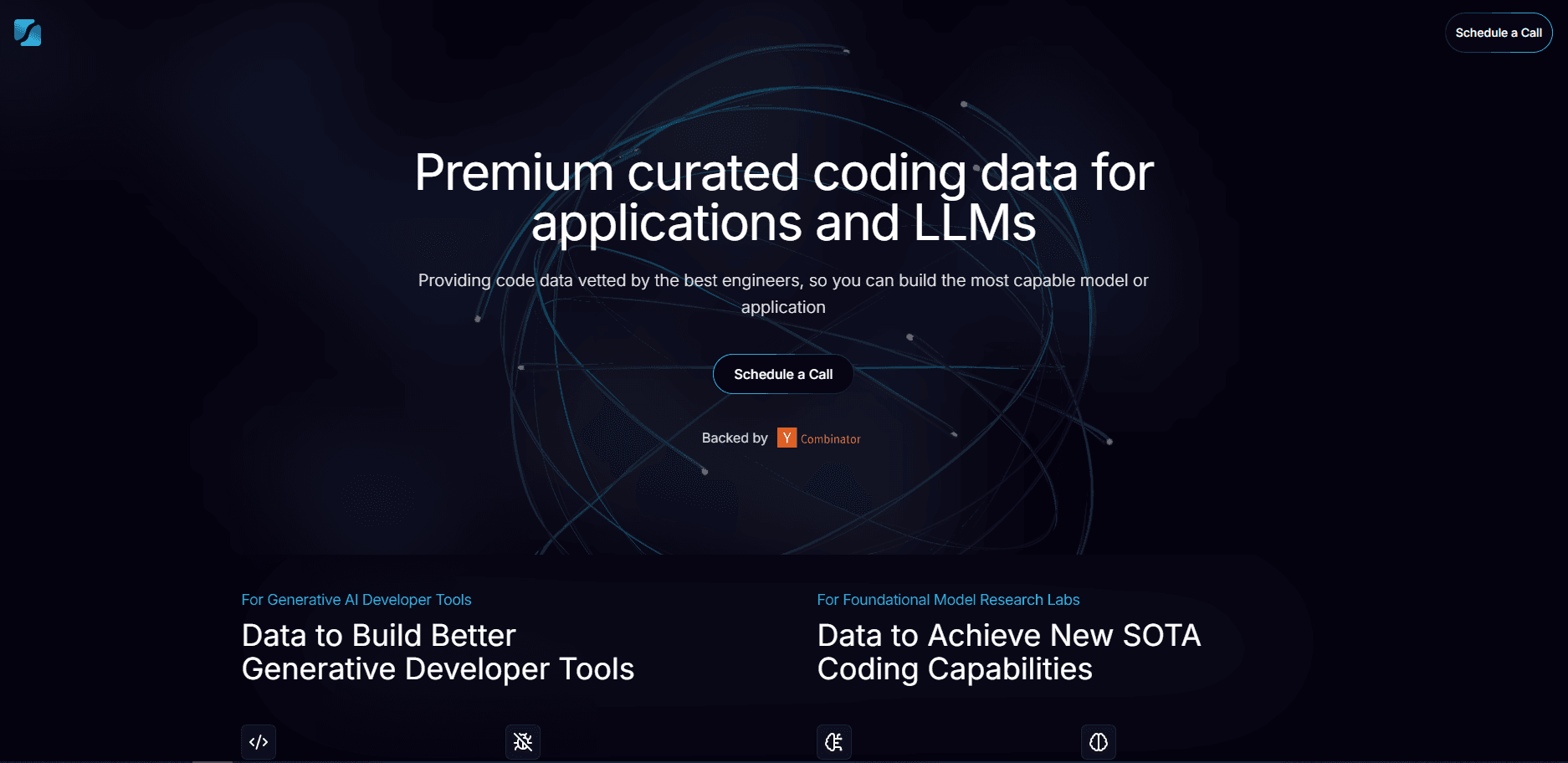
About Datacurve
What Is Datacurve
Datacurve sells to AI labs, not to everyday users. Its job is to produce the examples that frontier models learn from and get graded on, mostly for software engineering and other STEM work. The company calls itself a data engine for frontier AI, and the label holds up: hard problems go in, structured training and eval data comes out.
The problem it targets is quality. Most annotation work goes to contractors who are cheap to hire and easy to replace. That's fine for tagging a photo. It falls apart when someone has to judge whether a patch to a large codebase is actually correct. Datacurve takes the other road. It recruits engineers who already ship code, then pays them to solve difficult problems on a platform called Shipd.
Shipd is the side most people will actually touch. Contributors browse quests, pick work that matches their skills, submit solutions, and get paid once those solutions clear review. Labs never see this part. They buy the finished datasets.
Getting Started
- Sign up on Shipd with an email address or GitHub profile. The platform screens for coding ability, so expect to show what you've built.
- Browse open quests by category, including SWE, ML, and data science, and read the full spec before you claim one.
- Solve the task in your own setup. Expect repo level fixes, failing test suites, or builds that start from an empty folder.
- Submit for review. Automated tests run first, then human checks on correctness and approach.
- Collect the bounty once the quest passes. Your acceptance rate then shapes access to harder, better paid work.
Product Information
A quick look at Datacurve's pricing, supported platforms, and performance.
Best for
The users, tasks, and scenarios where this tool fits best.
Users
- Working software engineers
- ML and data science specialists
- Competitive programmers and Kaggle ranks
Tasks
- Writing original coding tasks
- Producing verified repo level fixes
- Assembling eval suites
Scenarios
- Earning on the side
- Labs needing uncontaminated AI training data
- Teams testing agentic coding tools
Key features
Bounty Quests on Shipd
Every project on Shipd is a quest with a stated bounty, a spec, and an acceptance bar. You see the pay before you start, which is rare in annotation work. Contributors come from open source projects, Kaggle, Codeforces, and ICPC.
Screening That Favors Practitioners
Sign-up isn't open to anyone with a laptop. The platform leans on demonstrated ability, which is why the contributor base stays small relative to general crowdwork sites. For labs, that means fewer submissions but far fewer wasted ones.
Layered Verification
A quest passes through automated tests, peer review, and expert sign-off before it counts. Each layer catches a different failure: broken code, correct code with the wrong reasoning, and tasks that are simply too easy to separate strong models from weak ones.
Range Across STEM
The catalog isn't limited to application code. Quests also cover machine learning, data science, and adjacent technical domains, so a lab can source several data types from one vendor instead of stitching together three.
Benchmarks in the Open
Datacurve publishes its own evaluations, including DeepSWE, a software engineering benchmark built from original tasks across active open source repos. Model makers cite the scores in launch posts, which gives the company a public profile most data vendors lack.
Custom Data Programs
Labs with specific gaps can commission datasets rather than buying whatever is on the shelf. The work is scoped, priced privately, and delivered as structured data, which is why there's no public price list.
Pros and cons
Pros
- Hard tasks attract strong engineers, so the resulting coding data carries judgment that crowdwork can't produce.
- Published benchmarks such as DeepSWE give outside observers a way to check the company's claims.
- Contributors keep their own schedule and pick their own difficulty, which suits people with full time jobs.
- One vendor covers SWE, ML, and data science work, cutting the coordination cost of multiple suppliers.
Cons
- No public pricing, so a lab has to talk to sales before it knows whether the budget works.
- Contributors face uneven income. A dry spell on hard quests means no pay that week, and there's no retainer.
- The screening bar keeps the talent pool small, which can mean slower turnaround on a large order than a bigger labeling shop would promise.
- There's no public API, so anything you build around the data has to be wired up by hand.
Frequently asked questions
Training and evaluation data for AI models, weighted toward software engineering. Labs buy datasets, not software, so there's no subscription to sign up for on the company site.
Related content
Explore related tools, skills, and articles for Datacurve.
Datacurve Alternatives

Base Code
Base44 (Wix) · Coding · ProductivityBase Code is a shared cloud development environment from Base44. Teammates describe changes to an existing GitHub codebase in chat, preview them live and send them back as pull requests.

Google EmbeddingGemma 2
Google DeepMind · Writing · Image · CodingGoogle EmbeddingGemma 2 is a 740M-parameter open model that turns text, code, images, audio, and video frames into vectors in one 768-dimension space, running on phones and laptops.

GitGlow
GitGlow · Coding · ProductivityGitGlow is a local-first desktop Git client that lets independent developers review their own code and their AI agents' changes in one place before shipping.