

DataHawk eCommerce Analytics
DataHawk (Seller Suite) · Marketing · Business
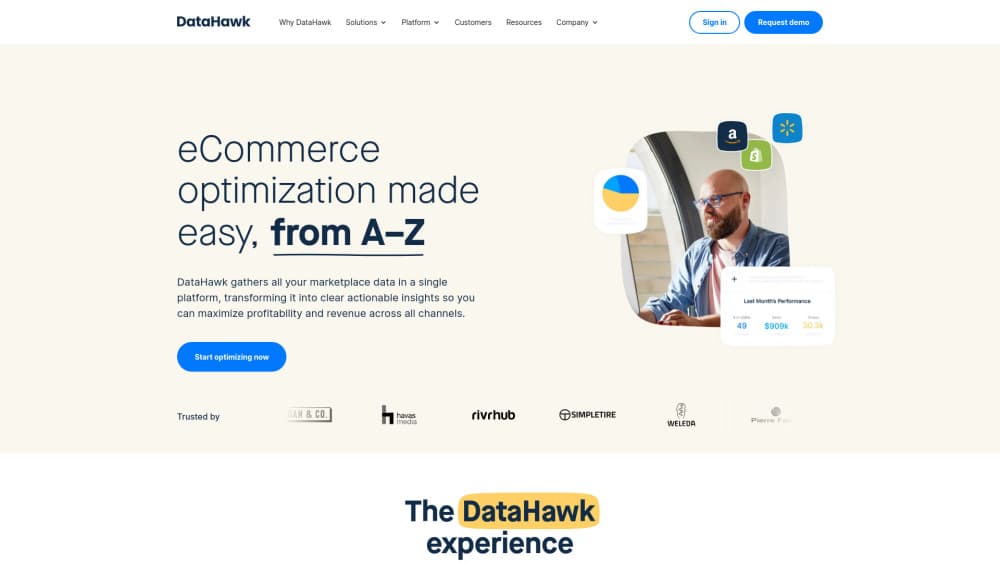
DataHawk is an ecommerce analytics platform that unifies Amazon, Walmart, and other marketplace data into daily dashboards, AI alerts, and API-ready reports for brands and agencies.
About DataHawk eCommerce Analytics
What Is DataHawk
DataHawk is a marketplace analytics platform built for people who sell on Amazon and Walmart, plus the agencies that manage those accounts. It pulls sales, advertising, SEO, and inventory numbers into one place, then layers alerts and analysis on top so you spend less time exporting spreadsheets and more time fixing the SKU that dropped.
The core problem it solves is fragmentation. Amazon pushes data through Seller Central and the Ads console, Walmart does the same through its own seller tools, and everything else arrives as CSV files at different times of day. DataHawk connects to those sources through official partner integrations, normalizes the numbers, and keeps history you can query later.
Two limits shape how you'd use it. Pricing is quote based, so you can't test the paid tiers without a sales conversation. And the platform is deepest on Amazon and Walmart, which means sellers whose revenue lives mostly on other channels get less out of it than a two-marketplace brand does.
Getting Started
- Start a free account on datahawk.co, or book a demo if you want pricing for a larger account first.
- Connect your Amazon Seller Central and Amazon Ads profiles, and your Walmart seller account if you sell there.
- Pick the SKUs, brands, and marketplaces you want on the main dashboard, and set your currency and time zone.
- Invite teammates and assign roles so analysts can build views without touching billing settings.
- Review the first daily data drop, then turn on performance alerts for the metrics you actually act on.
Product Information
A quick look at DataHawk eCommerce Analytics's pricing, supported platforms, and performance.
Best for
The users, tasks, and scenarios where this tool fits best.
Users
- Amazon and Walmart brand sellers past the startup stage
- Agencies running several client accounts
- Enterprise ecommerce and analytics teams
Tasks
- Checking yesterday's sales and ad spend per SKU
- Reviewing Amazon advertising analytics
- Estimating competitor sales before an inventory commitment
- Producing recurring client reports
Scenarios
- Expanding from Amazon to Walmart
- A metric moves and nobody knows why
- Marketplace data has to land in a warehouse
Key features
Amazon Analytics on Official Partner Data
DataHawk connects through Amazon's official partner integrations rather than scraping listing pages, so sales, traffic, and advertising figures come from your own seller account. That matters when numbers disagree with a third-party estimate: yours win for your own business. Daily SKU-level reporting covers revenue, units, sessions, conversion, and the profitability signals behind them.
Walmart Marketplace Coverage
Walmart gets the same treatment as Amazon, with sales, ads, SEO, and inventory tracking in one view. DataHawk is an approved Walmart Marketplace solution, which is the difference between a vendor that guesses at Walmart data and one cleared to pull it from the source. Brands selling on both platforms can compare performance without exporting two different report formats.
Sherlock, the AI Agent for Amazon Sellers
Sherlock watches your Amazon performance and steps in when something breaks: a sales drop, a buy box loss, an ad campaign that stopped converting. Instead of a chart with a red line, you get a written diagnosis and a suggested next step. It's in beta with waitlist access, so plan around the wait if this is the feature that sells you on the platform.
Advertising Analytics Tied to Organic Results
Ads reporting lives in the same place as organic rank and conversion data, so you can see whether higher spend actually moved your position. Spend, ROAS, and impressions get tracked per campaign and per ASIN, and the platform surfaces where rising ad cost is eating margin. For teams running both Sponsored Products and Sponsored Brands, the unified view removes the manual join between two consoles.
Agency Dashboards and White-Label Reports
Agencies get a multi-account view that rolls client performance into one screen, then switches to per-client detail in a click. White-label reports carry the agency's branding, and role-based access keeps a client from seeing another client's numbers. AI alerts can route to the account manager instead of everyone, which cuts the noise on a busy week.
API, MCP, and BI Connectors
The marketplace data API exposes your numbers programmatically, and native connectors cover Snowflake, Power BI, Looker Studio, and Google Sheets. DataHawk also ships an MCP server, so you can point an AI assistant at your Amazon data and ask questions in plain language. For teams with a warehouse, this turns DataHawk into one source among many rather than another dashboard to log into.
Profitability Tracking at SKU Level
Revenue growth hides unprofitable products, and DataHawk puts cost inputs next to sales so margin shows up per SKU. You can spot the ASIN that sells well and still loses money after fees and ad spend. Enterprise accounts get KPI shift detection on top, which flags when a metric breaks its normal range before the monthly review does.
Pros and cons
Pros
- Amazon and Walmart data in one platform with the same metric definitions, which saves the reconciliation work between two seller consoles.
- Official partner status on both marketplaces means your numbers trace back to your own accounts, not scraped estimates.
- The API, MCP server, and BI connectors let you keep your existing warehouse and reporting stack instead of replacing it.
- Agency features are genuinely built for agencies: multi-account switching, white-label reports, and role-based access all ship as standard.
- Daily alerts on KPI shifts catch problems in days rather than at the end of the month.
Cons
- No published price list. You have to book a demo to learn what the paid plans cost, which slows down budgeting and comparison shopping.
- Sherlock, the AI agent, is still beta with waitlist access, so you can't count on it as a live feature today.
- Setup depends on seller account permissions and a thoughtful metric configuration, so a solo seller may spend a week before the dashboard answers real questions.
- Coverage leans heavily toward Amazon and Walmart. If most of your revenue comes from other marketplaces or your own store, the platform covers less of your business.
Frequently asked questions
DataHawk is used to track and analyze marketplace performance for Amazon and Walmart sellers. It combines sales, advertising, SEO, and inventory data in one dashboard, adds alerts when metrics move, and can push the data into your own BI tools through an API.
Related content
Explore related tools, skills, and articles for DataHawk eCommerce Analytics.
DataHawk eCommerce Analytics Alternatives

ngram 2.0
ngram · Video · Marketingngram 2.0 is an AI video generator for teams. It turns a prompt, a screen recording, or a product URL into a narrated explainer, product demo, or AI avatar video, and every scene stays editable.

shippedit.me
Krawlup · Marketing · Businessshippedit.me now redirects to Krawlup, a web platform that audits SEO, AEO and page speed every week, then hands the fixes to AI coding agents over MCP.

MePersona
MePersona, Inc. · Writing · Productivity · MarketingMePersona is an AI unified inbox for creators. It learns your voice, drafts replies to fan messages from 12 platforms, and sends only what you approve.