

devlo
devlo · Coding
devlo is an AI software platform that acts like an extra engineer on your team. It reads your tickets, writes the code, opens a tested pull request, and reviews other people's PRs before a human ever looks at them. You connect it to GitHub, Jira, and Slack, and it works where your team already works. The point isn't to replace developers. It's to keep them in flow. Less busywork, more shipping.
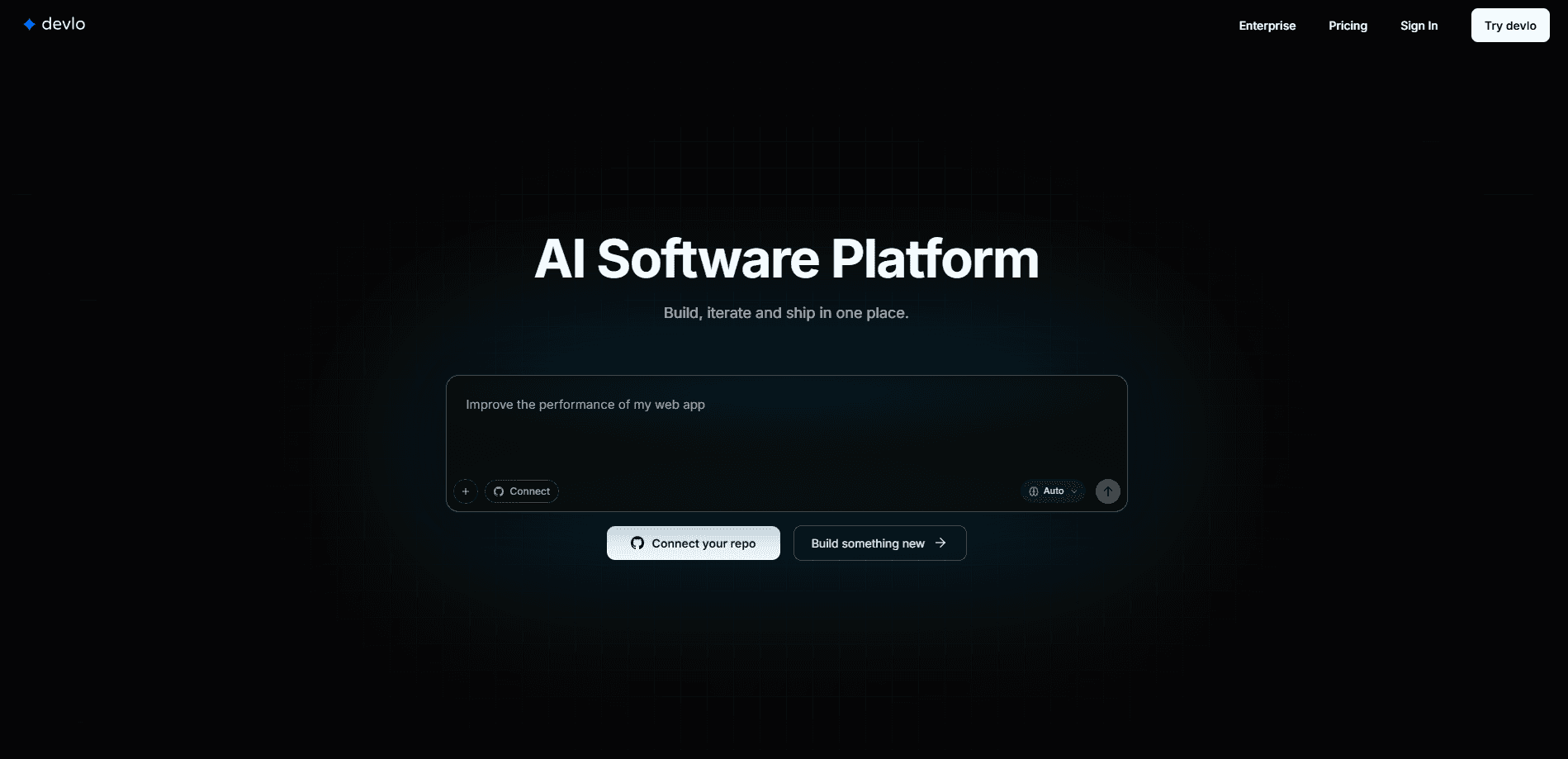
About devlo
What Is devlo
devlo is an AI engineering productivity platform built around one idea: most of a developer's day disappears into work that isn't really engineering. Answering tickets, chasing context, writing boilerplate, and waiting on reviews add up fast. devlo steps into that gap. It takes the chore work off your plate.
You hand it a ticket, and it comes back with a plan, a branch, and a pull request that already has tests attached. It also reviews incoming PRs automatically, so small issues get caught before they reach a teammate's queue. On top of that, it tracks how much of your team's output is actually AI-assisted, which is the part most teams have no visibility into. That last bit matters more than it sounds.
The limitation worth knowing up front: devlo is a hosted platform, not a local tool. Your code flows through its system, so you'll want to read the security posture carefully before adopting it. The company leans into that angle. It advertises SOC-2 Type-2 compliance, zero data retention, and top placement on SWE-Bench, the benchmark that scores how well AI models fix real bugs. Treat those bold claims as vendor claims and verify them against your own compliance needs.
Getting Started
- Sign up on devlo.ai and connect your GitHub account so devlo can see your repositories and issues.
- Link the tools your team lives in, such as Jira for tickets and Slack for chat, so tasks can be triggered where they're created.
- Point devlo at a repository and pick an issue, then let it draft an implementation plan before it writes any code.
- Comment on a PR or a ticket to delegate work, or set a trigger that fires when a new issue arrives.
- Review the generated pull request like you would any teammate's work, then merge it once the tests pass.
Product Information
A quick look at devlo's pricing, supported platforms, and performance.
Best for
The users, tasks, and scenarios where this tool fits best.
Users
- Engineering teams of 5 to 50
- Tech leads juggling delivery and code
- Solo maintainers on active repos
Tasks
- Converting bug reports into tested pull requests
- First-pass code review
- Tracking AI impact on delivery
Scenarios
- A backlog of small tickets that never reach the top
- Review queues that stall on Fridays
- New engineers ramping on an unfamiliar codebase
Key features
Ticket to Tested Pull Request
devlo's core move is turning an issue into a finished pull request. You assign it a ticket, and it comments with an implementation plan, writes the code, and opens a PR with tests included. The value here is the starting point: instead of staring at an empty editor, a developer reviews and adjusts real work. It fits small, well-scoped bugs far better than sprawling architectural changes. Keep the tickets tight. Big rewrites are still your job.
Automated Code Review on Every PR
Every pull request gets an intelligent review pass, not just the ones someone remembers to look at. devlo reads the diff, flags problems, and leaves comments inline where the issue lives. It's built for AI code review, not a generic lint check. For teams where review is the bottleneck, this shortens the queue because routine problems are handled before a human opens the file. No waiting. That alone changes the pace of a release week.
Delegation Through Comments
You don't need a separate dashboard to assign work. Mention devlo in a GitHub issue or reply to a review comment, and it picks up the task inline. It reads like a normal conversation, which means the whole discussion stays in one thread your team can follow. Why does that matter? Because tools people have to leave their editor to use tend to get abandoned. This one shows up where the work already happens.
Works Where Your Team Works
devlo plugs into the tools already in your stack: GitHub for code and issues, Jira for tickets, Slack for chat, plus a browser interface. The pitch is no context switching. A PM can hand off a task from Slack. An engineer can review the same work in GitHub. The work moves without anyone opening a new tab. Simple, and it works.
Custom Agents and Triggers
Beyond the default assistant, you can define custom agents for specific workflows. Set a trigger, like a new Jira ticket or a failing GitHub check, and define the outcome you want, then let the agent run. You're effectively building a tailored AI coding agent per workflow. This is real automation. devlo reacts to events rather than waiting for someone to type a prompt.
Velocity and AI Impact Tracking
Most teams can't say how much of their output is AI-assisted. devlo tracks team velocity and separates out the portion driven by AI, giving managers a hard number to work with. Think of it as your AI developer assistant reporting back on its own contribution. Handy. It's the feature you'll want if leadership is asking whether the tool actually pays for itself.
Security and Compliance Posture
devlo markets SOC-2 Type-2 compliance and zero data retention, meaning it claims not to keep your code after processing it. It also points to its SWE-Bench standing as evidence of capability. These matter if you're weighing a hosted AI tool against a self-hosted one. Confirm the details against your own policy before you connect a private repo. Don't skip that step.
Pros and cons
Pros
- Turns tickets into tested pull requests, so work starts from a real branch instead of an empty file.
- Reviews every PR automatically, shortening review queues on busy repositories.
- Lives inside GitHub, Jira, and Slack, so there's no new dashboard to learn.
- Custom agents and event triggers let you automate repetitive workflows, not just answer prompts.
- Tracks AI's share of team velocity, which helps justify the spend to leadership.
Cons
- Custom pricing means you can't estimate cost from the site alone, so budget approval needs a sales conversation.
- It's a hosted platform, so your code leaves your infrastructure. That rules out some security-sensitive teams.
- Best suited to well-scoped tickets; large architectural work still needs humans driving.
- Limited public documentation on pricing tiers and API access makes self-evaluation harder.
Frequently asked questions
devlo is an AI software platform that converts tickets into tested pull requests, reviews code on every PR, and tracks engineering velocity. Think of it as an AI teammate that handles the repetitive parts of shipping software, so your engineers can spend their attention on the harder problems that actually need a person thinking about them.
Related content
Explore related tools, skills, and articles for devlo.
devlo Alternatives
Forefront
Forefront · CodingForefront is a web platform for building with open-source AI. It lets you fine-tune leading open-source language models on your own data, evaluate how they perform, and run them through an API or export them to host yourself. Developers who want the convenience of a closed-source platform but insist on owning their models and data are the target audience here.

Startkit
StartKit.AI · CodingStartkit is a boilerplate for building AI SaaS and AI wrapper products. Think of it as an AI startup boilerplate with the boring parts already wired up: authentication, Stripe and Lemon Squeezy payments, usage limits, transactional email, and an AI API starter that talks to OpenAI, Anthropic, Groq, or Llama. You clone the repo, set your price, and start on the part of your product that people actually pay for. It's Next.js under React and Tailwind, so most of the boilerplate code already feels familiar.
Testim
Tricentis · CodingTestim is an AI-powered test automation platform for building and running end-to-end tests across web, mobile, and Salesforce applications. It leans on machine learning to keep tests stable when an interface changes, so teams spend less time fixing broken selectors. Not bad for an automated testing tool you can start using today. You create tests by recording actions in a browser, then optionally add JavaScript when you need more control. It's a solid pick for busy QA teams.