

Dodo Payments: Sell Global
Dodo Payments · Other
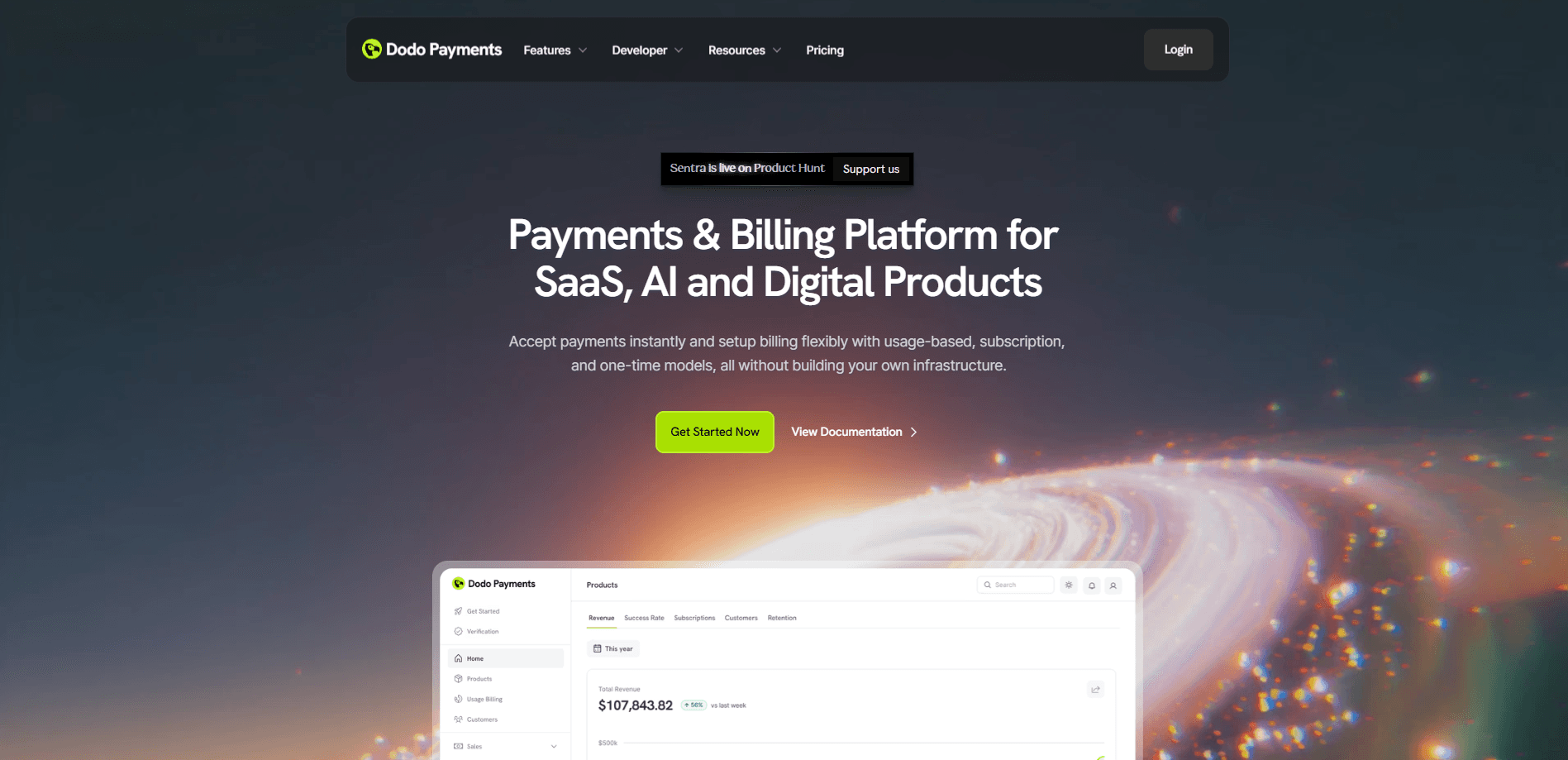
Dodo Payments is a payments and billing platform built for SaaS, AI, and digital product companies that want to sell worldwide without stitching together several tools. It acts as the merchant of record, so it handles sales tax, VAT, and compliance on your behalf while you collect payments in 80+ currencies and 40+ local payment methods. It also speaks to a wider shift in AI monetization, where products bill by tokens or API calls instead of flat seats. The platform covers one-time charges, subscriptions, credit balances, and usage metering in a single integration.
About Dodo Payments: Sell Global
What Is Dodo Payments
Dodo Payments is an all-in-one monetization engine for software businesses, handling payments, billing, and product distribution from one dashboard. It was founded in 2024 by Ayush Agarwal and Rishabh Goel and is based in Bengaluru, India. Backers include Andreessen Horowitz, Lightspeed, Visa, and Razorpay, according to the company's About page.
The product targets a specific problem. Most small teams can build a checkout link in a weekend, but tax registration across dozens of countries is another matter entirely. As the merchant of record, Dodo Payments takes legal responsibility for the sale, which means it files and remits the indirect taxes instead of you.
That convenience has a cost. Fees sit at the higher end of what processors charge, and the money moves through Dodo before it reaches your account. If you need direct card acquiring under your own name, this model won't match your setup.
So who is it actually for? Teams that would rather sell than file taxes. The setup takes minutes, and the tax work disappears.
Getting Started
- Create a Dodo Payments account and complete business verification in the dashboard.
- Connect a bank account for payouts and set your default currency.
- Pick a billing model, whether that's a one-time product, a subscription plan, or a credit balance for usage.
- Embed the hosted checkout or call the API to start a payment session.
- Track revenue, tax, and customer analytics from the same dashboard, and test everything in sandbox mode first.
Product Information
A quick look at Dodo Payments: Sell Global's pricing, supported platforms, and performance.
Best for
The users, tasks, and scenarios where this tool fits best.
Users
- Solo developers and indie hackers
- Small SaaS and AI teams
- Digital product sellers
Tasks
- Setting up subscriptions with add-ons
- Billing for AI usage
- Handling global tax compliance
Scenarios
- Launching a paid product in a new country
- Pricing fairly across regions
- Testing a monetization idea before committing
Key features
Merchant of Record
Dodo Payments takes legal responsibility for each transaction, which means it registers for, calculates, and remits sales tax, VAT, and GST in the countries where your customers buy. The company reports tax management coverage in 190+ countries. That's a lot of paperwork gone. For a small team, this removes the need to hire a tax advisor before the first international sale.
Flexible Billing Models
The platform supports one-time payments, subscriptions with add-ons, credit-based balances, and usage metering on the same account. AI companies can issue credits, count tokens, track API calls, and bill overages when a customer goes past a limit. Switching between models doesn't require a new integration.
Global Payments and Local Methods
Checkout accepts 80+ currencies and 40+ payment methods, including cards, Apple Pay, Google Pay, Klarna, and bank debits like ACH and SEPA. Buyers see local options and pay in a familiar format, which tends to reduce checkout drop-off in markets where cards aren't the norm. Fewer abandoned carts. That matters most where cards are rare.
No-Code Checkout
An embeddable, hosted checkout means you can start selling without engineering work. Pricing pages, discount codes, and payment links sit in the dashboard. No code needed. Teams that would rather stay in code can use the API and SDKs instead.
Distribution Tools
Beyond billing, Dodo Payments handles digital product delivery with storefronts, automated license key management, and affiliate programs. A multi-brand setup lets one account run several products with separate branding, all under a single merchant of record.
Sentra AI Assistant
Sentra is an AI agent that works inside VS Code, Cursor, and Windsurf to help plan and build billing integrations. You describe what you want, approve the plan, and it executes the setup. It's a neat idea. It's a notable fit for developer-first teams that want billing work done in the editor.
Pros and cons
Pros
- Merchant of record status means Dodo files and remits sales tax and VAT on your behalf.
- One integration covers payments, subscriptions, credits, and usage metering, so you avoid stitching tools together.
- Strong global reach with 80+ currencies and 40+ local payment methods.
- Distribution features like license keys and storefronts ship in the same platform.
- Startup program offers up to 12 months of free credits for early-stage teams.
Cons
- Standard pricing of 4% + 40c per domestic transaction plus surcharges costs more than many plain card processors.
- The merchant of record model means payouts route through Dodo, so funds don't settle directly into your own acquiring account.
- There's no free plan, so any real testing requires a live account with transaction fees.
- Because the platform is young, some long-standing processors have deeper document libraries and community guides.
Frequently asked questions
It's a payments and billing platform for SaaS, AI, and digital products. It handles checkout, subscriptions, credit balances, usage metering, and tax compliance under a merchant of record model, so you can sell globally without building billing infrastructure.
Related content
Explore related tools, skills, and articles for Dodo Payments: Sell Global.
Dodo Payments: Sell Global Alternatives

Odyssey 3
Odyssey · OtherOdyssey-3 is Odyssey's foundation world model. It simulates physics in real time, turns a prompt into an interactive environment, and adapts to robots, cars and games.

JarvisCore
Prescott Data · Coding · Productivity · OtherJarvisCore is an open source Python runtime where AI agents work as equal peers on an agent mesh, claim tasks from a shared ledger, and reach external services through a zero-trust broker.
Clef
Cloudflare · Business · OtherClef is Cloudflare's open-source decision model for Workers AI. It returns calibrated probabilities for typed questions, not generated text, so agents can classify, route, and act fast.