

Doubao 1.6
ByteDance (Volcano Engine) · Writing · Voice & Language · Chatbot · China AI
Doubao 1.6 is ByteDance's multimodal AI model family on Volcano Engine Ark, with three thinking modes, a 256K context window, and pricing that scales with input length.
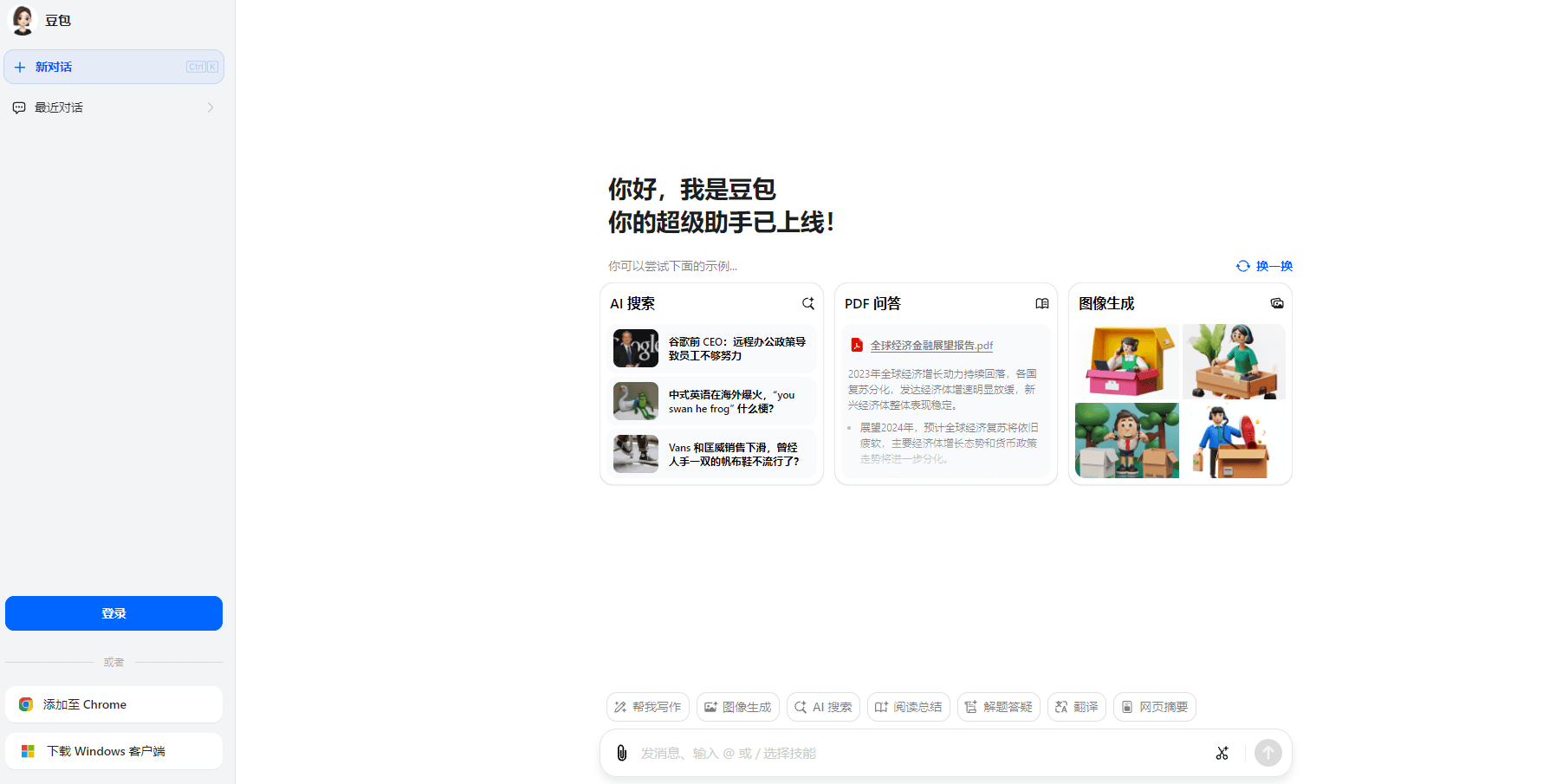
About Doubao 1.6
What Is Doubao 1.6
Doubao 1.6 is the model family ByteDance unveiled on June 11, 2025 at its Volcano Engine FORCE conference. It ships as three checkpoints under one name: doubao-seed-1.6 for general work, doubao-seed-1.6-thinking for harder reasoning, and doubao-seed-1.6-flash for high-volume, low-latency calls.
The pitch is consolidation. Instead of pairing a chat model with a separate vision model and an automation layer, Doubao 1.6 reads text, images and video, reasons about them, and can drive a graphical interface. All three versions take a 256K context window, which is the largest in its price class among Chinese providers.
The catch sits outside the model. Doubao is built for the Chinese market first, so the console, billing and most documentation assume a mainland Chinese account. Teams in Europe or North America can reach the doubao api, but procurement and compliance work takes longer than with US vendors.
Getting Started
- Choose an entry point. The Doubao app (web, iOS, Android) is free and needs no setup. For anything programmatic, use Volcano Engine Ark.
- Create an Ark account, complete real-name verification, then generate an API key in the console and enable the Doubao 1.6 model you want.
- Point your client at the Ark endpoint. It speaks the OpenAI chat completions format, so official SDKs work after you swap the base URL and model id.
- Set the thinking mode per request: on for hard problems, off for speed, or auto to let the model decide. Then send a prompt with text, image or video parts.
- Run your own documents or screenshots through it before you commit. Vendor benchmarks tell you little about your data.
Product Information
A quick look at Doubao 1.6's pricing, supported platforms, and performance.
Best for
The users, tasks, and scenarios where this tool fits best.
Users
- Teams building for the Chinese market
- Developers who need screen understanding
- Cost-sensitive startups
Tasks
- Reviewing long documents
- Reading charts and forms
- Mixed Chinese and English writing
Scenarios
- High-volume customer support
- Back-office data entry
- Agent prototypes
Key features
One Model With Three Thinking Modes
Doubao 1.6 lets you turn reasoning on, off, or leave it on auto. Auto mode reads the prompt and decides whether the question needs a chain of thought, which keeps simple requests fast and cheap. In practice this replaces the old choice between a fast model and a reasoning model.
A 256K Context Window on Every Version
All three checkpoints accept 256K tokens, not just the expensive one. That covers roughly 400 pages of text in a single call. Long inputs cost more per token, so the tradeoff is real, but you don't hit a wall mid-document.
Multimodal Input, Including Video
Text, images and video frames all go into the same request. You can ask what changed between two screenshots or pull numbers out of a chart. For most teams this removes a separate OCR or vision step from the pipeline.
GUI Operation
The model can look at a screen and issue actions: click, type, scroll, fill a form. ByteDance positions this as the base for computer-use agents. It works best on clean, standard interfaces, and it needs your own guardrails before you let it touch anything that matters.
Pricing That Follows Input Length
Instead of charging a premium for reasoning or vision, Doubao pricing uses one rate card per input bracket: 0 to 32K, 32K to 128K, and 128K to 256K. Short prompts stay cheap, and a long document costs more because it uses more of the window. ByteDance says the blended cost lands at about a third of Doubao 1.5 thinking.
Four Thinking Lengths
An October 2025 update added four levels (minimal, low, medium, high). You pick how much internal reasoning the model spends before it answers, which lets you trade latency against quality per request instead of per model.
Pros and cons
Pros
- Strong Mandarin handling, with English that holds up for translation and rewriting work.
- Price per token sits well below Western frontier models, especially on the flash version.
- 256K context on all three checkpoints, so long inputs don't force a model upgrade.
- Vision, video and GUI control live in one endpoint, which cuts integration work.
- The API follows the OpenAI format, so existing SDKs and wrappers mostly work unchanged.
Cons
- Sign-up, billing and real-name verification assume a mainland Chinese account, which slows down teams elsewhere.
- Data is processed in China, and that alone rules the model out for many regulated industries in the EU and US.
- English documentation trails the Chinese docs, so you'll translate error messages and release notes yourself.
- The family moves fast: Doubao 2.0 arrived within months, which means version migrations are a recurring cost.
Frequently asked questions
It covers the usual assistant work (chat, summarization, translation, coding help) plus two things text-only models can't do: reading images and video, and operating a graphical interface. Teams use it for support bots, document review and screen automation.
Related content
Explore related tools, skills, and articles for Doubao 1.6.
Doubao 1.6 Alternatives

Google EmbeddingGemma 2
Google DeepMind · Writing · Image · CodingGoogle EmbeddingGemma 2 is a 740M-parameter open model that turns text, code, images, audio, and video frames into vectors in one 768-dimension space, running on phones and laptops.

MePersona
MePersona, Inc. · Writing · Productivity · MarketingMePersona is an AI unified inbox for creators. It learns your voice, drafts replies to fan messages from 12 platforms, and sends only what you approve.

Fluence
Yay Software (Yannick Huchard) · Writing · Voice & Language · ProductivityFluence is an Android app that reads PDFs, EPUBs, Word files and web articles aloud, follows each sentence as it speaks, and answers questions about the text on the phone itself.