

Dragonfly
Dragonfly · Business · Other
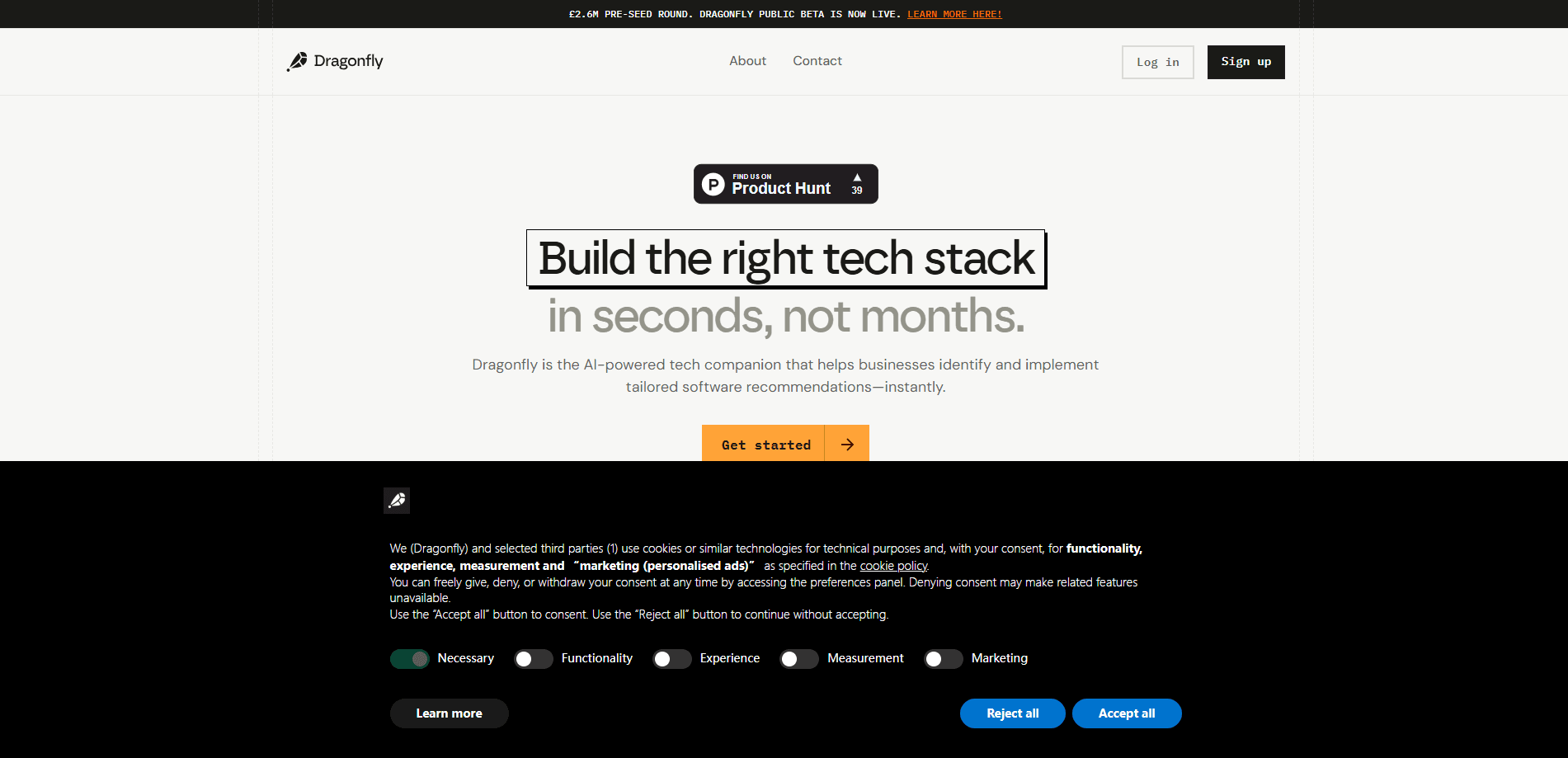
Dragonfly is an AI-powered tech stack intelligence platform for businesses. It learns the software you already run, watches the wider market of more than 300,000 tools, and then tells you what to change. Instead of running a spreadsheet audit every quarter, teams get one live view of every SaaS and AI tool, what it costs, and whether anyone still uses it, which is usually the part nobody can answer with confidence.
About Dragonfly
What Is Dragonfly
Dragonfly is a SaaS management tool and software intelligence platform built by Sean King and Sven Sabas. It reads your stack, usage, and spend straight from the systems you already connect, then compares that picture against a database of tools tracked across 100+ sources. The pitch is straightforward: decisions about software should come from your own data, not from whoever shouts the loudest or pays the most for visibility.
The problem it targets is messy, expensive stacks. Most companies lose track of who pays for what, which licences sit idle, and which AI assistants teams quietly signed up for. Dragonfly surfaces all three in one dashboard, so waste and rogue renewals show up before they hit the invoice.
It's not a fit for solo users or small teams with a handful of subscriptions. Dragonfly is built for companies that already run dozens of tools and have real money tied up in them. There's no public price list, and you start through a demo call rather than a self-serve signup.
Getting Started
- Book a demo through the Dragonfly website and walk your stack through with the team.
- Connect the systems that hold your software data, such as your identity provider, finance tools, or SaaS admin accounts.
- Wait for Dragonfly to map your stack, usage, and spend. This runs live, with no interviews or surveys.
- Review the dashboard for waste, unused licences, and unsanctioned AI tools your teams installed.
- Ask plain questions about your own data and use the recommendations to plan what changes next.
Product Information
A quick look at Dragonfly's pricing, supported platforms, and performance.
Best for
The users, tasks, and scenarios where this tool fits best.
Users
- IT and operations leads
- Finance and procurement staff
- Founders and CTOs at growing companies
- Security and compliance teams
Tasks
- Auditing software spend
- Detecting shadow IT
- Vendor risk checks
- AI adoption tracking
Scenarios
- Quarterly budget reviews
- Choosing a new tool
- Preparing for a renewal
- Rolling out AI across teams
Key features
Live Stack Mapping
Dragonfly connects to your existing systems and builds the inventory on its own. No interviews, no surveys, no weeks of discovery. Every SaaS and AI tool, each team, and each licence lands in one live view that updates as things change, so the inventory you see today is the inventory you actually have.
Spend and Usage Analysis
The platform shows what you pay and what your teams actually use side by side. That pairing is what makes cuts defensible. You point to idle seats instead of guessing at them. Waste and unused licences surface before they cost you, not after.
Shadow IT and AI Detection
Teams sign up for tools without telling anyone. Dragonfly monitors the unsanctioned software and AI assistants in use and flags them early. For anyone worried about company data leaking into a tool nobody vetted, this is the feature that earns its keep.
Vendor Risk Monitoring
Every vendor in your stack gets checked for financial health, security posture, and supply-chain risk. Trouble shows up on your dashboard. That gives you time to act instead of reacting to a breach or a shutdown.
Market Tracking
Dragonfly studies 300,000+ tools across 100+ sources and updates what it knows whenever something moves. That constant scan is the second half of the picture. Your data tells it what you run, and the market tells it what you could run instead.
Stack Q&A
You ask questions about your own stack in plain language. Answers come from your real data. Decisions that used to take a meeting take minutes. No gut feel involved.
AI Readiness Benchmarks
Dragonfly scores each tool for AI capability and tracks adoption by team. It also benchmarks your readiness against your industry, so your next AI investment is grounded in evidence and not in whatever's trending that week.
Right-Sized Recommendations
Suggestions come sized for every budget. Some are a quick win, some are a major project. There's always a clear next step rather than a vague gap analysis, which matters when you're deciding where to spend the next quarter's budget.
Pros and cons
Pros
- Pulls stack, usage, and spend data automatically instead of relying on manual audits and surveys
- Combines your own data with market tracking, so recommendations reflect both what you run and what else exists
- Shadow IT and AI monitoring gives security teams early warning on unvetted tools
- Vendor risk checks cover financial health and supply-chain exposure, not just features
- Pricing and setup run through a demo, so the team can scope the deployment to your stack
Cons
- No public pricing, so you can't compare costs without a sales conversation
- It's a fit for companies with large stacks, which rules out solo users and very small teams
- Getting value depends on connecting your systems first, so there's setup work before the dashboard fills in
- The company is young with no track record you can verify from the outside
Frequently asked questions
It maps the software your company runs, tracks what you spend and how much each tool gets used, and recommends changes. It then compares your stack against a database of over 300,000 tools to show what you might be missing or wasting money on.
Related content
Explore related tools, skills, and articles for Dragonfly.
Dragonfly Alternatives
Liveplan
Palo Alto Software · BusinessLivePlan is business plan software that helps founders and small business owners turn an idea into a funder-ready plan. It combines AI-assisted writing, market research with cited sources, and connected financial forecasting so your income statement, cash flow, and balance sheet move together when you change one number. Over 1.5 million businesses have used it to plan, forecast, and track performance against real accounting data. That's a lot of founders. It's also a signal the tooling survived contact with real lenders.

Swms
Swms AI · Writing · Productivity · BusinessSwms is an AI safety compliance tool that turns a plain description of a job into ready-to-use safety documents. Describe your project, trade, and known hazards, and it writes a safe work method statement, job hazard analysis, safe work procedure, RAMS, or safety data sheet in seconds. It also ships with Oscar, a chat assistant that answers workplace safety questions in any language. Teams in construction, mining, transport, and warehousing use it to cut the paperwork that usually eats into a workday.

Rows
Rows (Superhuman) · Productivity · BusinessRows is an AI spreadsheet and data analysis tool that imports live data from more than 50 sources, then lets you work with it using plain language instead of SQL queries or nested formulas. You can pull numbers out of PDFs, connect ad platforms, databases, and bank accounts, and ask the AI to build reports, merge datasets, or set up models that recalculate themselves. It runs in the browser, works like a spreadsheet, and now sits under the Superhuman umbrella.