

Drawerrr
Drawerrr · Business
Drawerrr is a challenge platform where people team up to solve defined AI safety and design problems, submit a working solution, and get judged by a panel for cash prizes.
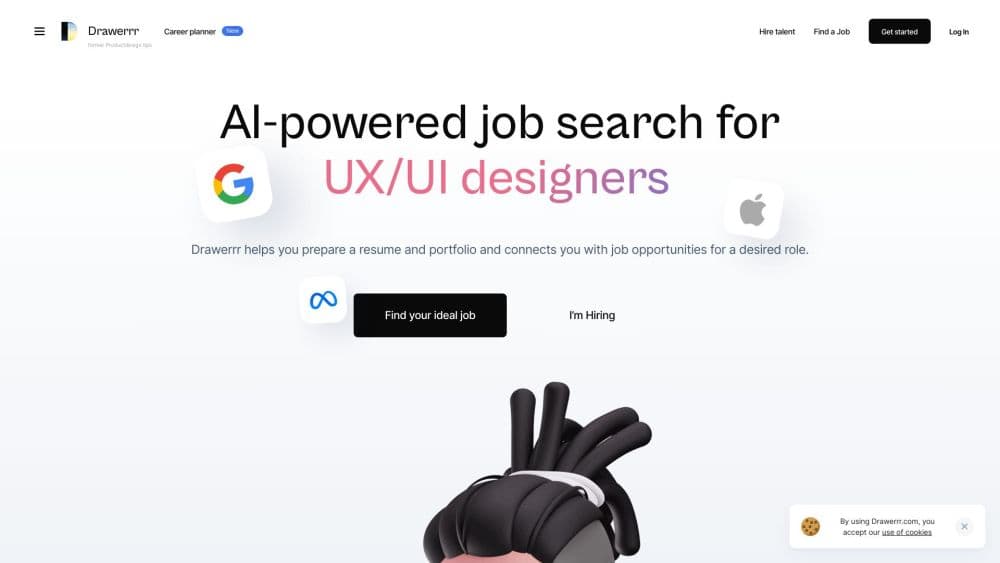
About Drawerrr
What Is Drawerrr
Drawerrr runs structured innovation challenges, closer to a themed AI safety hackathon than to a course or a benchmark suite. Each one states a narrow, real problem, such as preventing a tool-using AI agent from taking an action it cannot undo, and invites teams to build a working answer. You pick a challenge, form or join a team, submit a case study, and the strongest entries take cash prizes and a spot on the winners page.
The site frames its work around problems people can actually use, not research papers. Challenges are grouped by theme, and the current AI safety set works like a set of benchmark tasks with real deliverables and covers agent control, evaluation, alignment, accountability, privacy, fairness, and information integrity. Each theme breaks down into single-line problem statements, which keeps the brief concrete enough for a small team to ship something in weeks.
The limit worth knowing early: Drawerrr is a competition platform, not a tool you use to build the solution. There is no editor, model, or dataset inside it. Teams pick their own stack, and the platform handles the brief, the schedule, the mentors, and the judging. If you want a sandbox or a hosted agent runtime, bring your own.
Getting Started
- Create an account on drawerrr.com, then open the Challenges page and read the briefs.
- Pick the challenge that matches your skills, from the AI safety set to the sustainable development themes.
- Use the Connect page to find teammates, or bring your own team and register together.
- Ask a mentor for guidance through chat, or book a call to shape your approach before you build.
- Submit your case study before the deadline. The jury panel reviews entries, then winners and shortlisted projects get posted on the winners page.
Product Information
A quick look at Drawerrr's pricing, supported platforms, and performance.
Best for
The users, tasks, and scenarios where this tool fits best.
Users
- Designers and developers looking for portfolio work
- AI safety researchers and students
- Hiring managers and experts who want to give back
Tasks
- Turning a vague AI risk into a working demo
- Finding teammates for a short build
- Testing a safety idea against outside eyes
- Getting early feedback on a product concept
Scenarios
- A student has a free month between terms
- A designer wants proof of skill for a job application
- A small team wants a benchmark for its AI agent guardrails
Key features
Challenge Briefs Written as Failure Modes
Each brief names one specific thing that goes wrong, like an agent that skips the approval a person was supposed to give. That framing makes the submit bar clear: either your solution stops that failure or it doesn't. Teams spend less time guessing what judges want.
Themed Tracks Across AI Safety
The AI safety set splits into control, security, reliability, evaluation, alignment, accountability, transparency, privacy, fairness, information integrity, and human agency. You can stay inside one track or work across two, which suits both specialists and generalists.
Matched Mentors
Approved mentors guide teams through chat, optional kickoff calls, and a review of the case study before submission. Mentor applications are vetted on shipped projects, prior leadership experience, and mentoring intent, and the platform says it processes requests within 48 hours.
Jury Panel With Hiring Managers
Reviews come from people who hire and build in the field, not only academics. Submissions land in front of that panel, and applicants get feedback and visibility with the people who run teams.
Cash Prizes and a Winners Page
The sample challenge page lists $300 for first place, $150 for second, and $50 for third, with winners and shortlisted projects featured on the winners page. Treat those figures as challenge-specific. Check each brief before you plan around a payout.
Team Formation and Community Connect
You can jump into an existing team or assemble your own. The Connect page shows which teams are looking for a mentor and what they plan to work on, which cuts the awkward search for collaborators.
Pros and cons
Pros
- Briefs are short and concrete, so a small team can scope a submission without a research background.
- Jury feedback comes from working professionals, which adds weight to a portfolio piece.
- Mentoring is free for teams, and a mentor can review the case study before you submit.
- Prizes, shortlists, and the winners page give visible credit beyond a certificate.
- Challenges are tied to real problems in AI safety and sustainable development, which makes the work easy to describe in an interview.
Cons
- There is no workspace, model, or dataset inside the platform, so you bring your own tools and hosting.
- Prize amounts vary by challenge and the sample brief we looked at offered $300 at the top, so treat winnings as a bonus rather than pay.
- The site publishes no pricing page or public API, which leaves teams guessing about any future paid features.
- Deadlines decide everything, and a finished build submitted late counts for nothing.
Frequently asked questions
Drawerrr hosts open innovation challenges where teams build solutions to defined problems and submit them for judging. The current set focuses on AI safety, and earlier themes covered social and environmental goals aligned with the UN Sustainable Development Goals.
Related content
Explore related tools, skills, and articles for Drawerrr.
Drawerrr Alternatives

Knocket
Knocket (Tencent RTC team) · Productivity · Business · ChatbotKnocket is a free live chat and contact page tool that lets visitors message you from your website, app, or a shareable link, with every reply handled from Telegram or one inbox.

shippedit.me
Krawlup · Marketing · Businessshippedit.me now redirects to Krawlup, a web platform that audits SEO, AEO and page speed every week, then hands the fixes to AI coding agents over MCP.

Ayven
Alknoma · Productivity · BusinessAyven is an AI control centre by Alknoma that turns a plain-language goal into a dated plan, hands the work to your people and AI agents, and asks for your approval only when the call is yours.