

DREAM.page
Sloppy Joe, LLC · Coding
DREAM.page is a community and events management platform for curated communities, with AI tools for vetting members, running hackathons, and building event pages.
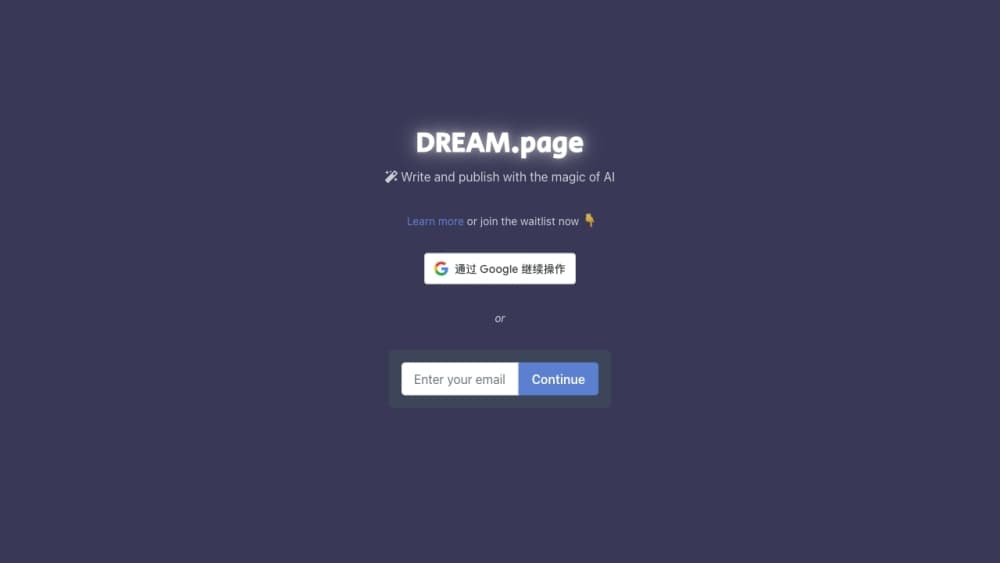
About DREAM.page
What Is DREAM.page
DREAM.page is the software behind AI Tinkerers, a network of meetups for people who build with foundation models. It handles the parts an RSVP form can't: deciding who gets in, keeping waitlists fair, and giving organizers one view of every member.
The product started as a way to publish event pages fast and grew into a full community management software stack for invite-style groups. Organizers get event orchestration, segmented email, hackathon administration, and a member directory in the same place, with AI doing the first draft of the copy, banners, and matchmaking.
Sloppy Joe, LLC owns both DREAM.page and the AI Tinkerers brand, and the company uses the platform to run its own chapters. That cuts both ways. The workflows are shaped by real meetups rather than a spec, and the product assumes you run a vetted builder community rather than an open mailing list.
Getting Started
- Sign up for an account, or contact the team for a licensing quote if you're bringing a whole organization onto the platform.
- Set up your community and the first event, then invite members or import the list you already have.
- Turn on curation rules and waitlist priorities, choosing what counts as a qualified member for your group.
- Build the event page with the AI page creator, send the announcement to a segment, then watch opens and signups in the analytics view.
Product Information
A quick look at DREAM.page's pricing, supported platforms, and performance.
Best for
The users, tasks, and scenarios where this tool fits best.
Users
- Community organizers running vetted meetups
- Hackathon and hack night organizers
- Sponsors and hiring teams
- AI builders looking for a serious room
Tasks
- Vetting hundreds of signups before a meetup
- Running a judged hackathon
- Sending an announcement that lands
- Producing an event landing page in minutes
Scenarios
- A monthly city chapter with a 60 person cap
- A weekend hackathon with sponsors watching
- A small sponsor dinner before the main event
Key features
Automated Curation and Smart Waitlists
Every RSVP request gets scored against the filters you set, including GitHub activity, LinkedIn profile, and technical role. The stated goal is builders rather than tourists, and the queue then ranks qualified people by contribution, speaking history, and expertise. For a 200 person waitlist this replaces hours of manual reading, and it also means your filters decide the room's character more than your gut does.
AI Page Creator and Visual Banners
Fine-tuned agents write the event page and the marketing copy from a short brief. A second tool produces on-brand banners and social images at high resolution, so a chapter organizer without a designer can publish a full event announcement in one sitting. Output arrives as a draft, and the copy still needs a human pass before it goes out under your community's name.
Precision Email and Segmentation
You can sub-target members by tech stack, location, or participation history instead of mailing the whole list. Delivery timing adjusts for high priority announcements, and the analytics break open rates and click-throughs down by segment. That last part matters for sponsors, because it turns "we emailed 4,000 builders" into numbers they can check.
Hackathon Engine
The hackathon management software covers team formation with double opt-in and message boards, a submission pipeline that hosts demo video, links repos, and transcribes demos, plus multi-round judging with weighted criteria. Prizes, winners, and deadline reminders are handled in the same flow. It's the part of the platform that saves the most admin time, especially once judge count passes five.
Builder Profiles and Community Intelligence
Each member has one profile with projects, stack preferences, and contributions. AI reads those profiles and suggests connections, hiring matches, and possible collaborators. The feature only works as well as the data behind it, so communities that ask for a real profile at signup get more from it than ones that collect an email address.
VIP Dinner Module
For smaller, higher stakes gatherings, the module finds conversation topics from the guest list and writes a briefing on each attendee, including bio, work history, and shared connections. Sponsors get guest management with invitations and RSVPs. It's a narrow tool, and it's the reason some teams license the platform for dinners alone.
Pros and cons
Pros
- Curation goes past the RSVP form and scores requests on public signals like GitHub activity and technical role.
- The event landing page generator and AI banners remove the design bottleneck for small organizer teams.
- Hackathon administration covers team formation, judging rounds, submissions, and prizes in one flow.
- Event management, segmented email, and member profiles share one database, so segments reflect who actually shows up.
- The platform runs AI Tinkerers itself, which means the workflows have been tested on large, high volume chapters.
Cons
- There's no public price list. You contact the team for a licensing quote, which slows down a small community's decision.
- The design assumes a curated, vetted community. Open public events with thousands of anonymous attendees fit less well.
- No native mobile app is listed, so door check-in and badge scanning happen in a mobile browser.
- AI copy and banners come out in the platform's house voice, so chapters with a strong brand identity will rewrite a fair amount.
Frequently asked questions
DREAM.page is a community and events management platform. Organizers use it to vet members, manage waitlists, publish event pages, send segmented email, run hackathons, and brief guests for small dinners.
Related content
Explore related tools, skills, and articles for DREAM.page.
DREAM.page Alternatives

Base Code
Base44 (Wix) · Coding · ProductivityBase Code is a shared cloud development environment from Base44. Teammates describe changes to an existing GitHub codebase in chat, preview them live and send them back as pull requests.

Google EmbeddingGemma 2
Google DeepMind · Writing · Image · CodingGoogle EmbeddingGemma 2 is a 740M-parameter open model that turns text, code, images, audio, and video frames into vectors in one 768-dimension space, running on phones and laptops.

GitGlow
GitGlow · Coding · ProductivityGitGlow is a local-first desktop Git client that lets independent developers review their own code and their AI agents' changes in one place before shipping.