

Elementy
Elementy · Coding
Elementy is an AI UI generator that turns plain-language descriptions into ready-to-use interface components. You describe the button, card, form, or layout you want, and Elementy returns clean React code you can copy, paste, and customize. It's built for developers, designers, and founders who want to skip repetitive layout work. Ship interfaces faster, with less busywork.
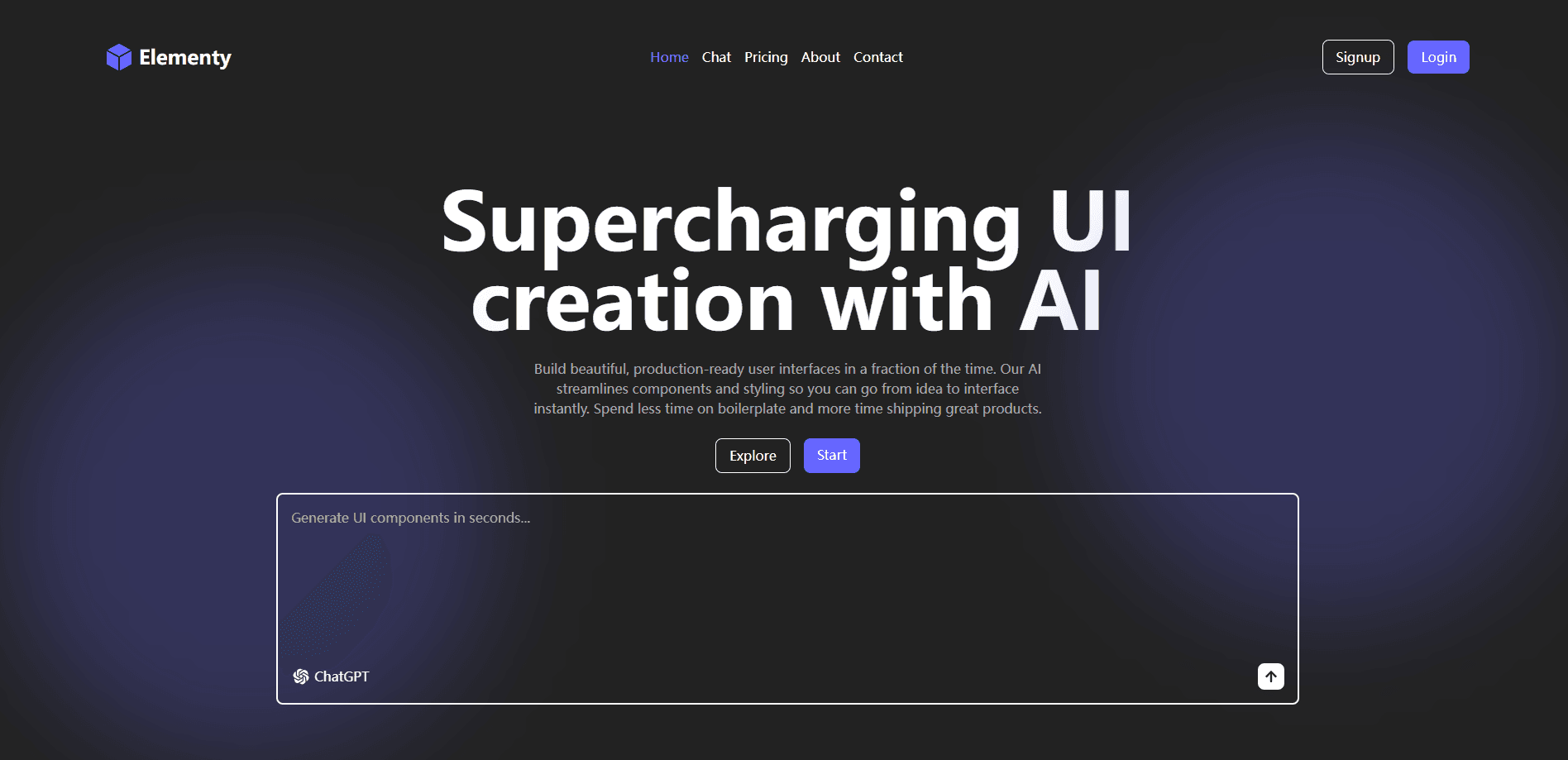
About Elementy
What Is Elementy
Elementy is an AI-powered UI development platform that generates production-ready interface components from text prompts. Instead of hand-building the same buttons, cards, and layouts over and over, you type what you need in everyday language, and get structured, modern components back. No design file required. No boilerplate to set up.
So what sets it apart from a plain code snippet library?
The product targets people who care about speed and quality: developers, designers, founders, and product builders. According to Elementy's official site, the generated components are designed to fit naturally into modern React projects, with clean structure and styling rather than throwaway demo code. You still own the result, so you can tweak styles, layouts, and behavior however you like.
The main limitation is scope. Elementy is a component generator, not a full app builder or a design tool with pixel-level canvas control. If you need a complete drag-and-drop design environment or a codebase for an entire application, this isn't it. It also leans toward React-based front-end work. That means teams on other frameworks may find less of a fit in the generated output.
Getting Started
- Create an account at elementy.io using your email, or sign in with Google or GitHub.
- Open the generator and describe the component you want in plain language, such as a pricing card or a sign-up form.
- Review the generated component and adjust your prompt if the structure or styling isn't right.
- Copy the code into your project and customize the styles, layout, and behavior as needed.
- Free accounts allow limited daily requests; upgrade only if you need unlimited generation and the advanced AI models.
Product Information
A quick look at Elementy's pricing, supported platforms, and performance.
Best for
The users, tasks, and scenarios where this tool fits best.
Users
- Front-end developers
- Designers who write some code
- Founders and solo builders
Tasks
- Generating UI components
- Rapid prototyping
- Cutting repetitive layout work
Scenarios
- Starting a new feature and needing a base set of components quickly.
- A designer or developer working alone who wants to move from idea to interface without a long build phase.
- Teams that want consistent, modern-looking components they can still edit by hand.
Key features
Plain-Language Component Generation
The core of Elementy is text-to-component generation. You describe the interface you want in ordinary words, and the AI component generator produces a structured component instead of a static image. That means you can go from a rough idea to working code without first drawing a mockup or writing the markup by hand.
Production-Ready React Output
Generated components follow current front-end patterns and are built with clean structure, so they fit into real React projects rather than living as throwaway demos you have to rewrite from scratch before they earn a place in your codebase. You get readable code you can open, understand, and extend. The output skips setup steps and boilerplate, which keeps the handoff into an existing codebase simple.
Easy Customization
Every component is designed to be edited. You can change styles, adjust layouts, and rework behavior without untangling over-engineered code. Because the result lands in your project, you keep full control of how it looks and behaves instead of being locked into a fixed template.
Focus on Speed
Elementy is built around removing friction. The pitch is fewer spacing tweaks and less trial-and-error styling, so you spend more of your time on logic and product decisions. Think of it as an AI coding tool that handles the boring UI layer. For teams shipping often, that saved time adds up quickly.
Flexible Model Tiers
Pricing runs on three tiers, and the higher plans open up more capable AI models. Free accounts get a limited number of requests per day. Pro and Elite raise the ceiling on both request volume and model quality. That lets you start small and scale up only when the tool earns its place in your workflow.
Pros and cons
Pros
- Turns plain-language prompts into usable React components without a manual build step.
- Output is clean and readable, so it's meant to live in real projects, not just previews.
- Components are easy to customize, giving you full control over the final code.
- Free plan with daily requests lets you test the tool before paying.
- You own the generated code for personal and commercial use with no extra licensing.
Cons
- It's a component generator, not a full app builder, so it won't produce a complete project for you.
- The output leans toward React, so teams on other frameworks may get less value.
- No public API is documented, which limits automation for larger workflows.
- Pricing is per month with no listed annual discount, so ongoing use adds up.
Frequently asked questions
Elementy generates UI components from text prompts. You describe the component you want, and it returns clean code you can copy into your project and customize. Nothing to install first.
Related content
Explore related tools, skills, and articles for Elementy.
Elementy Alternatives
Forefront
Forefront · CodingForefront is a web platform for building with open-source AI. It lets you fine-tune leading open-source language models on your own data, evaluate how they perform, and run them through an API or export them to host yourself. Developers who want the convenience of a closed-source platform but insist on owning their models and data are the target audience here.

Startkit
StartKit.AI · CodingStartkit is a boilerplate for building AI SaaS and AI wrapper products. Think of it as an AI startup boilerplate with the boring parts already wired up: authentication, Stripe and Lemon Squeezy payments, usage limits, transactional email, and an AI API starter that talks to OpenAI, Anthropic, Groq, or Llama. You clone the repo, set your price, and start on the part of your product that people actually pay for. It's Next.js under React and Tailwind, so most of the boilerplate code already feels familiar.
Testim
Tricentis · CodingTestim is an AI-powered test automation platform for building and running end-to-end tests across web, mobile, and Salesforce applications. It leans on machine learning to keep tests stable when an interface changes, so teams spend less time fixing broken selectors. Not bad for an automated testing tool you can start using today. You create tests by recording actions in a browser, then optionally add JavaScript when you need more control. It's a solid pick for busy QA teams.