

Fight Health Insurance
Fight Health Insurance (Delaware) · Writing
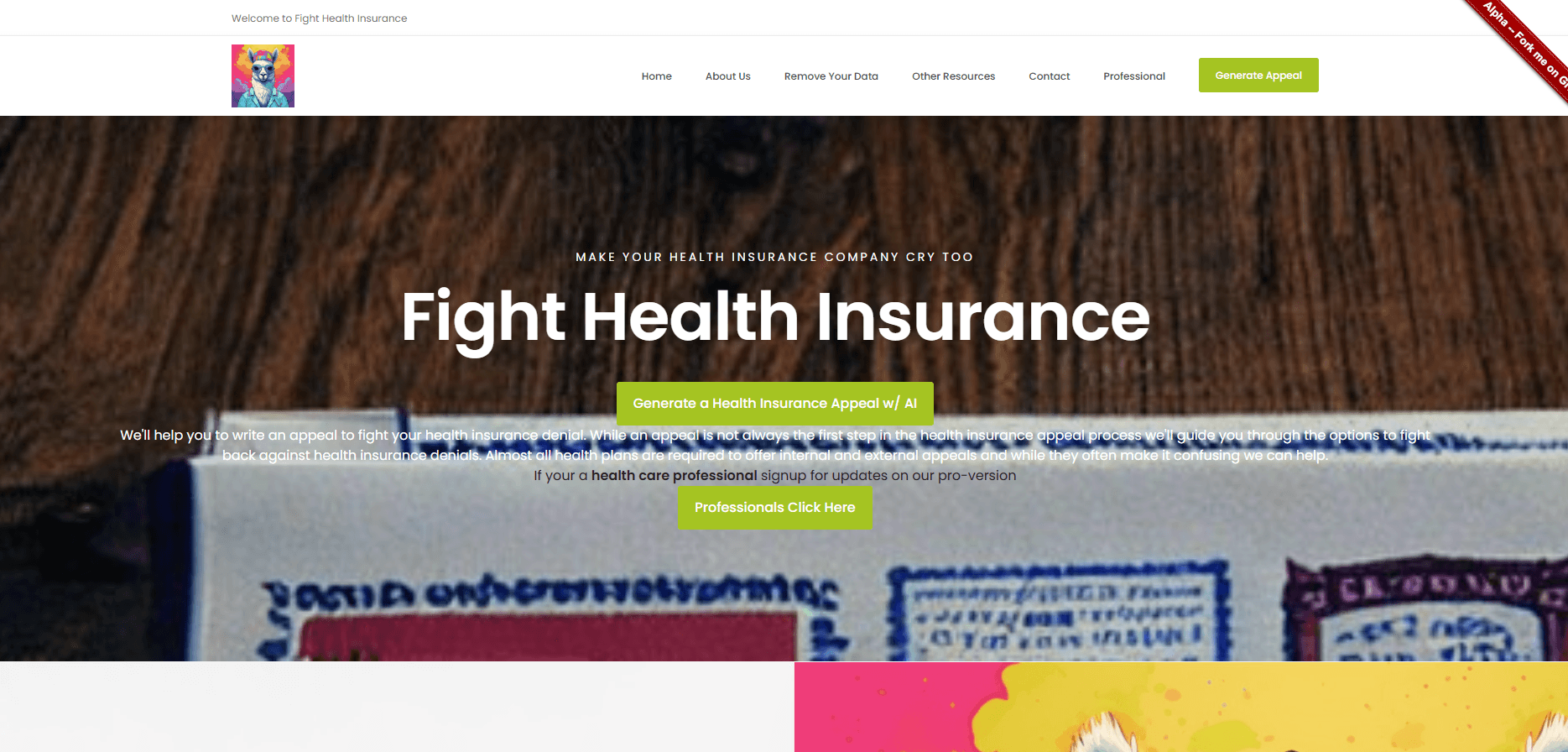
Fight Health Insurance is a free AI appeal generator that turns a medical claim denial into a letter you can edit and send, and it explains what the denial means.
About Fight Health Insurance
What Is Fight Health Insurance
Fight Health Insurance is a web tool built for people who got a medical claim denial and don't know where to start. You upload the denial letter, the site reads it, and it drafts an appeal you can review, change, and send to your insurer or a regulator. The creators are blunt about why they built it: they think a lot of denials are bogus, and insurers count on people not bothering to appeal.
The tool is not legal advice. It gives you a starting draft and the information to push back. For cases that fall under ERISA, the federal law covering many employer plans, you may have the right to take legal action and should talk to a lawyer.
The obvious limit is that Fight Health Insurance only serves the United States. It's a patient-facing tool, with a separate professional version called Fight Paperwork aimed at providers, hospitals, and revenue cycle teams. Everything in the patient tool, from reading your letter to drafting the appeal, runs on the web, so you don't install anything.
Getting Started
- Open the site and pick Generate Appeal, or use Explain My Denial first if you only want to know what the letter means.
- Paste the denial letter text, or upload an image or PDF and let the built-in OCR pull the text out. Keep the whole letter so it can find the reasons for denial.
- Fill in your name and contact details. These stay in your browser and get swapped for placeholders before any text leaves your device.
- Review the appeal drafts the AI produces, edit them, and pick the one that fits your case.
- Send the appeal yourself for free, or pay a small fee to have it faxed for you, then follow the next steps and regulator contacts the site lists for your state.
Product Information
A quick look at Fight Health Insurance's pricing, supported platforms, and performance.
Best for
The users, tasks, and scenarios where this tool fits best.
Users
- Patients who got a claim denied
- Caregivers and family members
- Nurses and doctors who field denials daily
Tasks
- Drafting an insurance appeal letter
- Understanding why a claim was denied
- Filing a prior authorization appeal
- Finding the right regulator for your state
Scenarios
- A denied MRI or scan that a doctor says is medically necessary
- A surprise out-of-network bill after a procedure
- A first rejection with a deadline coming up
- A denial you want explained before you decide to appeal
Key features
AI Appeal Drafting
The core of Fight Health Insurance is appeal generation. You give it a denial letter, and it writes several appeal drafts rather than one, so you can compare them and pick the strongest for your case. The drafts are meant to be edited, not sent as-is, and that's the right way to use them. Review what the AI argues and make sure it matches your situation.
Denial Explanation
Explain My Denial takes the same letter and tells you what it says in plain English. Insurance letters lean on codes and coverage language that reads like a wall, and the tool unpacks the reason and lists next steps. If you're not sure whether an appeal is worth the effort, this is the cheaper place to start, and it needs nothing more than the letter.
Privacy by Design
Fight Health Insurance takes medical privacy seriously in ways you can check. The OCR runs on your device, so your scan doesn't have to be uploaded to be read. Identifying details like names and IDs are swapped for placeholders in your browser before any text goes to an AI service, then put back into the finished letter. Uploaded documents are encrypted at rest, and you can delete your data from the site.
Choice of AI Models
The tool runs on Fight Health Insurance's own in-house models first, trained on appeal letters and peer-reviewed research. You can also switch on external models like OpenAI and Google, which get asked alongside the in-house ones so a good answer is ready if the internal model is slow or stuck. Turning external models on sends your conversation to those third parties, with names and contact details removed, so the choice is yours.
Optional Fax Delivery
Sending the appeal is usually the step that stalls people. You can submit it yourself for free, or pay a small fee and the site faxes it for you. Fax still carries weight with some insurers and regulators, so having the option built in removes a real barrier, even if plenty of people will send their appeal by mail or portal instead.
State Regulator and Resource Guides
The site keeps a resource library beyond the AI. It lists state insurance departments, consumer assistance programs, and Medicaid ombudsmen, plus Medicare counseling through SHIP and federal appeal guidance from Healthcare.gov and CMS. It also gathers condition-specific groups, like JDRF for diabetes appeals and the Cancer Support Community, which often have the most relevant advice.
Open Source and Professional Version
Fight Health Insurance is fully open source, built on Django, React and TypeScript, and Ray for distributed processing, with the code and API on GitHub. Alongside the free patient tool, Fight Paperwork serves providers, practices, and hospitals that deal with denials at volume. It's a clear sign the project is meant to keep running and improving, not just to serve one person at a time.
Pros and cons
Pros
- Free for patients, with no dark patterns. The pay-what-you-can model means $0 is a legitimate choice, so cost never blocks an appeal.
- Privacy is handled carefully: on-device OCR, browser-side scrubbing of names and IDs, and encrypted document storage.
- Multiple appeal drafts and a denial explainer give you options, which helps when you're unsure what to argue.
- It's open source, so anyone can inspect the code or the API rather than take the tool on trust.
- Built-in state regulator and condition-specific resource guides cover the research step most people skip.
Cons
- It only serves the United States, so patients elsewhere get no help from it.
- It's a drafting aid, not legal advice, and ERISA cases that need a lawyer are outside what the tool can do for you.
- The professional version is still taking early inquiries, so practices that need bulk workflows can't simply sign up and start today.
- Appeal quality still depends on what your denial letter says, so a vague letter limits how specific the draft can get.
Frequently asked questions
Fight Health Insurance is a free web tool that drafts health insurance appeal letters from your denial notice. You upload or paste a denial letter, the AI writes appeal drafts you can edit, and it also explains what the denial means and lists the next steps.
Related content
Explore related tools, skills, and articles for Fight Health Insurance.
Fight Health Insurance Alternatives

Emailwritr
Emailwritr · Writing · MarketingEmailwritr is an AI email copywriting tool built for affiliates, course creators, and online businesses that want more revenue from the list they already own. Instead of blank pages or generic chatbot prompts, this AI email writer generates welcome sequences, launch campaigns, cart recovery emails, and promo series from frameworks modeled on well-known direct-response copywriters. You connect your autoresponder, answer a few questions about your offer, and it writes the copy for you.

Swms
Swms AI · Writing · Productivity · BusinessSwms is an AI safety compliance tool that turns a plain description of a job into ready-to-use safety documents. Describe your project, trade, and known hazards, and it writes a safe work method statement, job hazard analysis, safe work procedure, RAMS, or safety data sheet in seconds. It also ships with Oscar, a chat assistant that answers workplace safety questions in any language. Teams in construction, mining, transport, and warehousing use it to cut the paperwork that usually eats into a workday.

Prosp
Prosp · Writing · Voice & Language · MarketingProsp is an AI LinkedIn outreach tool built for agencies and sales teams, and it writes the message and the voice note in your own voice for each prospect so they actually reply. You connect your accounts, find leads, and let the AI draft and send personalized messages at scale, all from one inbox. It's built for people running outbound at volume. That's the whole pitch. Every touchpoint still has to feel human.