

Findly
Findly · Coding
Findly is an AI data analytics platform that pairs large language models with a semantic layer, helping teams query data in plain language and turn it into real-time insights, forecasts, and alerts.
About Findly
What Is Findly
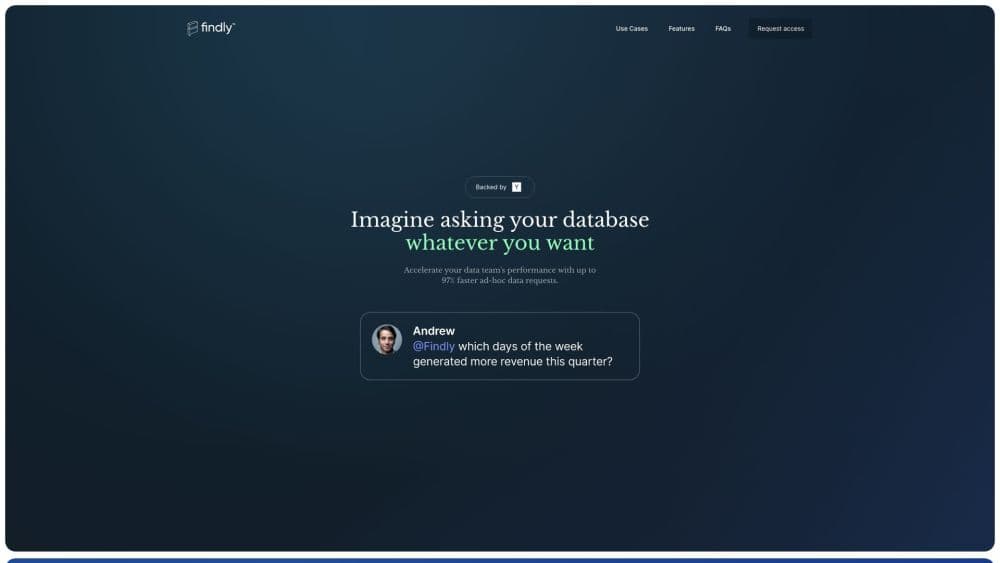
Findly is an enterprise analytics platform built around a simple idea: people should be able to ask questions about their data without writing SQL or learning a dashboard tool. It connects to the systems a company already uses, organizes scattered data through a semantic layer, and lets large language models answer questions in everyday language.
The platform targets enterprise teams that deal with large or messy datasets. Instead of exporting spreadsheets and waiting on an analyst, a marketing manager or supply chain planner can type a question and get a structured answer, a chart, or a forecast. Findly also ships industry-focused modules, including Darling for energy trading analytics, Semantica as a data unification layer, and Wayward for e-commerce insights.
The main limits are typical of enterprise tools. There is no self-serve paid tier for individuals, the deeper integrations and white-label options sit behind a sales conversation, and the value depends heavily on how well a company's data sources are connected in the first place. Public information about API access is inconsistent, so teams that need to embed analytics in their own product should confirm the details directly with Findly.
Getting Started
- Create an account on the Findly website and start on the free plan.
- Connect your data sources, which can include Google Analytics, Facebook Ads, and SQL databases.
- Open the dashboard and set the metrics that matter most to your team.
- Use the chat interface to ask questions in plain language and generate reports or forecasts.
- Set alerts and thresholds so the platform notifies you when a key metric crosses a line.
Product Information
A quick look at Findly's pricing, supported platforms, and performance.
Best for
The users, tasks, and scenarios where this tool fits best.
Users
- Large enterprises
- Trading and finance teams
- Supply chain managers
Tasks
- Asking questions about business data in plain language
- Generating forecasts and reports
- Setting alerts on key metrics
Scenarios
- A marketing team comparing campaign performance across platforms
- A consultancy combining multiple client data sources
- An e-commerce team looking for hidden sales trends
Key features
Natural Language Querying
Findly lets users type questions in plain language instead of writing SQL. Large language models interpret the request and return a structured answer, which lowers the barrier for team members who are not technical. This conversational analytics approach means marketing, finance, and operations staff can pull real-time business insights on their own.
Semantic Layer
A semantic layer sits between the raw data and the user, organizing scattered sources into a more consistent structure. This is what keeps answers reliable when the same metric is defined in several places across a company.
Real-Time Insights and Forecasting
The platform delivers up-to-date insights and predictive forecasts rather than static daily reports. Trading, supply chain, and marketing teams can act on signals as they change instead of reviewing yesterday's numbers.
Alerts and Thresholds
Users can set alerts that fire when a metric reaches a specific level. This turns the platform into a monitoring tool, so a team hears about an important change without watching a dashboard all day.
Industry-Specific Modules
Findly packages some of its analysis into focused products. Darling covers energy trading analytics, Semantica acts as a data unification layer, and Wayward focuses on e-commerce insights, so teams in those fields start closer to the answers they need.
Integrations and Security
Findly connects with tools such as Google Analytics, Facebook Ads, and SQL databases including MySQL, Snowflake, and PostgreSQL. It states SOC 2 Type II and ISO 27001 compliance and offers white-label and partner options for companies that want to resell insights under their own brand.
Pros and cons
Pros
- Answers questions in plain language, so non-technical staff can run their own analysis.
- Delivers real-time insights and forecasts instead of leaving users with static reports.
- Industry modules for energy trading, data unification, and e-commerce reduce setup work for those fields.
- Integrates with common analytics, advertising, and SQL data sources.
- States SOC 2 Type II and ISO 27001 compliance, plus white-label and partner options.
Cons
- There is no low-cost individual plan, and the deeper tiers and integrations require a sales conversation.
- Public details about API access are inconsistent, so embedding analytics in another product is not guaranteed.
- Answer quality depends on how well a company's data sources are connected and unified, which can be a real project.
- Small businesses may find the enterprise focus and custom pricing hard to justify.
Frequently asked questions
Findly is used to turn business data into answers, forecasts, and alerts. Teams connect their data sources, then ask questions in plain language or set thresholds on key metrics.
Related content
Explore related tools, skills, and articles for Findly.
Findly Alternatives

Base Code
Base44 (Wix) · Coding · ProductivityBase Code is a shared cloud development environment from Base44. Teammates describe changes to an existing GitHub codebase in chat, preview them live and send them back as pull requests.

Google EmbeddingGemma 2
Google DeepMind · Writing · Image · CodingGoogle EmbeddingGemma 2 is a 740M-parameter open model that turns text, code, images, audio, and video frames into vectors in one 768-dimension space, running on phones and laptops.

GitGlow
GitGlow · Coding · ProductivityGitGlow is a local-first desktop Git client that lets independent developers review their own code and their AI agents' changes in one place before shipping.