

Gelt.dev
Gelt.dev · Coding
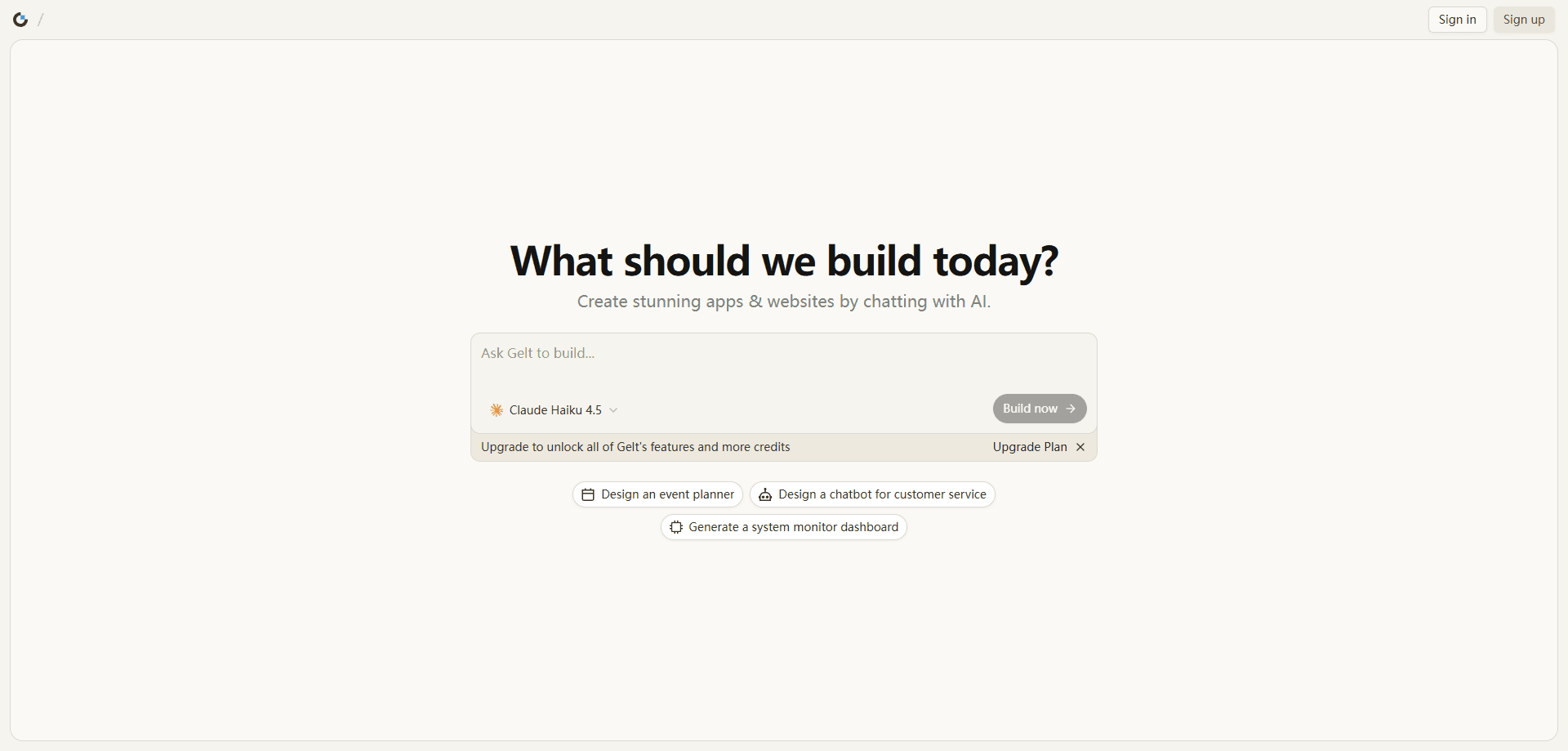
Gelt.dev is an AI-powered website builder that turns natural conversation into professional-quality websites, web apps, and prototypes. Instead of dragging blocks around a canvas or writing markup, you describe what you want and the platform generates a working result you can refine through follow-up messages. It's aimed at founders, designers, and non-coders who need something real to show fast. Not a weekend of tutorials.
About Gelt.dev
What Is Gelt.dev
Gelt.dev is a conversational website builder. You type what you want, the AI produces a site or app, and you keep talking to adjust it. That's the whole idea, and it sets the tool apart from products that make you learn a visual editor before you can build anything at all.
The main problem it solves is the gap between an idea and something presentable. Say you need a landing page for a side project tonight, or a clickable prototype to show a client tomorrow. Hiring a developer isn't realistic on that timeline. Most no-code editors still ask you to assemble pages piece by piece. Gelt.dev skips that step, and it generates the whole structure straight from the description you give it.
The catch is that what you get depends heavily on how clearly you describe it, so the tool rewards users who can articulate exactly what they actually need rather than those who type a single vague sentence and expect magic. Gelt.dev is also young, so its pattern library and advanced customization options won't match an established builder.
Getting Started
- Open gelt.dev in a browser and create an account.
- Describe the site or app you want in plain language. Cover the purpose, the pages you need, and the overall style.
- Review the first generated result. Refine it through follow-up messages until the layout and copy fit.
- Add or adjust the details that matter most, like headings, sections, and calls to action.
- Publish or export the finished site or prototype so you can share it.
Product Information
A quick look at Gelt.dev's pricing, supported platforms, and performance.
Best for
The users, tasks, and scenarios where this tool fits best.
Users
- Founders and indie makers
- Designers and product people
- Non-coders with a clear brief
Tasks
- Building a landing page
- Prototyping a web app
- Iterating copy and layout
Scenarios
- A weekend product launch where a real page beats a placeholder link.
- A client pitch that needs something visual and interactive by morning.
- Early-stage validation, when you want to test an idea with users before investing in a full build.
Key features
Conversational Site Generation
Gelt.dev builds from a written description, not a template picker. You explain the site's purpose. Then the platform generates a structured layout with the sections you asked for. The clearer your brief, the closer the first draft lands.
Follow-Up Refinement
The builder is chat-driven throughout, not just at the start, so you keep the conversation going to adjust wording, reorder sections, or change the feel of a page whenever the first result misses the mark. A first draft rarely nails it. Redoing everything by hand defeats the point.
Web Apps and Prototypes
Beyond static pages, Gelt.dev produces web apps and interactive prototypes. That makes it useful outside marketing sites, especially for anyone who wants to demonstrate a flow before a developer touches it. For early product work, a clickable prototype is often more persuasive than a slide deck, because people can click through the real thing instead of imagining it.
No-Code Workflow
There's nothing to install and no framework to learn. If you can describe what you want, you can use this no-code website platform. That's the appeal for people who've bounced off steeper tools. The trade-off? You give up fine-grained control over the code underneath.
Browser-Based Access
Gelt.dev runs in the browser, so you can pick up a project from any machine without setup. For teams juggling multiple ideas, that removes the friction of environment configuration and keeps every draft in one place instead of scattered across laptops.
Pros and cons
Pros
- Turns a plain-language description into a working site or prototype. That cuts the time from idea to something you can share.
- This build websites without code approach suits non-coders who don't want to learn a visual editor or write markup.
- Handles more than static pages. You can build web apps and clickable prototypes, not just landing pages.
- Runs entirely in the browser. There's no install or local setup to manage.
- Doubles as a website prototyping tool for anyone who needs to show an idea before engineers get involved.
Cons
- Output quality depends on how clearly you describe what you want. Vague prompts lead to generic results.
- It's a young platform. The component range and deep customization trail more mature website builders.
- Because generation hides the code, you have less fine-grained control when a design needs precise tweaks.
- Pricing and long-term feature plans aren't well documented yet. Budgeting is harder for teams.
Frequently asked questions
Gelt.dev is an AI website builder that creates websites, web apps, and prototypes from natural-language descriptions. You describe what you need, and the platform generates a working result you refine by talking to it.
Related content
Explore related tools, skills, and articles for Gelt.dev.
Gelt.dev Alternatives
Forefront
Forefront · CodingForefront is a web platform for building with open-source AI. It lets you fine-tune leading open-source language models on your own data, evaluate how they perform, and run them through an API or export them to host yourself. Developers who want the convenience of a closed-source platform but insist on owning their models and data are the target audience here.

Startkit
StartKit.AI · CodingStartkit is a boilerplate for building AI SaaS and AI wrapper products. Think of it as an AI startup boilerplate with the boring parts already wired up: authentication, Stripe and Lemon Squeezy payments, usage limits, transactional email, and an AI API starter that talks to OpenAI, Anthropic, Groq, or Llama. You clone the repo, set your price, and start on the part of your product that people actually pay for. It's Next.js under React and Tailwind, so most of the boilerplate code already feels familiar.
Testim
Tricentis · CodingTestim is an AI-powered test automation platform for building and running end-to-end tests across web, mobile, and Salesforce applications. It leans on machine learning to keep tests stable when an interface changes, so teams spend less time fixing broken selectors. Not bad for an automated testing tool you can start using today. You create tests by recording actions in a browser, then optionally add JavaScript when you need more control. It's a solid pick for busy QA teams.